


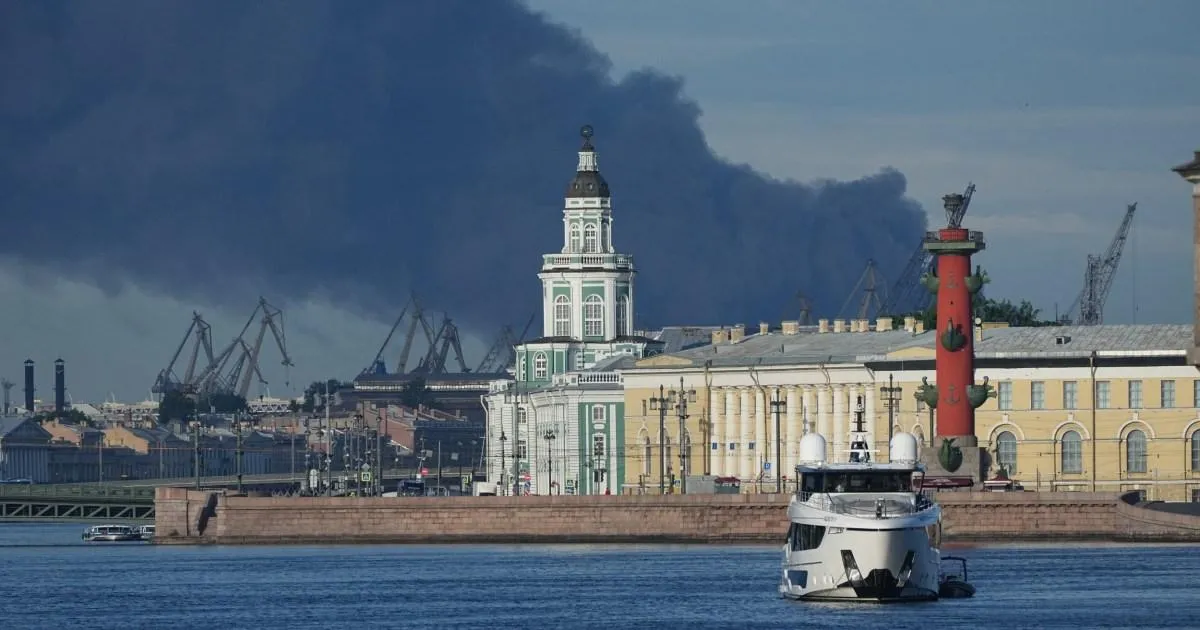
The morning in St. Petersburg began with a jarring sight: plumes of heavy, dark smoke curling over the skyline, signaling that the ongoing conflict in Ukraine had reached deep into Russian territory. Residents waking up to the dawn found themselves face-to-face with the reality of an overnight drone strike that targeted key infrastructure across three districts. While the immediate aftermath was one of chaos and concern, local governor Alexander Beglov quickly moved to reassure the public, confirming that while several individuals sustained injuries, miraculously, there were no fatalities reported. The event served as a stark, visceral reminder that the reach of this war is expanding, transforming once-distant tactical maneuvers into local nightmares for Russian citizens.
For the Ukrainian government, these strikes were not mere acts of aggression, but targeted, strategic operations. President Volodymyr Zelensky, in a statement released on X, framed the attacks as a necessary evolution in his country’s defensive strategy. He specifically highlighted hits on the Petersburg Oil Terminal—a facility he described as integral to the Russian war machine—and a military production site in the Tambov region. Zelensky’s public stance was one of gratitude toward his forces, framing these strikes as a crucial component of a long-range effort to degrade Russia’s internal ability to wage war, ultimately aiming to force a path toward peace through pressure rather than just battlefield defense.
The timing of this attack was particularly symbolic, as it coincided with the eve of the St. Petersburg International Economic Forum (SPIEF), a massive, high-profile event that has been a cornerstone of Russian diplomacy and business since 1997. Often dubbed the “Russian Davos,” the forum typically hosts over 10,000 attendees from across the globe, serving as a platform for Vladimir Putin to project strength and international relevance. The irony of smoke rising over the city just as the leadership prepared to welcome global business figures was undeniable, casting a long shadow over the event and subtly undermining the image of domestic stability that the Kremlin works so hard to project.
Beneath the immediate tactical back-and-forth lies a much grimmer reality of a cycle of violence that shows no sign of stopping. The drone strikes on St. Petersburg occurred just one day after Russia conducted a savage wave of missile and drone attacks on Ukrainian cities, including Kyiv, which resulted in at least 23 deaths and left nearly 140 people wounded. Zelensky’s response to the tragedy was a desperate plea for international allies to tighten sanctions, specifically targeting Russia’s production capabilities. He warned that the Kremlin is already orchestrating its next wave of destruction, highlighting the desperate need to disrupt the supply lines that keep Russian missiles flying into civilian areas.
However, internal pressure might eventually succeed where external sanctions have yet to fully penetrate. Financial documents obtained by the Financial Times suggest that President Putin is facing an increasingly perilous economic reality. Russia’s own Finance Minister, Anton Siluanov, reportedly projected a massive budget deficit this year, with war spending exceeding income by at least £20.8 billion. Domestic financial experts, including those within the central bank, have been sounding the alarm, warning that the current trajectory of military spending is utterly unsustainable. Even as the regime tries to project an image of invincibility on the global stage, the ledger suggests a country stretching its resources to the breaking point.
Ultimately, the clash between military ambition and economic reality defines the current impasse. Despite the warnings from his own financial advisors to reign in spending, reports indicate that Putin remains undeterred, ordering his ministers to find savings elsewhere to continue funding the war. This insistence on maintaining the pace of conflict, even at the risk of domestic economic ruin, paints a picture of a leader increasingly isolated from fiscal logic. As the smoke clears over St. Petersburg and the forum gets underway, the world watches a fragile dance: one side using precise, long-range strikes to choke the enemy’s resources, while the other relentlessly pours its future into a conflict that is draining the nation’s very foundation.