


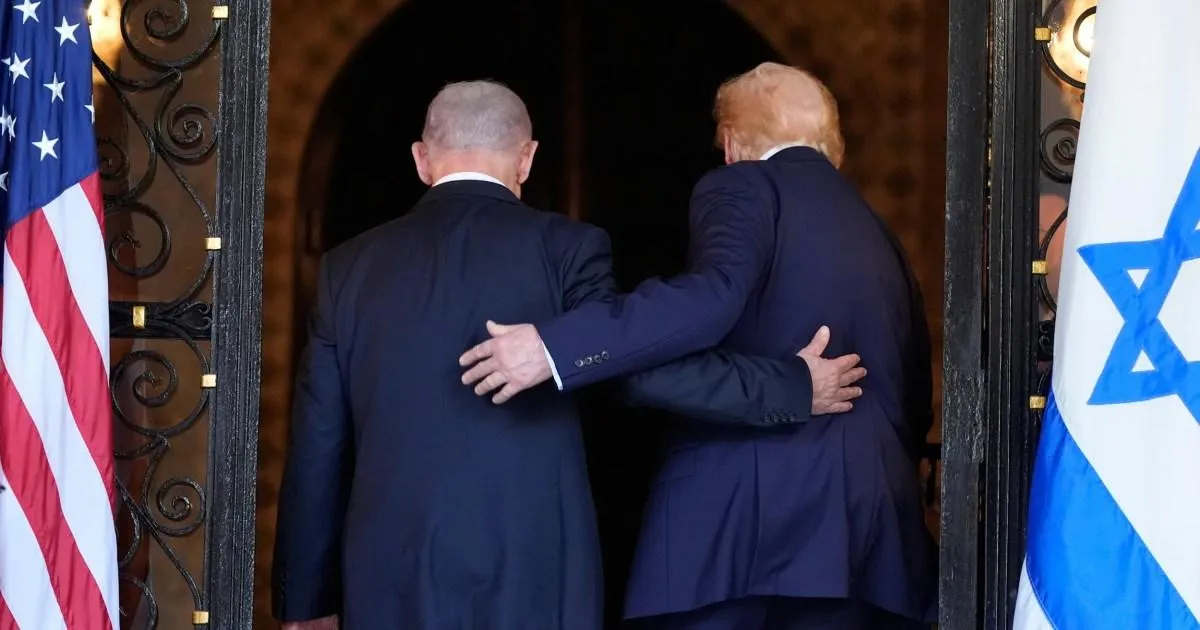
In the volatile arena of international diplomacy, few conversations are as explosive as the one recently reported between Donald Trump and Israeli Prime Minister Benjamin Netanyahu. According to accounts shared by Axios, the dialogue was far from the polished, diplomatic exchanges typical of heads of state. Instead, it devolved into a coarse and heated confrontation. Trump, known for his unfiltered communication style, reportedly directed expletives at the Israeli leader, questioning his decision-making regarding airstrikes in Beirut. The tension underscored a deepening rift between the two longtime allies, with Trump bluntly asserting that Netanyahu’s political survival was indebted entirely to his own influence, warning that without his protection, the Prime Minister would be facing imprisonment.
The friction between these two figures stems from a complex web of legal and geopolitical pressures, most notably the threat of international prosecution. In May 2024, the International Criminal Court (ICC) leveled significant charges of crimes against humanity against both Hamas and top Israeli officials, including Netanyahu himself. For someone in Netanyahu’s position, these warrants represent an existential threat that transcends regional warfare, turning every diplomatic interaction into a high-stakes calculation for personal and political survival. Trump’s remarks—asserting that the world’s perception of Israel and its leadership has soured—reflect a growing concern among global stakeholders that the current trajectory of the conflict is becoming politically toxic, even among traditional Western allies.
Despite the pressure from the American side to de-escalate, the situation on the ground in Lebanon remains dire and contradictory. Following the tense phone call in which Trump demanded a cessation of hostilities, Israel proceeded to launch drone strikes on the southern suburbs of Beirut. These attacks resulted in the deaths of 11 individuals, including two young children and their father—a grim human toll that occurred even as Hezbollah was reportedly signaling an intent to scale back engagement. The timing of these strikes, coming directly after claims of a diplomatic breakthrough, highlights the massive disconnect between what is discussed in high-level summits and the brutal reality faced by civilians trapped in the crossfire.
The human element of this crisis is staggering, with over one million people displaced within Lebanon and more than 3,400 lives lost since the latest surge in violence began. Families are fleeing their homes, and conflict-weary populations are caught in a state of suspended animation, waiting for a reprieve that never quite arrives. The violence has transformed into a major obstruction for broader regional stabilization, particularly concerning an emerging ceasefire deal meant to address the expanding conflict between the U.S., Israel, and Iran. Tehran has made it explicitly clear that any agreement regarding the broader war must include a permanent end to the fighting in Lebanon, effectively linking the fate of the Lebanese people to the larger Iranian strategic chessboard.
Diplomatic pathways are currently strained to the point of collapse, with reports indicating that Iran has severed communication with mediators tasked with facilitating these sensitive talks. Meanwhile, a fragile, non-representative negotiation process is unfolding in Washington. While Lebanese negotiators are pushing for a comprehensive ceasefire to secure their borders against future incursions, Hezbollah has maintained a stance of non-participation in direct talks, choosing instead to rely on the backing of Iranian pressure. This leaves the region in a precarious state where formal diplomatic relations are non-existent, and the lines of communication between the primary belligerents are blocked by deep-seated distrust and the hardening of ideological positions.
As we look at the broader picture, the relationship between Trump and Netanyahu—once defined by a unified front—now seems to be fracturing under the weight of these mounting crises. Recent history has shown that these two leaders are capable of lengthy and dramatic engagement, yet the current escalation suggests that internal political pressures are beginning to outweigh their strategic partnership. Whether it is the specter of the ICC warrants, the devastating loss of life in Beirut, or the complex, multi-front war with Iran, the situation is increasingly defined by instability. As the world watches, it is clear that the path to peace requires more than just heated phone calls and threats; it requires a renewed focus on the human lives hanging in the balance, a necessity that seems to be getting lost in the noise of global power struggles.