



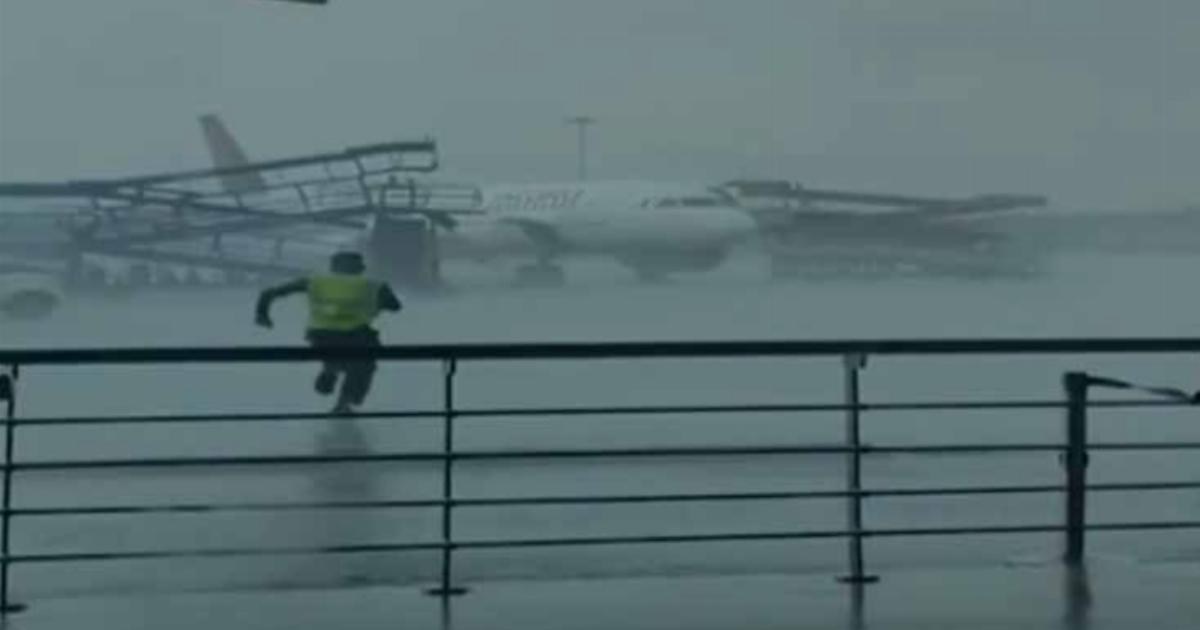
The serenity of a routine afternoon at Indira Gandhi International Airport in Delhi was abruptly shattered yesterday when a sudden, violent storm transformed the tarmac into a scene of chaotic destruction. As torrential rain lashed down and gale-force winds whipped across the airfield, the airport’s carefully orchestrated ground operations were thrown into disarray. What began as a typical weather event quickly escalated into a dangerous ordeal, with heavy equipment being tossed like toys by the unrelenting gusts. Captured by horrified onlookers from the safety of the terminal windows, the footage reveals a terrifying loss of control as inanimate objects became airborne hazards, threatening the safety and integrity of the multimillion-dollar aircraft parked nearby.
The true scale of the mayhem became apparent as ground support gear—specifically heavy boarding stairs and a large metal trestle—broke free from their moorings. In a striking display of the winds’ sheer power, a driverless ground vehicle was seen careening across the tarmac, narrowly missing several stationary planes. Ground staff, clad in bright hi-vis jackets, were caught on camera frantically sprinting across the rain-slicked concrete in a desperate, albeit doomed, attempt to intercept the runaway equipment. Despite their courageous efforts to intervene, the momentum of the storm proved too great, and the heavy machinery ultimately slammed into the idling fleet.
At the center of the incident were three Air India Airbus A320s, which stood defenseless against the onslaught of debris. While the sight of heavy equipment colliding with the fuselage of a jet is undoubtedly alarming, there was one vital piece of good news: all three aircraft were empty at the time of the impact. The timing, which could have easily resulted in a tragedy, proved fortunate, ensuring that no passengers or flight crew were in harm’s way when the collisions occurred. Airport officials have since confirmed that while the infrastructure and the planes themselves sustained significant damage, no injuries were reported among the staff or ground personnel present during the event.
In the aftermath of the storm, questions have begun to surface regarding the communication protocols and safety measures at the airport. An anonymous source from the airline industry hinted that while the trestle had been secured according to standard operating procedures, it simply could not withstand the extreme force of the freak weather. More concerning, however, were allegations that Air Traffic Control failed to provide adequate warning to the airport operators or the airlines regarding the rapidly deteriorating conditions. This breakdown in information flow meant that ground crews were essentially caught off guard, leaving them little time to properly secure the equipment before the gale-force winds took hold.
As the dust settles, the technical fallout of the event is still being addressed. All three aircraft have been pulled from service to undergo rigorous safety inspections and structural repairs. While two of the planes are expected to be patched up and cleared for flight within the week, the third suffered more extensive damage and will remain grounded for a longer period of time. The boarding gear itself was completely mangled, serving as a bitter reminder of how quickly routine operations can be compromised when nature chooses to flex its muscles in such an aggressive manner.
This incident marks yet another troubling chapter for Air India at this particular hub, highlighting the persistent challenges faced by aviation logistics in extreme conditions. Earlier this year, in a separate, equally bizarre mishap, a brand-new Airbus A350 suffered significant damage after ingesting an unsecured baggage container during a heavy fog. These recurring issues raise valid concerns about the vulnerability of aircraft when they are on the ground. As the aviation industry continues to navigate the unpredictable realities of climate patterns and airport safety protocols, this chaotic day in Delhi serves as a sobering lesson on the fragility of ground operations in the face of nature’s unpredictable temperament.