


Britain’s Naval Crossroads: A Nation Confronting the Rising Tide of Maritime Threats
The cerulean waters of the English Channel, long a symbol of Britain’s maritime heritage and commercial vitality, have become an unexpected arena of geopolitical tension. Recent weeks have witnessed a chilling scenario that would have seemed unthinkable just a decade ago: the Royal Navy intercepting a Russian oil tanker off the country’s southern coast, a vessel now anchored and monitored under the watchful eyes of British authorities. This single act of maritime enforcement, while legally justified, has opened a Pandora’s box of concerns about the nation’s readiness to protect its commercial interests on the open seas. Defence strategists are quietly expressing alarm about the potential for Russian retaliation, particularly the specter of ‘hijackings’ of British merchant vessels in the vast expanse of the Indo-Pacific region. The threat is not abstract or hypothetical—it stems from explicit statements made by Vladimir Putin himself, who has urged his naval forces to ‘detain’ European ships in response to European efforts to crack down on Moscow’s shadow fleet operations. This shadow fleet, consisting of hundreds of aging tankers operating under opaque ownership structures and dubious insurance arrangements, has become the Kremlin’s primary mechanism for circumventing international sanctions and sustaining its war machine.
The seizure of the SMYRTOS vessel in July represented a significant escalation in Britain’s approach to maritime enforcement. For months, this sanctioned tanker had been conducting operations in European waters, part of a fleet that defence analysts estimate numbers in the hundreds, each vessel playing a crucial role in moving Russian oil across global markets. The Ministry of Defence defended the interception with characteristic resolve, characterizing it as a strike against a ‘critical lifeline for the Kremlin in sustaining Russia’s illegal war in Ukraine.’ Yet behind this confident public posture lies a growing unease among military planners who recognize that Britain’s ability to project power at sea has eroded significantly over three decades of defense budget cuts and strategic downsizing. The Royal Navy that once ruled the waves now finds itself stretched dangerously thin, raising fundamental questions about whether the United Kingdom can fulfill its historic role as a guarantor of maritime security and freedom of navigation.
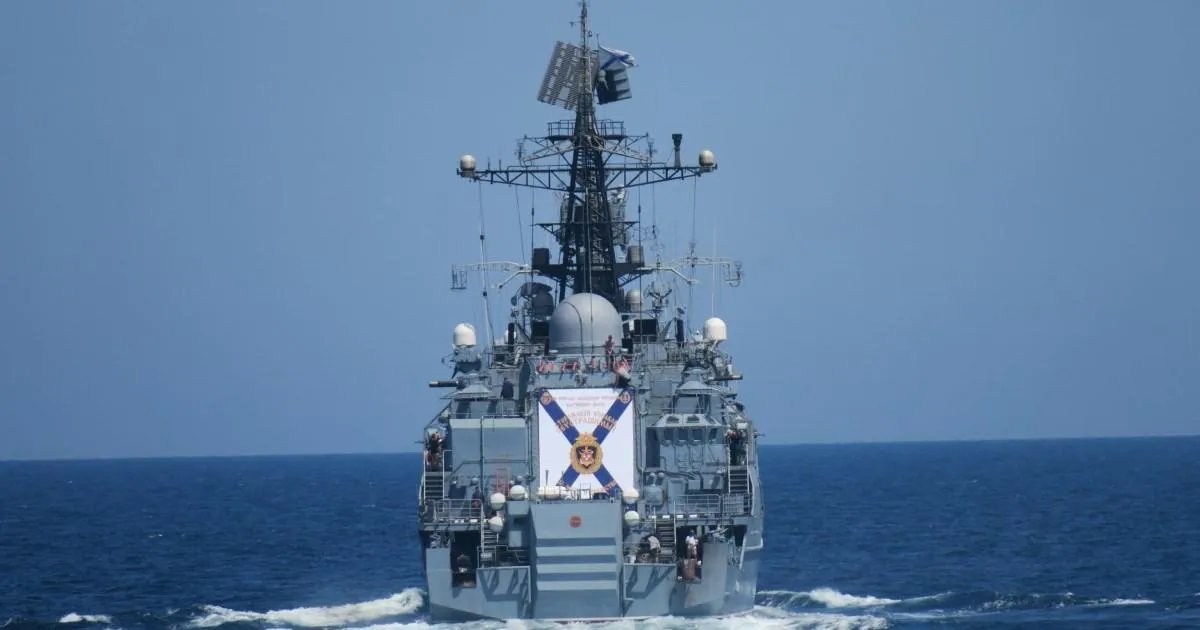
The numbers paint a stark picture of decline. Admiral Lord West, a former head of the Royal Navy, speaks with the authority of someone who has witnessed firsthand the deterioration of British maritime capabilities. His words carry the weight of frustration accumulated over decades of watching successive governments treat the Senior Service as a convenient source of budget savings. The reduction has been relentless, he argues, and the consequences are now becoming visible exactly when they matter most. Where once four or five patrol vessels would have been maintaining a visible presence in the waters around Britain, now merely two ships are available for such duties. This represents not just a numerical decline but a fundamental change in Britain’s ability to conduct the everyday maritime operations that underpin global trade and national security. The presence of patrol ships, Admiral West emphasizes, serves a purpose far beyond their immediate operational capabilities—it communicates resolve, deters potential aggressors, and provides the eyes and ears necessary to maintain situational awareness in increasingly contested waters. The Royal Navy, stripped of these assets, has become a shadow of its former self, ill-equipped to fulfill the responsibilities that the nation still expects it to bear.
The concerns raised by Admiral West find echo in the warnings of Sir Ben Wallace, the former Conservative defence secretary who witnessed the evolving nature of maritime threats during his tenure. His prescription for addressing the current crisis reflects a pragmatic understanding of Britain’s limitations. Rather than attempting to maintain a global naval presence alone, he advocates for burden-sharing with allies, particularly mentioning France as a potential partner in escort and protection duties. This recognition of the need for international cooperation marks a significant departure from Britain’s traditional posture as an independent naval power. It acknowledges what many defence planners have been saying privately: that the era of British naval supremacy is definitively over, replaced by a more complex reality where coalition operations and shared responsibilities are the only viable path forward. The challenge, however, lies in translating this recognition into effective action. International cooperation requires trust, coordination, and shared strategic objectives—commodities that are often in short supply even among closely aligned allies. Moreover, the burden-sharing approach raises uncomfortable questions about whether Britain’s diminished capabilities might undermine its credibility as a partner, reducing its influence within alliance structures and its ability to shape maritime security policy.
Russia’s maritime strategy has evolved considerably since the early days of the Ukraine war, when its Black Sea Fleet suffered a series of embarrassing defeats at the hands of Ukrainian forces. The Kremlin has adapted, shifting its focus to unconventional threats that exploit vulnerabilities in Western maritime networks while avoiding direct confrontation. The shadow fleet represents perhaps the most sophisticated manifestation of this adaptive strategy—a set of vessels that operate in a legal gray zone, enabling Russian oil exports while maintaining plausible deniability about their involvement in broader geopolitical conflicts. These ships have been implicated in everything from sabotage of critical infrastructure to surveillance and intelligence gathering. The International Institute of Strategic Studies issued a sobering assessment suggesting that shadow fleet vessels have served as launch and recovery platforms for surveillance drones targeting RAF bases and other critical installations across Britain and Europe. This finding transforms the shadow fleet from a mere commercial evasion mechanism into a strategic military asset, one that provides Russia with deniable attack and reconnaissance capabilities deep within NATO territory. The implications are profound, suggesting that the maritime domain has become a primary vector for Russian unconventional warfare against the West.
The decision to seize the SMYRTOS vessel was thus not merely about enforcing sanctions, but about sending a message that Britain would no longer tolerate this exploitation of maritime spaces for hostile purposes. Yet the message carries risks. Putin’s response—urging his navy to detain European ships—signals a willingness to escalate, potentially targeting British vessels in regions where the Royal Navy lacks the capacity to provide adequate protection. The Indo-Pacific, in particular, represents a vulnerability. This vast region, crucial to global trade and increasingly central to geopolitical competition, is far from Britain’s shores and beyond the operational reach of its reduced naval forces. Russian ‘hijackings’ of British merchant ships in these waters would represent a significant humiliation and economic disruption, exposing the gap between Britain’s global pretensions and its actual maritime capabilities.
The situation raises fundamental questions about British strategic priorities and national identity. For centuries, the Royal Navy has been not merely a military force but a symbol of British power, influence, and global reach. Its decline represents something deeper than a loss of military capability—it signifies a retreat from the nation’s historic role in shaping and maintaining the international order. The current crisis challenges Britain to confront an uncomfortable reality: the gap between its aspirations and its resources has grown dangerously wide. While the immediate threat focuses on Russia’s aggressive maritime posturing, the underlying issue is one of national direction. Does Britain still seek to be a major naval power with global responsibilities, or has it silently accepted a more modest role in world affairs? The answer will determine not just the future of the Royal Navy but the nature of Britain’s place in the world. As the nation grapples with these questions, the waters off its coast—where a Russian tanker sits under armed guard, where patrol ships steam on reduced rotations, and where the consequences of strategic miscalculation loom ever larger—serve as a reminder that every nation ultimately faces the consequences of the choices it makes about its own defense and security.