



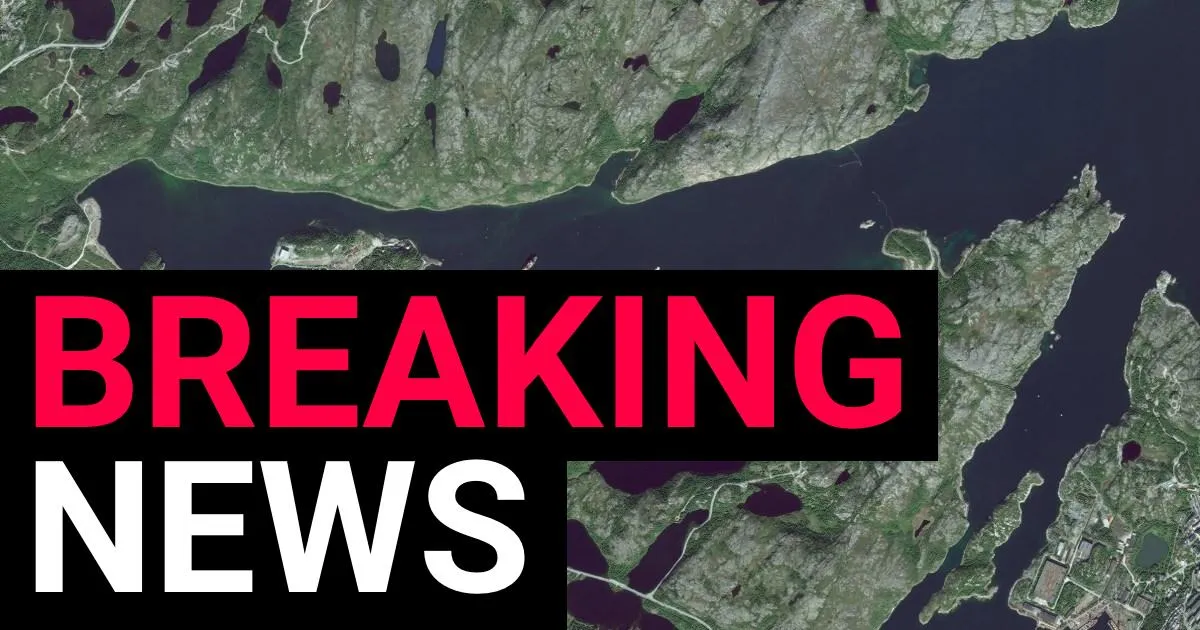
In the cold, dark waters off the Arctic archipelago of Svalbard, something unexpected was happening. Beneath the surface, in depths where sunlight has never reached, a network of undersea cables carries data between the remote islands and the Norwegian mainland. These cables are more than just technical infrastructure. They are the invisible threads that connect the world, carrying everything from weather forecasts and scientific research to banking transactions, medical records and family video calls. Most people never give them a second thought. Yet recently, a joint NATO operation uncovered a plan to destroy them. Two Western officials told Reuters that Russian submarines belonging to GUGI, a secretive branch of the Russian navy dedicated to undersea warfare, had been found near Svalbard attempting to sever a vital cable. The submarines were believed to have been launched from Russia’s Arctic base, slipping beneath the ice with the clear intention of damaging infrastructure on which millions of people depend. The operation to stop them involved Britain, Norway and the United States, and together they managed to force the Russian submarines to break off and withdraw. There was no dramatic explosion, no public confrontation, no news footage of ships colliding in the night. But the incident was a vivid reminder that the most important threats to modern life often happen in places we never see and never think about. We wake up in the morning and check our phones without asking where the data comes from. It seems as though the internet exists in some invisible cloud above us. In reality, it is carried along the ocean floor, through fibre-optic cables that are surprisingly thin, surprisingly fragile, and increasingly vulnerable. The attempt near Svalbard was not an isolated accident or a rogue operation. It was a deliberate act of sabotage aimed at the physical infrastructure that keeps our world connected. And the fact that it was stopped should not make us complacent. It should make us look closer at what lies beneath the waves and ask what else might be heading towards the cables that sustain our daily lives. The Arctic is no longer just a frozen wilderness. It has become a strategic frontier, and this quiet battle was a warning that the next conflict may not be fought on land, but in the deep.
The cable at the centre of the operation lies 2,700 metres below the surface of the Arctic Ocean. To put that in perspective, it is far deeper than the point where sunlight can penetrate. The pressure at that depth is immense, enough to crush a human body in an instant. Yet the cable carries the digital heartbeat of an entire region. Svalbard itself is a small and remote place, known for glaciers, polar bears, coal-mining history and the Global Seed Vault, a vault dug into a mountainside to preserve the world’s crop diversity in case of catastrophe. But its location at the top of the world gives it strategic importance out of proportion to its population. The cable ties Svalbard to Norway and, through Norway, to the rest of Europe. It carries communications for scientists studying the Arctic climate, for meteorological stations, for satellite ground stations and for the small communities living on the islands. If that cable were cut, Svalbard would suddenly be plunged into isolation. Doctors could not easily consult specialists on the mainland. Weather data would be interrupted. The internet would vanish. It would be like cutting the last road leading out of a town, but this road is made of glass and lies at the bottom of the sea. Russia has continued to deny that it was targeting the cables. Official statements insist that Russian submarines were operating legally and that there was no plot to damage undersea infrastructure. But the denials are not entirely convincing to Western officials. They point out that GUGI submarines are not ordinary naval boats. They are specially designed for deep-sea operations, fitted with equipment that can be used for spying, mapping, or sabotage. They can carry mini-submarines and remotely operated vehicles capable of reaching the seabed and manipulating objects. The presence of such vessels in the immediate vicinity of a cable is not something that happens by accident. It is a deliberate mission. The fact that NATO caught them before they could succeed does not change the nature of the threat. It simply means that, this time, the defenders were ready. Next time, they might not be.
The Svalbard incident is part of a much wider pattern. The British government has said that Russian activity off the coast of the United Kingdom has increased by about 30% over the past two years. That is not a minor uptick. It represents a significant escalation in effort, resources and ambition. One of the clearest examples is the Russian ship Yantar, which has been spotted on the edge of UK waters twice in the last year. Yantar is not an ordinary fishing boat or merchant vessel. It is an intelligence-gathering ship with a reputation for undersea surveillance. The Ministry of Defence suspects that Yantar and similar vessels are being used to map pipelines and cables, charting the exact locations of critical infrastructure so that, if the order is ever given, saboteurs will know exactly where to strike. Why is this so concerning? Because the United Kingdom relies on subsea infrastructure for 99% of its international telecommunications data. Almost every message sent abroad, every international payment, every overseas internet request, travels through cables along the ocean floor. The country also depends on undersea pipelines for basic energy supplies, including electricity, oil and natural gas. This means that a small number of underwater targets could, in theory, disable the digital and energy systems on which the entire nation depends. It is not an exaggeration to say that the seabed has become the new front line. In the past, wars were fought over territory, borders and resources. Today, they are increasingly fought over the invisible networks that allow societies to function. The cable routes are not a secret. Maps of undersea cables are available online, and shipping traffic data can reveal where ships are going. What is not publicly known is exactly how vulnerable these cables are, how quickly they can be repaired, and what would happen if several were cut at the same time. This uncertainty is part of the threat. Russia does not need to actually sever a cable to cause disruption. It simply needs to make us believe it might. The mere presence of spy ships and submarines hovering around undersea infrastructure sows suspicion, forces governments to spend more on protection, and reminds us that the systems we depend on are not guaranteed.
The recent strategic defence review, which sets out British security priorities, warns that the sea is becoming increasingly vulnerable and that adversaries are more willing to threaten the free flow of critical commodities. Those words are carefully chosen, but their meaning is stark. An adversary that can cut an undersea cable can disrupt the global economy without firing a single bullet. The scenario is not difficult to imagine. A submarine or a remotely operated vehicle approaches a cable, attaches a cutting device or simply drags an anchor across it. The cable snaps. In that moment, massive amounts of data cease to flow. Depending on which cable is severed and how much redundancy exists, the effects could range from slower internet speeds to a complete communications blackout. If multiple cables are cut in different ocean regions at the same time, the consequences could be devastating. International banks rely on high-speed data links to transfer money and settle transactions. Hospitals use cloud systems to store patient records. Emergency services coordinate through digital networks. Air traffic controllers depend on radar and data feeds that are often shared through undersea cables. Food and medical supply chains are managed through global logistics platforms. Even the military’s ability to command and control its forces depends on secure communications links, many of which traverse the ocean floor. The threat is not limited to developing countries. It is greatest for highly connected, digitally dependent nations like the UK, where 99% of international communications flow through subsea infrastructure. What makes this threat so hard to address is that the ocean is overwhelmingly large and mostly unmonitored. There are only so many naval vessels and underwater drones available to patrol the global cable network. The cables themselves stretch for tens of thousands of miles across the ocean floor. They are laid on the seabed, often without any protection beyond a thin layer of armouring that is easily cut by the right tool. There are no guards on the bottom of the ocean. There are no fences. There is only the assumption, which has held for decades, that no one would be reckless enough to destroy something so important. That assumption is now being tested, and the operation near Svalbard shows just how real the threat has become.
Behind the abstract talk of geopolitics and cyber warfare, there are real people doing dangerous work. The NATO operation that stopped the Russian submarines near Svalbard was carried out by sailors and analysts who spend much of their lives in the dark. Submariners are a particular kind of human being. They live in confined metal tubes for months at a time, breathing recycled air, eating from tins, and sleeping under the constant hum of machinery. They are trained to endure extreme stress and to make life-and-death decisions without any room for error. When the Russian GUGI submarines were detected near the cable, these were the people who had to respond. They had to track the intruders through layers of cold water, using passive sonar to listen for the faint sounds of propellers and pumps. They had to distinguish between the natural crackling of Arctic ice and the unnatural noise of a submarine trying to hide. They had to stay close enough to keep the Russians under observation, but not so close that they risked a collision or an unintended escalation. The operation required not only technical skill but also enormous restraint. The goal was not to attack the Russian submarines. It was to stop them from completing their mission and to send a signal that such activity would not be tolerated. That is a delicate line to walk. In the freezing waters above Svalbard, the margin between a successful operation and a dangerous international incident is measured in metres. The fact that the operation succeeded is a testament to the professionalism of the men and women involved. They did not do it for fame or recognition. Most of what they did remains classified, hidden from the public. But their work protects the infrastructure that keeps our world functioning. When you make a phone call or pay for something online, you are relying on people you have never met, people who are willing to go into the dark and face the threat so that the rest of us can stay connected. They do not expect thanks, and most of the time we never even know they exist. But they are there, beneath the waves, keeping watch.
So what should we take away from this? First, we need to recognise that undersea cables are not simply a matter of technical interest. They are a matter of national security, economic stability and everyday survival. The operation off Svalbard was a success, but it is only one battle in a larger contest. Governments must invest in making cable networks more resilient. That means building redundant routes so that if one cable is cut, data can automatically be rerouted along another path. It means developing better tools for monitoring the ocean, including underwater sensors, drones and satellite surveillance. It means working with allies to share intelligence and respond quickly when suspicious vessels are detected. It also means repairing cables faster. A cable ship can take days or even weeks to reach a remote location, and harsh weather can delay repairs even further. At the same time, ordinary citizens have a role to play. We need to understand that the internet is not a cloud; it is a physical system built from metal and glass lying on the ocean floor. It can be broken. It can be attacked. It can be lost. We should not be paranoid, but we should be informed. The world beneath the waves is not empty. It is full of cables and pipelines, and now it is full of sentinels and saboteurs. The next time you scroll through your phone or send a message across the world, think for a moment about the journey that data has taken. It may have passed through the cold, dark waters near Svalbard. It may have gone through a cable that was almost destroyed. And remember that there are people, invisible to us, who descended into that darkness to make sure the message got through. The threat is not over. The cables are still there. The submarines are still out there. But so are the people who refuse to let them win. In the deep ocean, in the quiet hum of fibre-optic cables, the fight for the future of our connected world is still underway. We cannot afford to ignore it, because the cost of losing that fight would not be counted in lost wires or interrupted signals. It would be counted in the collapse of the daily life we have come to rely on. The ocean kept its secret this time, but the secret is out: our world is connected by threads, and those threads are under attack.