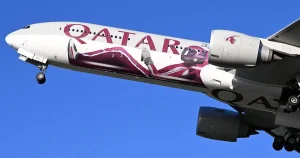

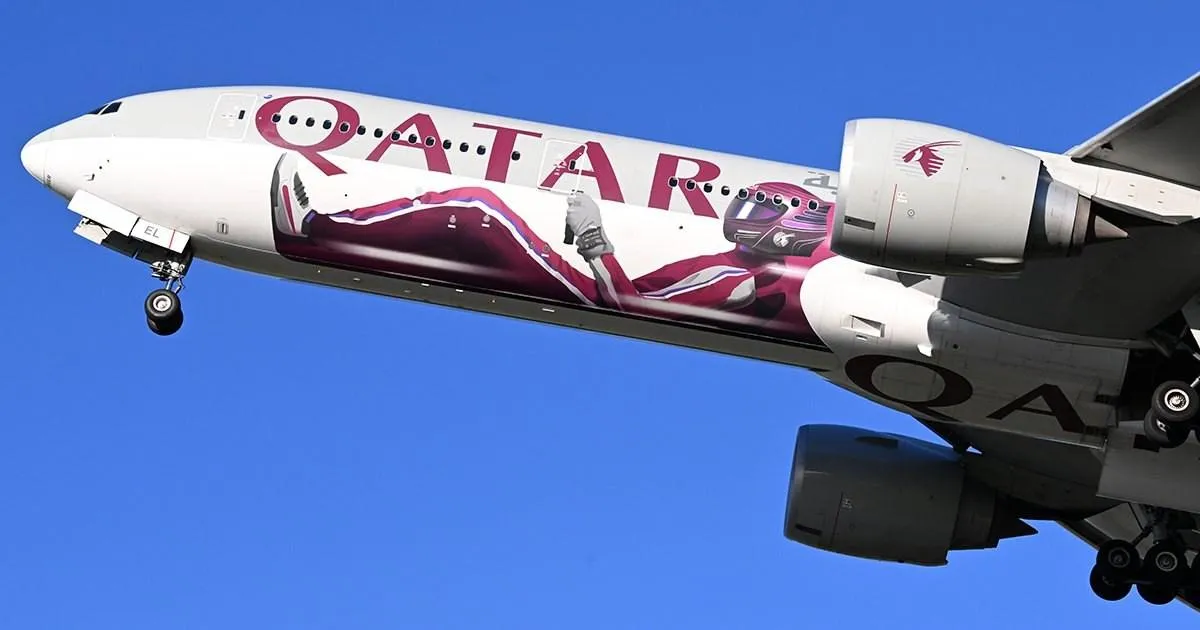
The flight from Melbourne to Doha should have been a long but uneventful journey across the Indian Ocean, a chance for passengers to settle into their seats, watch a film, or drift into an uneasy sleep at 35,000 feet. Instead, it became a floating nightmare, a story of sudden, terrifying chaos that no one aboard could have anticipated. Qatar Airways flight VA7 had barely begun its journey when two male passengers began to unravel. What started as restlessness—fidgeting, getting up, trying to move through the cabin, rummaging through overhead luggage—soon curdled into something darker. Fellow travellers later described the pair as “agitated” from the very beginning, their behaviour setting off quiet alarm bells among those seated nearby. But no one could have guessed that within hours, these same two men would be physically fighting, screaming threats, and claiming to have a gun, turning a routine commercial flight into a scene of raw fear and desperate restraint. The cabin, once filled with the low hum of conversation and the clatter of meal trays, became a pressure cooker. Passengers exchanged nervous glances, unsure whether to intervene or hide, while flight attendants, trained for service rather than combat, suddenly found themselves on the front line of a violent crisis.
The escalation came with terrifying suddenness, roughly six hours before the aircraft was due to touch down in Doha. According to witnesses, the two men began fighting each other, their anger spilling outward into abuse aimed at crew members and fellow passengers alike. What made the situation even more chilling was the nature of their threats. They were not just shouting obscenities; they were “screaming about wanting to hurt and shoot people,” as one passenger later recounted. Another witness described a scene of visceral brutality: the men were “headbutting and spitting on flight attendants,” their behaviour so unhinged that the cabin crew’s professional composure began to crack under the strain. For the passengers, it was a moment of pure existential dread. There is something uniquely terrifying about being trapped in a metal tube at high altitude, with nowhere to run and no police to call. The usual rules of safety and order had dissolved, replaced by the primal fear that comes from being at the mercy of two people who seemed to have lost all control. In that fraught atmosphere, small acts of courage emerged. A 63-year-old woman, desperately texting her relatives through the plane’s Wi-Fi to let them know she was alive, later praised a man named James, who was sitting beside her. When things turned truly ugly, James “jumped across” to help restrain one of the men, a split-second decision that likely prevented the situation from spiralling even further into catastrophe.
The crew’s response was nothing short of heroic, though it came at a terrible cost. Flight attendants are not trained police officers; they are hospitality professionals, taught to smile through turbulence and serve meals with grace. Yet here they were, physically grappling with two violent men, trying to pin them down while also protecting the terrified passengers around them. Each of the two men is said to have required six or seven people to hold them down, a staggering testament to their strength and frenzy. For hours, the cabin became a makeshift battlefield. One witness said that the crew spent “10 hours straight” restraining the passengers, a detail that suggests the ordeal was not a brief flash of violence but a prolonged, exhausting siege. Imagine the physical toll: arms aching, adrenaline surging, the constant fear that one of the men might break free and harm someone. Imagine the psychological toll on the other passengers, forced to watch this struggle unfold while strapped into their seats, unable to help beyond the few brave souls who stepped forward. The flight attendants, already stretched thin by the demands of a long-haul journey, had to dig deep into reserves of strength they likely didn’t know they possessed. They did not crack. They did not give up. They held the line, hour after hour, until the wheels of the aircraft finally touched down on Qatari soil.
When the plane landed in Doha, the relief was almost palpable. Police officers were waiting on the tarmac, and the two men were arrested, their reign of terror finally over. Witnesses said the cabin erupted in applause—a spontaneous, cathartic release of tension that had been building for hours. For the passengers, the clapping was not just a thank-you to the authorities; it was a salute to the crew and the fellow travellers who had risked their own safety to protect others. It was also a recognition of their own survival, a collective exhale after a brush with something truly dark. Qatar Airways Group later released a statement confirming the incident, noting that both passengers had been restrained and handed over to local authorities upon arrival. “The safety and well-being of our crew and passengers remain our highest priority,” the statement read, a familiar corporate platitude that, in this context, felt both necessary and inadequate. Because for the people on board, this was not a press release. It was a trauma they would carry with them for years. The 63-year-old woman who texted her relatives, the passenger who watched James leap across the aisle, the flight attendant who spent hours with bruises forming on her arms—they all lived through something that no training manual could fully prepare them for. The applause may have faded, but the memory of that fear, that helplessness, and that courage would not.
This incident did not happen in a vacuum. Just days earlier, an American Airlines passenger had been duct-taped to his seat after allegedly shouting racist and homophobic slurs and becoming physically violent on a flight from Dallas to Newark. That passenger, later identified as 67-year-old estate agent Arthur Lundeen, was subsequently fired from his job. The two incidents, separated by thousands of miles, point to a troubling pattern: air travel, once a symbol of civilized mobility, has increasingly become a flashpoint for aggression and instability. The pandemic era brought with it a surge in so-called “air rage” incidents, fueled by stress, alcohol, cramped conditions, and a general erosion of patience. Flight attendants, already overworked and underpaid, have become the de facto first responders of the skies, expected to de-escalate violent confrontations, restrain unruly passengers, and maintain order—all while serving drinks and ensuring everyone is buckled in. The Qatar Airways incident, with its reports of gun threats and headbutting, shows just how far this trend has spiraled. These are not merely cases of someone being rude or refusing to wear a mask. These are situations where lives are genuinely at risk, where a single moment of madness can turn a routine flight into a hostage situation. And yet, the system that is supposed to protect passengers and crew remains woefully unprepared. Airlines rely on the heroism of individual employees and passengers, rather than investing in better training, better screening, and better support for those who are asked to do the impossible.
In the end, the story of flight VA7 is a story about the fragility of order and the resilience of the human spirit. It is about how quickly the mundane can become terrifying, how a quiet cabin can erupt into chaos, and how ordinary people—a man named James, a team of flight attendants, a 63-year-old woman texting for her life—can rise to meet a crisis with courage and grace. It is also a story about the scars that such events leave behind. The passengers who clapped when the police boarded the plane may have felt relief in that moment, but the trauma does not end with an arrest. It lingers in sleepless nights, in the sudden jolt of anxiety when a fellow passenger stands up too quickly, in the way a routine flight can never quite feel routine again. For the crew, the physical and emotional toll is even greater. They were asked to do something no one should have to do, and they did it, but at what cost? The airline’s statement spoke of safety and well-being, but true safety requires more than words. It requires a commitment to protecting the protectors, to giving flight attendants the tools and authority they need to prevent such incidents before they explode. It requires a broader conversation about why so many people are cracking under the pressure of modern life, and how we can create a world where violence does not find its way onto a plane. Until then, we will continue to hear stories like this one—stories of fear, bravery, and the thin line that separates civilization from chaos. And we will hope, every time we board a flight, that we never have to cross that line ourselves.