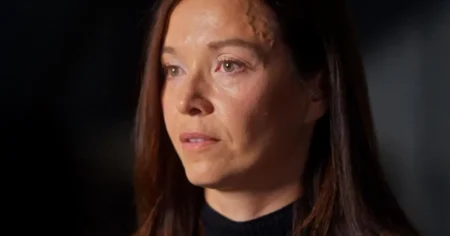
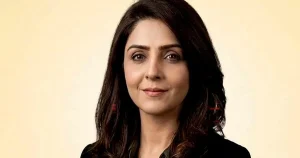

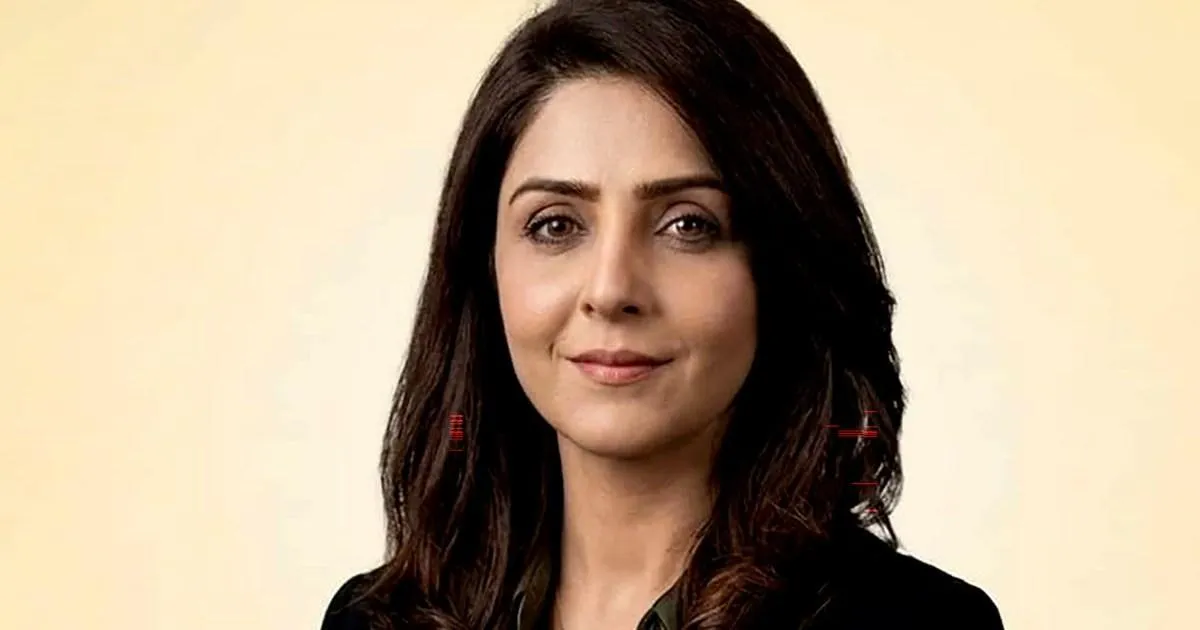
There are voices that become part of the quiet background of a nation, voices that people invite into their homes each day with the press of a button, trusting them to explain the complicated currents of the world. Rabia Ahsan, 41, was one of those voices. As a presenter at Pakistan’s Urdu-language news channel 92 News, she had spent years in the public eye, delivering news with the calm authority that made journalism feel like conversation, information feel like care. Her final hours, however, were not spent in a studio. She had posted a video to her YouTube channel, a discussion on the United States midterm elections, an act so thoroughly ordinary in the life of a journalist that no one could have known it would be her last. Hours later, her sister heard a gunshot from the family home in Rawalpindi, Pakistan. What she found in the bedroom would shatter any sense of safety: Rabia lying in a pool of blood, her husband reportedly still holding a pistol. First responders discovered that she had been shot below the neck and on the right side of her back. She was pronounced dead before her body could be taken for a post-mortem examination. This is the cold, brutal chronology of a life ending, but the facts alone cannot capture who she was or what she meant to those who loved her, to her daughters, her family, her colleagues, and the viewers who had welcomed her into their daily lives.
The investigation that followed only deepened the sense of anguish and confusion. Police recovered a firearm from the property and took Rabia’s husband, Ahsan Tahir, into custody after her brother, Khurram Ahmed, filed a complaint. According to local Pakistani outlets, authorities reported that Tahir had confessed to shooting his wife, but he insisted that the weapon had discharged accidentally. The Sun also reported that Tahir allegedly did not possess a permit for the firearm. The idea that a life can end because a gun in a home was handled carelessly is almost too painful to absorb, and it leaves behind a storm of impossible questions. Why was the weapon there? How could such a moment turn so violently wrong? And what did Rabia’s family endure in the split seconds between hearing a shot and finding her bleeding on the bedroom floor? Her two daughters were reportedly in the garden with their maternal grandmother at the time of the shooting. The image of children playing outside while their mother lay dying inside is haunting, a reminder that the aftermath of violence is never contained to a single room. It ripples outward, touching every person who loved the victim. Rabia’s brother later told ARY News that he had withdrawn his complaint amid the possibility that the shooting may have been accidental. That decision, made in the fog of grief, speaks to the unbearable complexity of such cases, where families are forced to navigate justice, suspicion, and the desire to preserve some shred of coherence. Rawalpindi police officer Hassan Mushtaq Sukherea promised that an impartial investigation would be ensured, but for those who knew Rabia, no investigation can bring her back.
What makes Rabia Ahsan’s death so profoundly human is the contrast between the vibrancy of her life and the silence that now surrounds her. She was not just a media personality; she was a working mother, a sister, a daughter, a woman who had carved out a place for herself in a field where women often have to fight twice as hard to be heard. Her final public appearance, a video about the US midterm elections, shows a journalist engaged with the world, not retreating from it. She was still doing the work, still explaining, still connecting ordinary Pakistanis to international events that might otherwise feel distant. In that way, she embodied the very best of journalism: a commitment to truth, a desire to make the world legible, a willingness to put oneself in the path of public conversation. And then, within hours, it was over. The same hands that had typed scripts and gestured toward graphics were gone. The voice that had guided audiences through breaking news was stilled. There is no indication that Rabia and her husband had a history of domestic disputes, which only makes the tragedy stranger and more painful. This was supposedly not a household marked by abuse or anger. It was a home with a garden, with children, with a grandmother nearby, with a woman who had just finished a day of work. And yet a gunshot turned that home into a crime scene. The ordinariness of the setting and the extraordinary finality of the act are what make this story so difficult to process.
In the aftermath, grief poured in from across the country, and from those in positions of power who recognized that more than one life had been lost. Pakistan’s First Lady, Aseefa Bhutto-Zardari, issued a statement through the official account of the President of Pakistan, expressing deep sadness over the killing of journalist Rabia Ahsan and strongly condemning the violence. She called for a thorough, impartial, and transparent investigation to establish the facts and to ensure that those responsible are held accountable. But her words carried an additional weight because they came so soon after another tragedy. In August, digital media executive Hina Javed was found dead at her home in Rawalpindi, with police saying that she had also been tortured. That case remained unsolved. The First Lady referenced it directly, saying, “Less than three months ago, Hina Javed was killed and the outcome of the investigation into her case is still awaited. Such incidents demand serious attention and accountability. Women must be able to live and work without fear for their lives.” Those words are not just a political statement; they are a mirror held up to a society that has too often failed to protect women, especially women in public life. Rabia Ahsan and Hina Javed are not statistics. They were real people with real voices, and their deaths are an indictment of a system that allows violence to go unpunished and questions to go unanswered.
But this loss is not only Pakistan’s to mourn. It is a story that resonates far beyond borders because it is part of a larger, painful pattern: women who speak, who lead, who work in public-facing roles all over the world continue to face threats, harassment, and violence. In Pakistan, women journalists have long navigated dangerous terrain, from the streets where they report to the homes where they should be safest. Rabia Ahsan’s death, like Hina Javed’s, is a reminder that safety is not guaranteed anywhere, not in a newsroom, not on a Zoom call, not in the bedroom of one’s own house. The two daughters who were playing in the garden when their mother was killed will now grow up in a world forever divided into before and after. They will have questions no one can answer. They will need care and support that no one can fully provide. And their loss is a public failure as much as a private one. Every time a society allows a woman’s murder to become just another headline, it tells other women that their lives are expendable. Every time an investigation stalls or a family withdraws a complaint because the system offers no hope, it tells survivors and future victims that justice is a luxury they cannot afford. The unsolved death of Hina Javed hangs over Rabia’s killing like a warning, a question that cannot be escaped: will this case too fade into silence?
To humanize Rabia Ahsan is to remember that she was not a story to be summarized but a soul who lived. She laughed, she worked, she worried, she hoped. She raised children, she pursued a career, she stood in front of cameras and spoke into microphones because she believed that information mattered. The video she uploaded just hours before her death was not a farewell; it was an offering to anyone who wanted to understand the world a little better. She did not know it would be her last act, and that is exactly what makes it so devastating. Life does not come with warning signs. A normal Tuesday can become the day a family falls apart. A husband can hold a gun and say it was an accident, and a wife can be gone before the sound of the shot fades. The tributes will be printed, the hashtags will trend for a day, the officials will promise investigations, and then the world will move on, as it always does. But for Rabia’s daughters, the news will never end. Their mother is not a headline. She is a voice they will never hear again, a face that will only exist in photographs and videos, a woman who should have been there to watch them grow, to celebrate their triumphs, to hold them during their failures. The greatest tribute anyone can offer Rabia Ahsan is not a statement or a moment of silence; it is a commitment to truth, to justice, to the difficult work of making the world safe for women who dare to speak. Her voice was silenced, but the questions her death raises must not be. Let them stay loud. Let them demand answers. Let them ensure that Rabia Ahsan is remembered not as a victim, but as the journalist, mother, and woman she truly was—and that her death becomes a turning point, the way forward to outlive injustice.