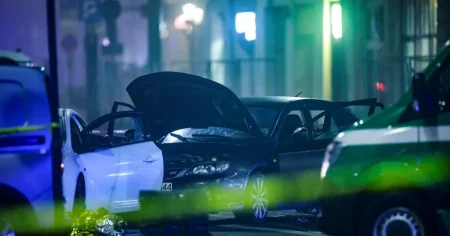

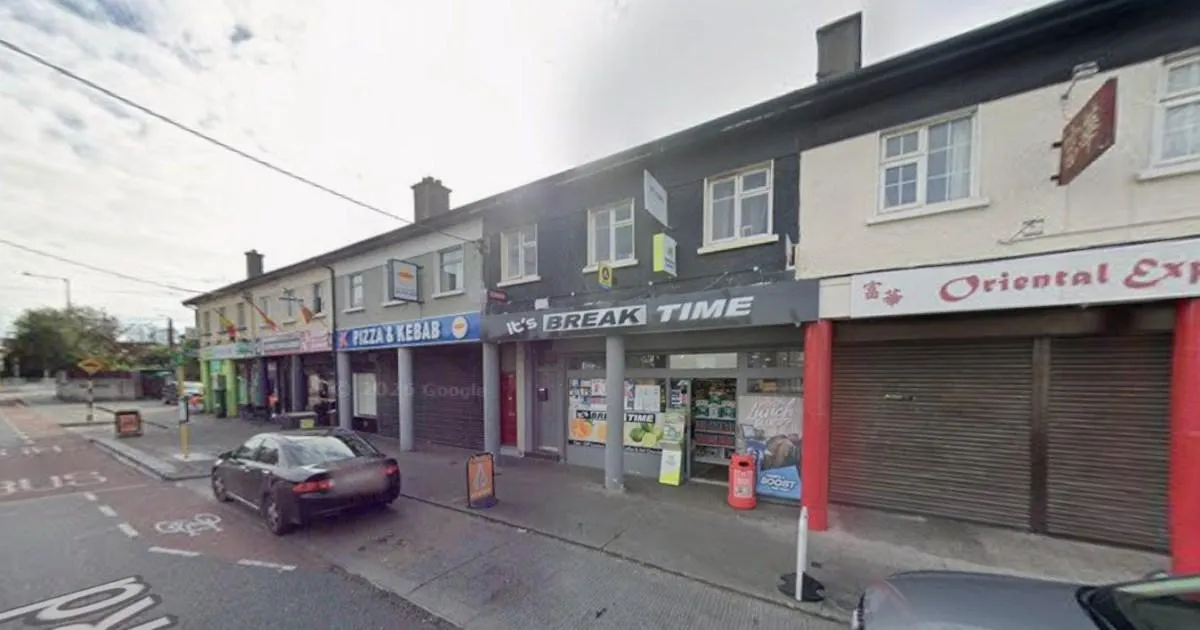
On a quiet weekday afternoon in Monkstown, a well-known suburb six miles south of Dublin city centre, the ordinary rhythm of a local street was shattered in an instant. Around 3pm, along Oliver Plunkett Road, a car left the road and mounted the footpath outside a row of shops that includes an off-licence. What followed was a scene of sirens, ambulances and stunned neighbours, because the vehicle had crashed into the very space where pedestrians are supposed to feel safest. Gardaí, Ireland’s police force, described it as a serious road traffic collision. Eight people were injured: seven pedestrians, all teenagers aged between fourteen and fifteen, and the driver, a woman in her forties. For a road that is more accustomed to residents running errands and children walking home from school, the impact was both physically violent and emotionally devastating. The shopfronts that had stood quietly for years suddenly became the backdrop for emergency workers trying to treat young people with injuries of varying degrees. Residents who earlier might have heard nothing more alarming than traffic and chatter were now hearing radios and urgent calls. It is the kind of event that feels impossible until it happens on your own street.
The ages of the injured make this story especially difficult to absorb. Seven teenagers, fourteen and fifteen years old, were on the pavement at 3pm on an ordinary day. They may have been coming from school, buying a snack, or simply walking with friends, wrapped in the easy conversation that defines adolescence. They were not doing anything reckless; they were simply occupying public space, enjoying an afternoon that should have gone unnoticed. Gardaí later confirmed that the seven juvenile pedestrians, all teenagers, and the driver, a woman in her forties, sustained varying degrees of injuries. All eight were taken to different hospitals for treatment. Those words, so carefully chosen by the authorities, cannot convey the chaos of the moment or the fear that gripped families when the first phone calls went out. Parents who had waved their children off that morning suddenly had to drop everything and race to hospitals scattered across the city. The woman driving the car may not have been a villain at all. Irish broadcaster RTÉ reported that she may have suffered a medical episode while behind the wheel. If that is true, then the accident is not a simple story of a car versus pedestrians, but a tragedy in which a person’s body betrayed her at the worst possible moment. It is impossible not to feel sympathy for her as well, for the guilt she may carry, even if she is entirely blameless.
The location of the crash adds another layer of grief. Oliver Plunkett Road is not a busy highway or an unfamiliar intersection; it is a local road in a residential area, lined with shops that serve the daily needs of the community. A row of premises that includes an off-licence is the kind of place where people stop for everyday purchases, where neighbours nod at each other, where children walk with their friends after school. At 3pm, the footpath could easily have been filled with people going about their business. The fact that the car mounted the pavement outside a row of shops makes the collision feel almost like an invasion of private life. Footpaths are supposed to be refuges. They are where people push prams, walk dogs, hold hands and wander in safe oblivion. When a car leaves the road and enters that space, it breaks an unspoken social contract. Monkstown is a place that prides itself on quiet neighbourhoods and strong local identity, and for that reason the emotional shock of the crash may be far wider than the physical area of the accident. People who did not see the collision will still feel its presence, passing that stretch of road and remembering exactly where the car came to rest. The community will be asking questions for weeks, not only about what happened, but about whether anything could have prevented it.
In the aftermath, the broader issue of road safety inevitably comes into focus. Pedestrians are the most defenceless participants in any traffic system, and when a vehicle mounts a footpath there is often little they can do to protect themselves. Investigations into crashes like this one are usually careful and methodical. Gardaí will examine the road surface, the condition of the car, the angle of the impact, CCTV footage and the medical history of the driver. They will want to know whether the collision was caused by a mechanical failure, a moment of inattention, or a sudden medical event such as a seizure, a blackout, or a heart problem. The possibility of a medical episode is especially painful because it reminds us that even the most responsible driver cannot fully control what happens if their body ceases to cooperate. Yet the lesson is not about blame. It is about vulnerability and design. Should traffic barriers or bollards be placed outside shops in residential areas? Should drivers be required to undergo more regular health checks? These are difficult, sometimes invasive questions, but they are worth asking after an accident that leaves teenagers in hospital. The human cost of such collisions is enormous, and the least that can be done is to learn whatever can be learned, so that another street, in another suburb, does not have to suffer the same shock.
For now, however, the immediate work is not investigation but recovery. The eight people injured in the crash have been taken to different hospitals, where doctors and nurses will do their best to treat broken bones, wounds and the hidden trauma that does not always show up on scans. For the families of the seven teenagers, the next hours and days will be filled with waiting. There is no way to rush healing, and no way to erase the memory of seeing a child placed into an ambulance. Schools in the area will also feel the impact. Teachers will need to brace themselves for anxious students, for difficult conversations and for the sudden, unwanted awareness that something terrible can happen in a familiar place. Counsellors may be brought in to help young people process what they saw or heard. The driver, too, will need support if she wakes up to learn what happened. People who have medical episodes while driving often struggle with enormous guilt, even when there was no way to prevent the accident. Community will matter greatly in the days ahead. Neighbours may not know exactly what to say, but they will know how to offer meals, rides, a quiet place to sit and the unmistakable message that no one has to carry this alone. In Ireland, communities often respond to tragedy with a powerful, understated kindness, and Monkstown will no doubt find strength in that tradition.
As Gardaí continue to investigate the circumstances surrounding the collision, the full story may take weeks to emerge. It will involve careful technical analysis, medical reports and interviews with witnesses. But the deeper story is already known. It is about a group of teenagers whose ordinary afternoon was suddenly changed, a woman who may have lost control of her own body, and a community left to make sense of an event that should never have happened. It is also about the fragility of the world we walk through every day, a world in which a car can slip from the road and land on a footpath where children stand. The crash on Oliver Plunkett Road will not easily fade from memory. But neither will the responses of the emergency workers, the hospital staff and the neighbours who reached out to help. In the end, the best answer to tragedy is compassion: for the seven young people beginning the long process of healing, for the driver who may be living with her own suffering, and for everyone who was touched by the sound of impact on that quiet afternoon. Recovery will be slow, but it will come, and with it the hope that the same street can once again be a place of ordinary, safe, everyday life.