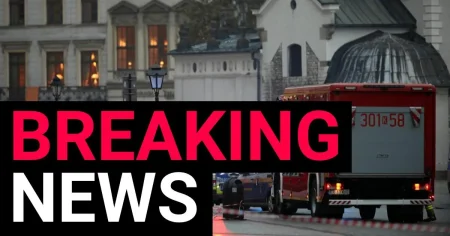


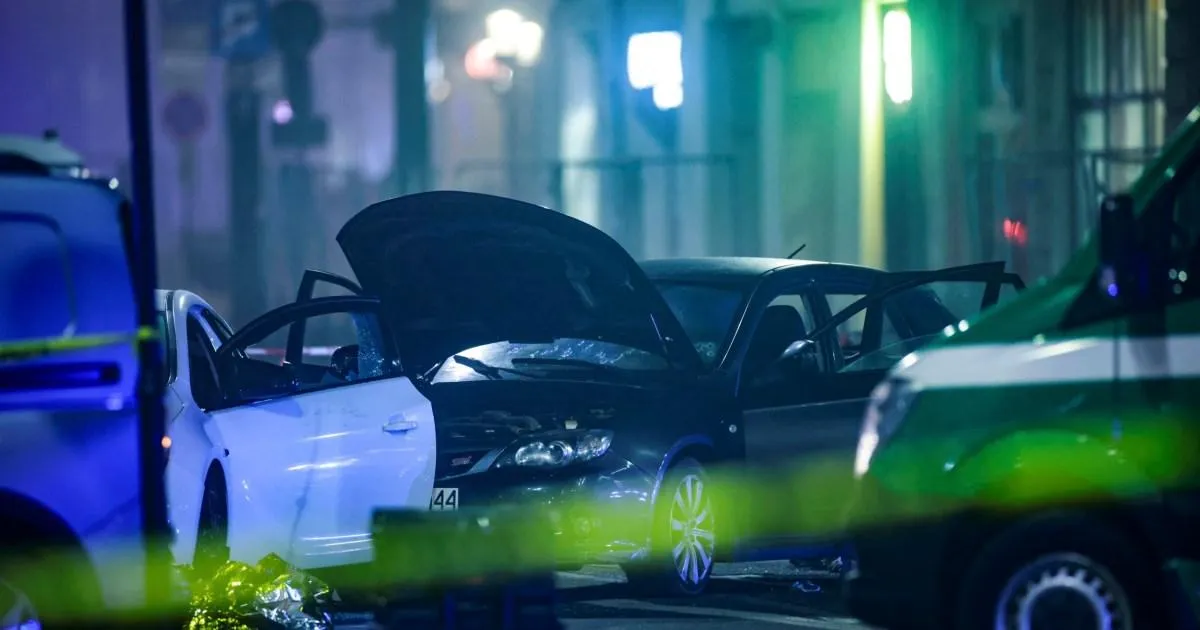
The vibrant heart of Krakow, a place usually filled with the laughter of tourists and the hurried steps of locals, became the stage for an unspeakable tragedy on a quiet Saturday afternoon. The cheerful chaos of the Main Square was shattered by the sharp, terrifying crack of gunfire, sending hundreds scrambling for cover in a desperate panic. What began as a typical weekend devolved into a nightmare, leaving six people dead, sixteen wounded, and a community, along with the entire world, reeling from the shock. As the initial terror subsided, a grim reality set in: among the victims were four women and two men, a diverse group that included Polish nationals and foreign visitors. A British citizen was among those killed, with another British national counted among the injured, stretching the tendrils of this tragedy across borders and into the living rooms of families in the UK, Portugal, Russia, Germany, and Austria. The sheer randomness of the violence, perpetrated in one of Europe’s most beloved public spaces, made the attack feel deeply personal, a violation of a sanctuary of culture and history. The echoing silence after the chaos was filled only with the wails of the wounded and the frantic calls of emergency services, painting a scene of pure horror that no one present would ever be able to forget.
The alleged perpetrator, a 24-year-old man identified only as Michal O., was quickly apprehended, but the investigation soon uncovered an even deeper layer of horror that extended beyond the cobblestones of the main square. When authorities searched his family home in Ostrowiec Swietokrzyski, a city approximately 93 miles away, they were met with a chilling discovery: the bodies of his own sister, mother, and father. This revelation transformed the attack from a public act of violence into a profoundly personal one, suggesting a spiral of rage and despair that began at home before erupting into the public sphere. The killing of his family painted a picture of a deeply disturbed individual, one whose violence was not just ideological but also intimate and familial. The added detail that he had used an AR-15-style rifle, a civilian version of a military-grade weapon, underscored the chilling calculation of his attack. His attempt to escape in a car was thwarted, and he was arrested on a nearby street after an exchange of gunfire with police that injured two officers. The suspect himself, critically wounded in the confrontation, was transported to a hospital, clinging to life, only to succumb to his injuries the following morning, a fact confirmed by the Malopolska Police. This final turn of events meant that the man who had caused such immense pain would never face a courtroom, leaving many questions about his motives unanswered and denying a sense of closure to the grieving families. The confirmation of his death brought a strange and hollow end to a weekend of violence, closing a chapter on the perpetrator while leaving the victims’ stories open with grief.
In the wake of the attack, authorities and acquaintances began to piece together a portrait of the man behind the massacre, a figure described as an ‘aloof’ individual who was fascinated by far-right ideologies. He was a ghost in his own community, someone who ‘never spoke’ and was known for always donning black clothes. A local, speaking to the tabloid Fakt, described him as ‘a little strange,’ a man who kept his hood pulled over his head and never engaged in more than a fleeting greeting. This description paints a picture of an isolated, radicalized individual, one who may have been nursing a festering resentment before erupting into catastrophic violence. The report of his fascination with far-right ideologies provides a potential, albeit horrifying, context for the rampage, suggesting the attack may have been a form of ideological terrorism as much as an act of personal violence. The contradiction between the seeming quietness of his daily life and the ferocity of his final actions is a chilling reminder of how radicalization can fester unseen in plain sight. The police, while confirming his death, have remained tight-lipped about the full extent of his motivations, leaving a void that will likely be filled with speculation and debate. The details of his isolated existence serve as a stark warning about the dangers of extremism, particularly when combined with access to military-style weaponry, and the tragic consequences that can unfold when a troubled mind meets a violent ideology.
The immediate aftermath of the shooting was a maelstrom of fear, confusion, and bravery. In the mayhem, countless stories of heroism emerged—of strangers pulling the wounded to safety, of police officers storming toward the gunfire, and of everyday people shielding each other from harm. A British couple, who were vacationing in Krakow at the time, recalled the terrifying moments of the attack, describing how they saw ‘250 people running’ in a frantic stampede after the first shots rang out. Their account, echoed by many others, illustrated the sheer pandemonium that gripped the square, as a peaceful afternoon dissolved into a primal struggle for survival. The iconic Main Square, a UNESCO World Heritage site known for its Renaissance architecture and vibrant street life, was transformed into a terrifying labyrinth of panic. The memories of that day will be a lifelong source of trauma for survivors, indelibly linked to the beautiful but now forever-changed backdrop of the city. While the motive remains ‘unclear’ to officials, the stories of the survivors highlight the profound, existential shock that such acts of violence inflict on ordinary life, reminding us that safety is often an illusion. The courage shown in those terrifying moments, however, serves as a powerful counterpoint to the hatred that triggered the event, showcasing a remarkable resilience in the face of absolute terror.
As the sun set on the blood-stained square, Krakow, a city that has survived centuries of war and occupation, began the arduous, heartbreaking process of mourning. The city’s residents, known for their warmth and resilience, were left to grapple with an attack that felt both alien and terrifyingly modern. The names of the six public victims, now joined in death by the three family members killed earlier, represent a tragic tapestry of lives cut short by a single, destructive force. While authorities confirmed the nationalities of the victims, the true scope of the loss was best measured in the shattered families and communities left behind, both in Poland and in Britain, where the news of a citizen’s death prompted a wave of national mourning and diplomatic condolences. For the 16 injured, their physical wounds may heal, but the psychological scars will remain a permanent fixture of their lives. The investigation, now focusing on the reasons why Michal O. decided on this fateful day, is a quest for understanding in a senseless act, a need to find patterns in chaos to reassure a grieving public that this can never happen again. The city prepared to hold vigils, not just for the victims, but for the community’s own wounded psyche, gathering together in the very square where the attack happened to reclaim it as a place of life and unity.
Ultimately, the Krakow attack is a tragic story with no winners, only a profound sense of loss and a litany of unresolved questions. The death of the perpetrator in the hospital this morning brings a sense of finality to the manhunt but leaves behind a void where accountability and explanation should be. He will never be tried; his motives will only be gleaned from the fragments of his life left behind—his obsession with far-right ideology, his aloofness, his black clothes. The families of the nine victims are left not with answers, but with an interminable, devastating absence. In the sprawling city of Ostrowiec Swietokrzyski, a home was discovered with three bodies, a private tragedy that preceded the public one, and a stark reminder that the roots of this violence were sown in a domestic setting. For the international community, this attack is a grim reminder that terrorism and mass violence are not confined to any single region or ideology; they are a global contagion that can strike anywhere, at any time. As Krakow begins to rebuild its sense of normalcy, the world watches with a heavy heart, holding its breath and wondering when the next senseless act of violence will shatter another peaceful day. The only enduring legacy of this tragedy may be the stories of the victims and the resilience of the survivors, who must now carry the weight of this memory forward.