



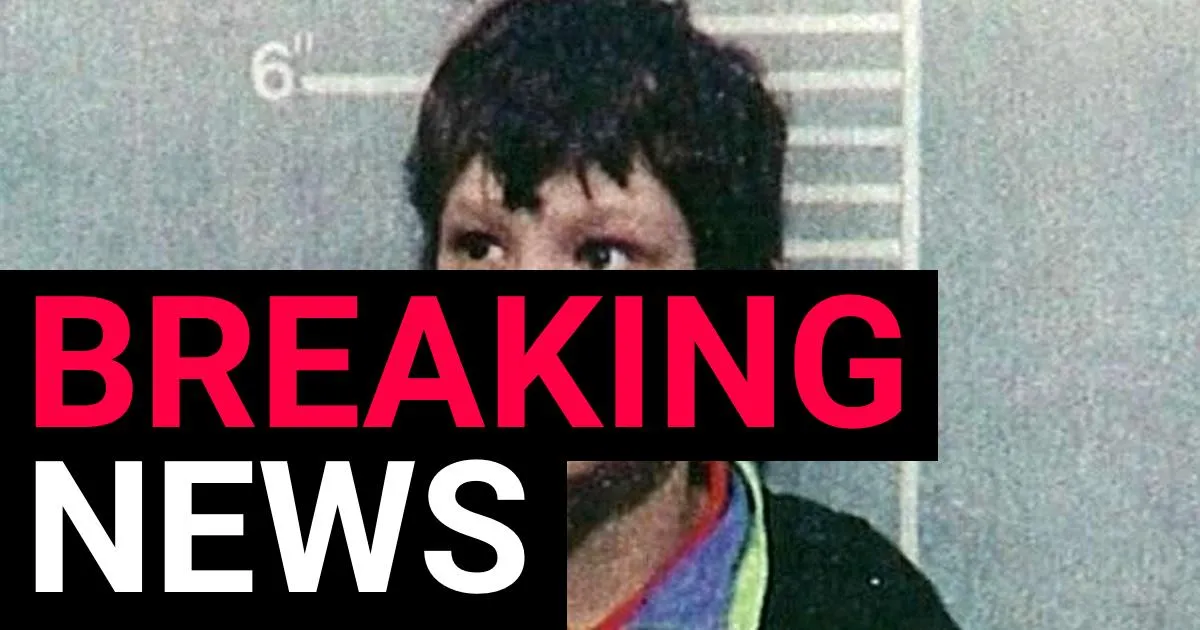
Jon Venables, one of the two men convicted as children for the brutal murder of two-year-old James Bulger, has once again lost his fight for freedom. In a decision that will reverberate through the lives of all those touched by one of Britain’s most harrowing crimes, the Parole Board ruled that he is not yet suitable for release. What makes this latest development particularly striking is that Venables himself acknowledged this reality. At the very outset of his private hearing, he submitted an opening statement saying he accepted the need to undertake further offending work in custody and was not seeking release. This is not the posture of a man confidently insisting on his innocence or demanding immediate liberty; it is the weary recognition of someone who understands, perhaps better than anyone, that the damage he has done—and the patterns he has repeated—have made freedom an impossible prospect for now. For the public, and especially for Denise Fergus, James’s mother, this is another painful chapter in a decades-long ordeal that has never truly ended. The case remains a dark landmark in modern British history, a reminder that some crimes leave wounds so deep that no passage of time can fully heal them.
The Parole Board’s summary of its findings paints a nuanced and deeply troubling picture. The panel considered evidence from probation officers based both inside the prison and in the community, as well as from three psychologists and a psychiatrist. Notably, all but one of these professionals concluded that Venables should remain in custody. The panel also heard a victim personal statement, which “clearly conveyed the devastating impact” of Venables’ crime and the continuing effects of his offending. For Denise Fergus, this was yet another moment of reliving a horror no parent should ever endure. The panel’s concerns were specific and serious: they questioned how openly and honestly Venables would engage with probation staff if he were released, and they identified a clear need for further work in custody to address his sexual interests. At the same time, the summary acknowledged that Venables articulated “protracted and extreme remorse” for his crime, and that professionals assessed this remorse as genuine and sincere. This is the agonizing paradox at the heart of the case: a man who appears to feel real regret for an unspeakable act, yet whose subsequent behavior has repeatedly demonstrated that he remains a risk. Remorse, the panel seemed to say, is necessary but not sufficient. It cannot, by itself, guarantee safety.
To understand the weight of this decision, one must return to the original crime that shocked the world. In February 1993, Venables and Robert Thompson, both just ten years old, led two-year-old James Bulger away from the New Strand Shopping Centre in Bootle, Merseyside, while his mother’s attention was briefly turned away. They walked him for roughly two and a half miles to a railway line in Walton, where they tortured and killed him in a manner so brutal that the details remain almost unbearable to revisit. The two boys were eventually convicted of murder, making them the youngest convicted killers in modern British history. They were sentenced to indefinite detention, and after serving eight years, they were released in 2001 on license, given new lifelong identities and protected by a court injunction that made it illegal to reveal their names or whereabouts. The idea was to give them a chance at a new life, away from the shadow of their past. For Robert Thompson, that chance appears to have been taken. He has maintained a quiet, anonymous existence, has not reoffended, and has largely faded from public consciousness. For Jon Venables, the story has been radically different. His release did not mark a new beginning; it marked the start of a long, grim cycle of reoffending, recall, and repeated hearings.
Venables was first returned to prison in February 2010, after indecent images of children were found on his computer. He was released on parole in 2013, but just four years later, in July 2017, he was sentenced to 40 months in prison after more indecent images were discovered, along with a prohibited manual. Since then, he has made several attempts to secure parole—in 2020, in 2023, and in various other hearings—but every single bid has been rejected. Panels have repeatedly ruled that he still poses a significant risk to the public, particularly to children. This is not a matter of a single lapse or a momentary failure; it is a pattern. The fact that a man convicted of such a terrible crime, who has since twice been caught with child sexual abuse material, continues to be considered for release is itself a source of deep anxiety for many people. It raises uncomfortable questions about the limits of rehabilitation, the nature of risk, and the ability of the justice system to protect the vulnerable. For Denise Fergus, these questions are not abstract. She has spent more than three decades living with the aftermath of her son’s murder, and she has watched as one of his killers repeatedly failed to stay on the right side of the law.
Denise Fergus has become a powerful and tireless advocate for reform, speaking openly about her grief and demanding changes to the parole system, particularly for serious young offenders. Earlier this year, after decades of fighting to keep Venables locked up, she made a new demand: that his latest parole hearing be held in public. Her reasoning was straightforward—she believed that transparency would combat misinformation and that the public had a right to see how such decisions were made. She also spoke of the “retraumatising impact” that the case continues to have on her. Every hearing, every appeal, every news story drags her back to the worst moment of her life. But the Parole Board rejected her request. In a decision that highlights the impossible balancing act at the heart of this case, they argued that a public hearing would make it “very difficult for Jon Venables to give evidence.” They added that he would be “listened to by people who are seeking to get information so that they can kill him.” It is a chilling statement, but it is also a reminder that Venables, whatever he has done, is still a human being whose safety must be considered by the state. This creates an agonizing tension between the rights of a grieving mother, the public’s desire for justice and transparency, and the state’s duty to protect even those who have committed horrific acts.
In the end, the latest decision offers no closure, only continuation. Jon Venables remains behind bars, his future uncertain, his freedom indefinitely suspended. Denise Fergus remains without her son, her grief undiminished, her campaign ongoing. The rest of us are left to grapple with a case that defies easy answers. There is genuine remorse, yet there is also repeated offending. There is a man who was a child when he committed an unthinkable crime, yet who has since proven, as an adult, that he cannot be trusted around the most vulnerable members of society. There is a mother who has suffered beyond measure, yet whose fight for justice sometimes collides with the cold logic of legal process and risk assessment. What the parole board’s decision makes clear is that Venables is not ready to be free, and that more work needs to be done. Whether that work can ever be completed is an open question. Some will argue that he should never be released, that the risk is simply too great, and that the protection of children must always come first. Others will point to the principle of rehabilitation, the possibility of change, and the need to avoid punishing the same crime forever. There are no comfortable positions here. All that can be said with certainty is that this case continues to haunt the national conscience, that it has caused unimaginable pain to one family, and that the man at its center remains a figure of profound tragedy and danger. For now, he stays where he is, and the story continues—sad, complex, and unresolved.