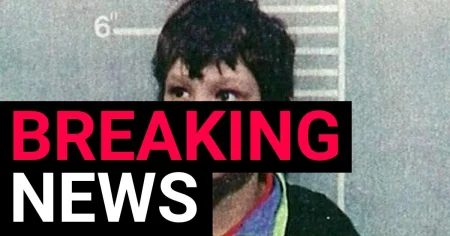




In a courtroom in Northampton, a 20-year-old man named Evan Bailey stood before a magistrate and learned that his ordinary freedoms would now be tightly restricted. Bailey, by all appearances a young adult just beginning his life, had been at the center of growing concern among police for some time. The concern was not simply about youthful mistakes or minor missteps; it was about a pattern of behavior that placed vulnerable children at risk. The court heard that Bailey had been flagged for repeated and troubling contact with young, vulnerable minors, and that this contact had escalated from worrying to dangerous. Perhaps the most striking detail to emerge was that Bailey had tattooed a child under the age of 18. That act, in itself, was a stark symbol of the inappropriate boundary crossing that had made authorities so uneasy. For the families involved, and for the officers who had been watching him, this was not a theoretical risk but a lived, frightening reality. The result was a Criminal Behaviour Order, issued on October 27, which now bans Bailey from having any contact whatsoever with anyone under 18. It is a legal boundary designed to protect those who cannot always protect themselves, and it signals that the community and the courts are paying attention. The order is not merely a piece of paper; it carries real weight, real consequences, and a clear message: the safety of children comes first.
Behind the formal legal language lies a more human story, one that involves a network of worry, observation, and intervention. Police had reported “significant concerns” about Bailey’s interactions with minors long before the court date. They described anti-social behaviour that repeatedly drew vulnerable young people into his orbit. More troublingly, he was linked with drug-related offences and had allegedly encouraged children to go missing and become involved in criminal activity. This is not the language of minor mischief; it is the language of exploitation, of adults pulling young people into dangerous situations that can alter the course of their lives. Every child who goes missing is a child in crisis, and the idea that someone might actively encourage that crisis is deeply unsettling. The vulnerable children in question were not abstract statistics; they were human beings with families, hopes, and futures that had not yet unfolded. Bailey, himself only 20, was still young, and that too complicates the picture. But his youth does not erase the harm of his alleged actions, nor does it reduce the need to protect younger and more vulnerable people. The court’s decision reflects a growing recognition that safeguarding children sometimes requires tough, clear boundaries, even when the person being restricted is barely out of childhood themselves.
The Criminal Behaviour Order itself is detailed and stringent, leaving little room for ambiguity. Bailey is banned from meeting or contacting anyone under the age of 18, and he cannot invite them to his home or any other premises where he is staying. There are narrow exceptions for family members and communications strictly required for work, but beyond those, the restriction is absolute. Importantly, the ban applies not only to direct contact but also to communication through third parties. That means he cannot ask a friend, a relative, or anyone else to pass along a message, arrange a meeting, or facilitate contact with a minor. This extra layer of protection is crucial because it closes loopholes that might otherwise be exploited. The court was clearly determined to make the order as airtight as possible. Bailey is also required to allow officers to search his home and his mobile phone whenever they need to check that he is following the rules. This is a significant intrusion into his privacy, but it is a deliberate one, designed to ensure compliance and to give authorities the tools they need to intervene quickly if something goes wrong. The order transforms concern into action, turning a vague sense of unease into a concrete set of legally enforceable expectations.
Constable Adam Perch, speaking after the hearing, made the purpose of the order unmistakably clear. “Protecting children and vulnerable young people is one of our highest priorities,” he said, “and we will use every tool available to us to safeguard those who may be at risk of exploitation.” His words reflect the quiet determination of those who work on the front lines of safeguarding, the officers, social workers, and community members who notice when something seems wrong and refuse to look away. Perch explained that the evidence presented to the court demonstrated significant concerns about Bailey’s contact with young people and the impact his behaviour was having on vulnerable members of the community. The order, he said, places robust restrictions on Bailey and gives officers additional powers to intervene where necessary. He also stressed that the police were publicizing the order deliberately, so that members of the public would understand the conditions imposed and could help identify any breaches. This is a reminder that safeguarding is not only the job of the police; it is a shared responsibility. Neighbors, teachers, parents, and ordinary citizens all have eyes and ears that can make a difference. By putting the order into the public sphere, the police are effectively asking the community to become partners in protection, to report anything that feels wrong, and to help ensure that Bailey respects the boundaries set by the court.
If Bailey breaches any of the conditions, he faces further arrest and prosecution. This is not an empty threat; breaches of Criminal Behaviour Orders are taken seriously, and courts have shown that they will enforce them with real consequences. The order is designed to be a deterrent, but it is also a safety net. Every time Bailey hands over his phone for inspection, every time he has to think twice about who he contacts and why, the order is doing its work. It creates a pause, a moment of reflection, and a clear consequence for crossing the line. The wider context here is the growing awareness of how children can be exploited by adults who groom them, manipulate them, or draw them into criminal activity. It is a pattern that happens across the country, often in plain sight, and it thrives on silence and secrecy. Orders like this one are a way of breaking that silence. They send a message that communities will not tolerate behavior that puts children at risk, and that the vulnerability of the young will be met with vigilance rather than indifference. At the same time, there is an underlying hope in these measures: the hope that early intervention and legal boundaries can prevent worse harm, stop exploitation before it becomes entrenched, and give children the chance to step back from danger before it is too late.
For the community, the message is simple but powerful: if you see something, say something. The police have encouraged anyone who sees Bailey in the company of a young person in circumstances that may breach the order to report it to Northamptonshire Police. This is not about encouraging suspicion or fear; it is about caring enough to act. The story of Evan Bailey is not just a story about one man and one court order. It is a story about how a community comes together to protect its most vulnerable members, how laws are used not just to punish but to prevent, and how ordinary people can play a role in keeping children safe. It is also a human story, filled with difficult decisions and complicated lives. Bailey is a young man, and the order will shape his life for years to come. But the children he was accused of drawing into danger matter too, and their futures are worth protecting. In the end, the Criminal Behaviour Order is a promise: a promise that the safety of children outweighs the comfort of adults, that vulnerability will be met with protection, and that those who cross the line will be held accountable. It is a reminder that safeguarding is not an abstract ideal but a daily, practical commitment, carried out in courtrooms, police stations, and neighborhoods, by people who refuse to look away. And for anyone who might be tempted to dismiss such orders as excessive bureaucracy, the faces of the children involved offer a quiet, powerful answer: they are worth every precaution, every restriction, and every search.