


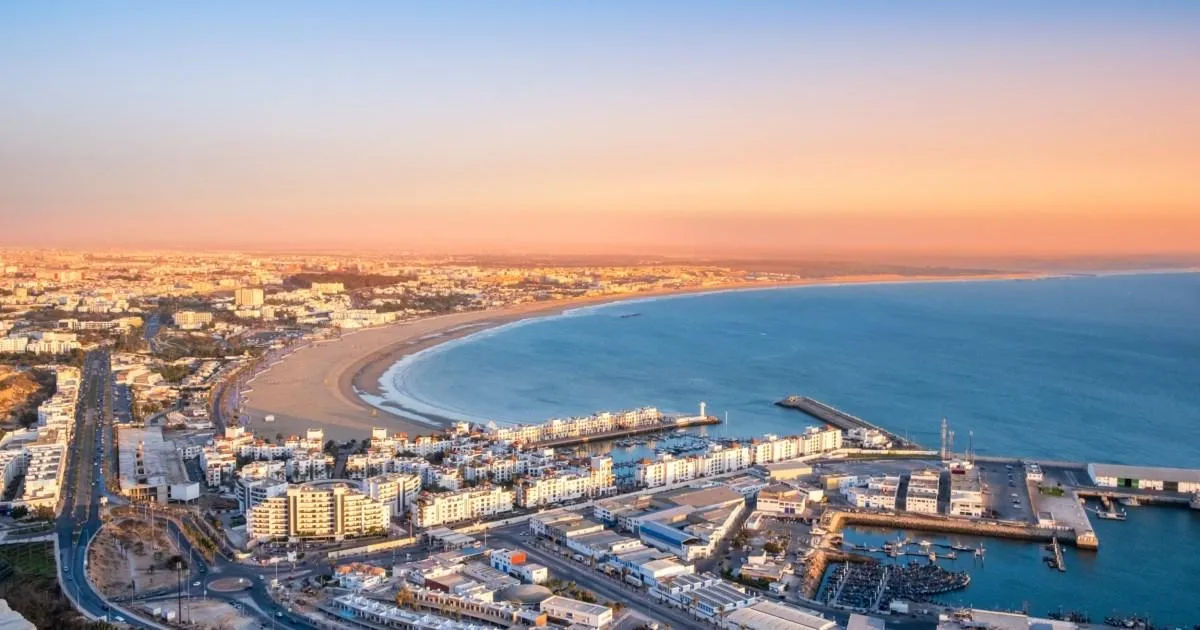
The sun was setting over Agadir’s beachfront on Monday evening when emergency services were called to a major resort hotel. Inside one of the rooms, they found two British tourists unconscious. Despite urgent efforts, both were pronounced dead at the scene. Another two tourists were rushed to the city’s university hospital in a reportedly critical condition, leaving doctors fighting to save them and families thousands of miles away clinging to hope. The news has sent a ripple of shock through the quiet coastal city, known for its golden sands and warm winters, and through communities back in Britain, where loved ones have been left waiting by the phone for answers. For those who knew the two people who died, the holiday that was meant to be a happy escape has become an unbearable tragedy. The Foreign Office confirmed that it was aware of the deaths and said: “We are aware of the deaths of two British nationals in Morocco. We are supporting their families and are in contact with the local authorities.” That short statement, delivered in careful diplomatic language, cannot begin to capture the scale of the heartbreak behind it. A mother and father may never hear their child’s voice again. A friend may never send another message. A life that had plans, dreams, and people who loved them has been cut short in a hotel room far from home. An inquiry has now been opened to establish exactly what happened, but no official cause of death has been announced. Until then, the families are left in a painful limbo, trying to process the impossible while the world moves on around them.
While the investigation begins, Moroccan authorities have reportedly carried out an inspection of the hotel to assess its accommodation standards and safety procedures. That step suggests that officials are treating the case with seriousness, but it also raises uncomfortable questions for anyone who has ever stayed in a hotel and trusted that they would be safe. The resort, set in a popular tourist area of Agadir, had been just another place of rest for travellers looking to escape the grey British weather. Now it is the scene of a tragedy that will be remembered for a long time. The two surviving tourists remain in hospital, and their conditions are said to be critical. Every update from the city will be watched closely by their families, who face the agony of not knowing whether their loved ones will recover. Meanwhile, the Foreign Office is offering consular assistance, helping with logistics, communicating with local officials, and providing support to the families of the dead. But no amount of official support can ease the particular grief that comes from losing someone suddenly, in a foreign country, under circumstances that are still unclear. There is something uniquely painful about a death abroad. The distance makes everything harder: the paperwork, the travel, the language, the waiting. Families are forced to imagine their loved one alone in a place they may never have visited themselves. Agadir is a city that welcomes millions of visitors each year, and for most it offers nothing but good memories. But for two British families, it will forever be the place where their world fell apart. The inquiry will seek to answer how and why this happened, and until it does, every theory, every rumour, and every news report will carry an extra weight. In the meantime, the most human response is to hold space for the grief, to resist the urge to speculate, and to remember that behind every official statement are real people whose lives have been changed forever.
This latest tragedy comes less than a month after another British woman was found dead in a hotel room in the same city. Clare Mitchell, 31, had travelled to Agadir for a four-day break, flying from Manchester and arriving the day before her death. She was a university student studying accountancy, someone who had returned to education to build a new future for herself. Her family described her as “the most unique person” and “one of a kind” — the kind of phrases that are often used in obituaries, but here they came from a place of raw, aching love. Clare’s death has already devastated those who knew her, and the news that another pair of British tourists have now died in the same city will only deepen that grief. For her family, the timing is unbearably cruel. They had barely begun to mourn Clare when the headlines returned to Agadir, reminding them of the place where their own loss occurred. The coincidence of two separate tragedies in such a short time in the same tourist destination raises natural concerns. Are these incidents connected? Could they have been prevented? Is there a broader danger for British travellers in the area? At this stage, there are no answers, and it is important not to speculate. But the families of those involved deserve honesty and thoroughness, not silence. Clare’s death, like the latest one, remains under investigation. Her family is not only dealing with grief but also with the practical and financial burden of bringing her body home. In the midst of their sorrow, they have turned to the kindness of strangers, launching a fundraiser to cover the costs of repatriation. It is a heartbreaking reminder that even in the digital age, death abroad comes with a terrible price tag, and that no family should have to add financial worry to the weight of their loss.
In a post on the fundraiser page, Clare’s sister, Angel Davies, wrote with a rawness that stopped people in their tracks. “Hi, as most of you know my mum recently had the dreaded knock on the door from the police that no parent ever wishes to hear, that unfortunately Clare had passed away.” Those words paint a picture of a moment that no family should have to experience: the sudden appearance of police officers at the door, the confusion, the terror, the collapse of everything familiar. Angel went on to speak about the deeper issue behind her sister’s death. “Mental health is the biggest killer it doesn’t care what you have who you are or what you have to look forward too and unfortunately now we have to plan the funeral of the tattooed diva, biggest drama queen and one of a kind most definitely.” In that one sentence, she captured both a devastating truth and a loving tribute. Clare was not just a statistic or a case file. She was a woman with tattoos, with attitude, with a personality that filled rooms and hearts. She was a sister, a daughter, a friend, a student with a future. And she was struggling in ways that those around her may not have fully understood. Mental illness can be invisible, relentless, and indifferent to the plans and promises of a life. Angel’s decision to speak openly about mental health in the midst of her grief is an act of extraordinary bravery. It also serves as a reminder to all of us to check on the people we love, to take their pain seriously, and to break the silence that surrounds so much suffering. The fundraiser she launched is not just about covering funeral costs. It is about bringing Clare home, giving her a proper goodbye, and letting her family gather in one place to honour a life that ended far too soon. Every donation, every share, every message of support is a small thread of comfort in a vast sea of pain.
The deaths of British tourists abroad are more common than many people realise, but each one is a private catastrophe for the people left behind. When the news breaks, the details are reported for a day or two, then the world moves on. But for the families, time stops. They are left to make phone calls to embassies, to arrange flights, to identify bodies, to plan funerals, and to answer the same agonising question over and over again: How did this happen? The latest incident in Agadir also raises uncomfortable questions about the safety and accountability of holiday accommodation. A hotel room is supposed to be a place of rest, a sanctuary at the end of a day of exploring. The thought that something in that room could have contributed to the deaths of two healthy travellers is deeply unsettling. That is why the reported inspection of the hotel’s accommodation standards and safety procedures is so important. Tourists deserve to know that the places they stay in are safe, and that proper safeguards are in place, whether against fires, carbon monoxide, faulty electrical wiring, or any other hidden danger. At the same time, the tragedy of Clare Mitchell reminds us that not every death abroad is caused by the environment. Sometimes the danger travels with us, carried quietly inside the mind. Clare’s sister spoke of mental health as the biggest killer, and she is not wrong. Depression, anxiety, and other mental health conditions claim lives across borders and social classes. They do not pause for holidays or celebrations. They can turn a bright day in a Moroccan coastal city into a dark, lonely nightmare. But Clare was not alone in the world. She had a family who loved her, who now describe her as a tattooed diva and a drama queen with affection and pride. Her memory will live on in their stories, their laughter, and their tears. In the days ahead, both investigations will continue, and hopefully the truth will emerge. But the outcome of those inquiries will not bring anyone back. What matters now is compassion: for the two British tourists who died this week, for the two still fighting for their lives, for Clare Mitchell, and for every family sitting in shock, waiting for answers that may never fully come.
At times like this, the only honest response is humility. We do not know what happened in that hotel room in Agadir. We do not know what led to the deaths of the two British tourists, nor do we know the condition of the two survivors. We do not know all the details of Clare Mitchell’s final days, or what was going through her mind when she arrived in Morocco on a four-day break. What we do know is that three families are now living with a pain that no parent, sibling, or friend should ever have to endure. And another two families are waiting by a hospital bed, hoping for a miracle. In a world that often feels numb to tragedy, it is easy to scroll past headlines like this one. But behind every headline is a human being. Someone who laughed, who cried, who had plans for the weekend, who loved and was loved. The two British tourists who died in Agadir were not just “two tourists.” They were individuals with names, faces, histories, and futures that will now never unfold. Clare Mitchell was not just “a British woman found dead in a hotel room.” She was a sister, a daughter, a student, a one-of-a-kind personality whose family is now trying to raise money to bring her home. The Foreign Office’s statement — “We are supporting their families and are in contact with the local authorities” — is a reminder that even in the most tragic circumstances, there is a system of care in place. But systems cannot hug a grieving mother. They cannot hold a sister’s hand as she writes a fundraiser page through tears. Only people can do that. So perhaps the most important response to this news is to reach out to the people in our own lives. To send the message we have been putting off. To ask the question that feels awkward. To listen without judgment. To remember that mental health is a killer, and that love is not always enough — but it is never wasted. As the investigations continue, our thoughts should remain with the families and friends of everyone affected. May the two survivors recover. May the dead be given the dignity they deserve. And may the truth, when it comes, bring some measure of peace to those left behind.