


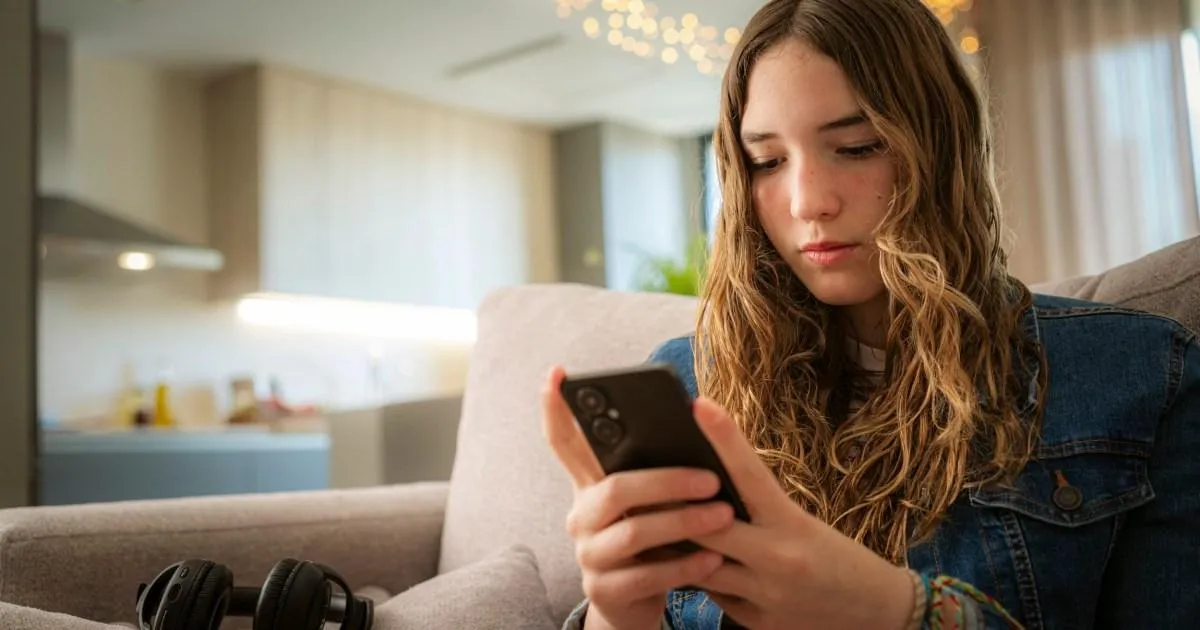
Imagine a parent glancing over a teenager’s shoulder and seeing them scrolling through what looks like an ordinary online shop—maybe a pair of second-hand trainers, a vintage dress, or a discounted phone. For years, websites like eBay, Vinted, Depop, and Facebook Marketplace have felt like the safe, mundane corners of the internet: places where you go to find a bargain, not to meet strangers. That sense of safety has now been shaken. The UK government, led by Culture Secretary Lisa Nandy, has announced that the forthcoming ban on social media for under-16s will be expanded to cover these online marketplaces as well. The reason is sobering: alongside the legitimate trading of used clothes and gadgets, these platforms have become another hunting ground for adults seeking to groom children. Their built-in messaging functions, meant to help buyers and sellers negotiate prices and arrange pick-ups, can be quietly weaponised by predators who use the guise of a transaction to strike up conversations with minors. The announcement has left many parents re-evaluating what they once considered harmless, and many young people confused about yet another digital door being locked.
The heart of the problem lies in the fact that marketplaces were never designed to be social networks, yet they have evolved to include all the tools of one. A user can browse a seller’s profile, send a direct message, share photographs, and even build a reputation through reviews and ratings. For a child, the line between buying an item and being befriended by a stranger can blur almost imperceptibly. Charities have been raising the alarm for some time. In evidence submitted to Parliament, The Children’s Society explained that groomers are strategic: they choose the platforms that give them the easiest access to the children they are targeting, and they adapt their approach depending on the demographic. For instance, a child from a family struggling financially might be more likely to be approached on Vinted, where the promise of a free or heavily discounted item can feel irresistible. A predator might offer to pay for something, then ask for a photograph “to make sure it fits,” or promise a gift in exchange for a picture. What begins as a transaction becomes a manipulation, and what seems like a kind gesture becomes a demand. This is not a hypothetical fear; it is a pattern documented by child safety experts. The slang of the marketplace—sellers, buyers, listings, bundles—masks a darker human story in which vulnerable children are conditioned to believe that their bodies can be traded.
The scale of the issue is more significant than many would expect. According to research prepared for Ofcom, nearly one in five children aged between eight and fourteen uses eBay at least once a month, and fifteen percent use Vinted monthly. These are not tiny numbers, and they reveal just how embedded online shopping has become in childhood culture. Children are browsing, buying, and sometimes selling—clearing out old toys to earn pocket money, or hunting for a particular brand of trainers that their parents might not buy at full price. The platforms’ terms of service often state that users must be at least eighteen, but anyone who has spent time online knows how easily age restrictions are bypassed. A birth date can be changed in seconds, and no one is checking identity documents at the digital door. That is why the government has concluded that self-regulation is not enough. While marketplaces insist their platforms are not open to under-18s, Ofcom data suggests the rules are being circumvented on a massive scale. The concern extends beyond commerce sites. Online gaming platforms, many of which also allow strangers to communicate with children through voice chat and direct messages, are being considered for similar restrictions. The connecting thread is clear: any digital space that allows private communication between an adult and a child can be exploited, no matter how innocently the space is marketed.
On one level, the government’s move is a welcome recognition that online safety cannot be limited to the obvious social media giants. For too long, parents have been warned about Instagram and Snapchat while the quieter, more subtle dangers of second-hand shopping apps have gone unmentioned. Expanding the ban to marketplaces acknowledges that the internet is an ecosystem, and predators will migrate to wherever children are. That is why Lisa Nandy’s intention to include eBay, Vinted, Depop, and Facebook Marketplace is so significant: it closes a loophole that many did not even know existed. The mechanism will reportedly come through secondary legislation, with the rules potentially in force by the end of 2027. That gives platforms time to prepare, but it also gives the government time to get the details right. eBay has responded cautiously, saying it remains focused on providing a trusted and safe marketplace and looks forward to understanding the proposed legislation and working constructively with the government. It is a measured response, but behind the corporate language lies a complicated reality: these companies are being asked to rethink the fundamental architecture of their platforms, not just to remove a few posts or hire more moderators. They must decide whether to require identity verification, whether to scan messages for grooming patterns, and how to distinguish between a harmless conversation about a product and a manipulative attempt to exploit a child.
It is worth pausing, however, to consider what this expanded ban means for the everyday lives of young people, and for the adults who love and supervise them. There is a reason so many teenagers make their first online purchase on Depop or Vinted. It is not just about the cheap prices; it is about the feeling of independence, the small thrill of winning an auction or negotiating a price, the sustainable satisfaction of giving clothes a second life. For some, particularly those from lower-income families, these platforms are not a luxury but a necessity. A uniform, a winter coat, a school bag—all of it can be found for a fraction of the high-street price. Banning under-16s from these spaces might protect them from a specific risk, but it also removes a legitimate and often empowering activity. The human dimension of this policy is therefore not just about villains and victims; it is about ordinary children who are growing up in a world where the physical and digital are deeply intertwined. They do not always understand why the rules change, or why a site that seemed harmless yesterday is suddenly forbidden today. Parents, too, are left in a difficult position, forced to navigate between trusting their children and protecting them from risks that are invisible until it is too late.
Ultimately, this announcement is a reminder that childhood in the digital age is both richer and more dangerous than we often acknowledge. A ban on marketplaces may prevent some tragedies, but it cannot be the end of the conversation. Children will find other spaces, other platforms, and other ways to communicate. The real task is not simply to block them from one more corner of the internet, but to teach them to recognise the subtle signs of grooming, to feel safe telling a parent or caregiver when a stranger makes them uncomfortable, and to understand that their worth is not measured in free gifts or affectionate messages. It is also a challenge for governments and tech companies to move beyond reactive, headline-grabbing restrictions and to build proactive, thoughtful safety measures that do not treat every young person as a suspect or every online interaction as a threat. The marketplace ban is a step in that direction, but it is a step, not a destination. As the legislation moves forward in the coming years, perhaps the most hopeful thing we can do is keep that human perspective at the centre—remembering that behind every statistic, every platform statement, and every political promise is a child scrolling on a phone, trying to find a bargain, a connection, or just a place to feel less alone. If the law can make that world safer without making it smaller, it will be worth the challenge.