


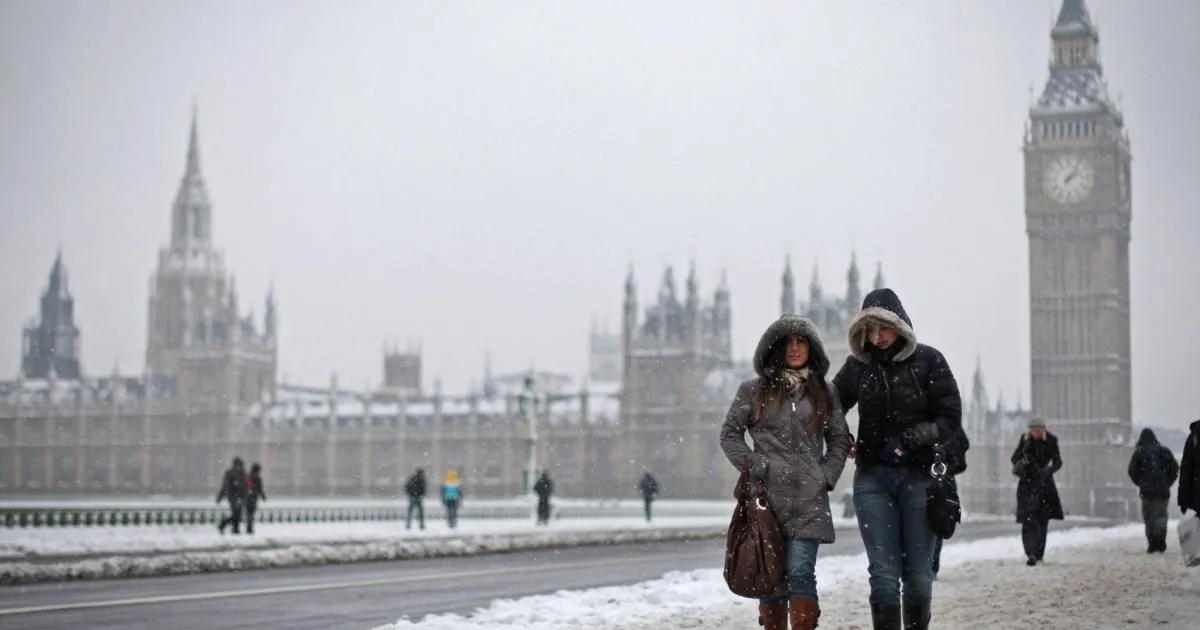
It may sound like the plot of a disaster film, but Britain could be heading for a genuinely dramatic change in the weather by the end of this month. Forecasters are keeping a close eye on something called the stratospheric polar vortex, a huge band of powerful winds that normally circles the Arctic and keeps the most brutal cold air trapped far to the north. Right now, that vortex is showing signs of weakening, and there are fears it could even split apart. If that happens, the icy air that usually stays near the North Pole could slide southwards, putting the UK in the path of a bitter cold snap and possibly snow. What makes this particularly worrying is the timing. A breakdown this early in the season would be unprecedented, beating a record that has stood since November 28, 1969. Scientists think the unusual behaviour may be linked to El Niño, the natural climate pattern that affects weather systems across the globe. For the average person, the polar vortex is the kind of phrase you might hear in passing during a weather forecast, but it is not just a scientific curiosity. It has the power to change the way we live for weeks at a time. In a normal British winter, the country enjoys relatively mild and wet conditions because a steady jet stream over the North Atlantic acts like a protective barrier, keeping the harshest Arctic air away. That is why British winters are usually more about grey skies and drizzle than deep snow and freezing temperatures. But when the polar vortex weakens, that barrier can break down, and the cold air that would normally never reach us can suddenly flood south. The result could be a sharp drop in temperatures, icy winds, and possibly significant snowfall in some areas. No one is saying with absolute certainty that this will happen, but the fact that so many experienced meteorologists are paying attention tells you that something unusual is going on high above our heads.
To understand what is happening, it helps to know a little about the strange connection between the stratosphere and the weather we feel on the ground. The stratospheric polar vortex is a winter phenomenon, a swirling mass of cold air and strong westerly winds that forms high above the Arctic. Occasionally, something called sudden stratospheric warming occurs, where temperatures in that part of the atmosphere rise dramatically over a short period. This might sound like a good thing, especially when you are worried about freezing weather, but it is actually the opposite. The warming disrupts the vortex, causing its powerful winds to weaken. This can either push the vortex off its usual position over the North Pole or even split it into two smaller vortices. When that happens, the coldest air can be displaced from the Arctic and moved into more southerly regions. Met Office forecaster Marco Petagna has confirmed that a warming is already taking place in the stratosphere and that the polar vortex is starting to weaken. These are not words that forecasters use lightly, because sudden stratospheric warming events have a history of triggering severe winter weather in the UK and elsewhere in Europe. You can think of the vortex like a spinning top. When it is strong and stable, it keeps everything contained. But when it wobbles or breaks, the contents spill out. In this case, the contents are frigid Arctic air that most of us never have to experience. The exact outcome is still uncertain, but if high pressure builds to the north and northeast of the UK, the country could see colder, drier conditions, along with sleet or snow showers. That might sound almost picturesque, but for vulnerable people, for transport, for the NHS, and for the energy grid, it can be a serious challenge.
The experts do not want to alarm anyone, but they are being very clear that people should be prepared for the possibility of extreme weather. Jim Dale, a meteorologist with British Weather Services, put it bluntly, describing the prospect of a polar vortex breakdown as “debilitating, dangerous and hazardous.” He also made an important point about human nature, saying that most people think it is never going to happen to them, but we need to be ready for whatever Mother Nature throws at us. His suggested attitude is to come through such events with a smile, not a grimace, which is a gentle way of saying that preparation can make all the difference. If the vortex does break down this month, it would be a record-breaking event. The previous earliest date for such a breakdown was November 28 back in 1969, so happening before that would be genuinely unusual. Judah Cohen, a climatologist at the Massachusetts Institute of Technology, told Scientific American magazine that this is a big event because it is so unprecedented. That sense of surprise is shared by many in the meteorological community. The science of long-range weather forecasting is never exact, but when you have people with decades of experience saying that something remarkable is underway, it is worth listening. The good news is that an event like this does not automatically mean the UK will be buried in snow. Much depends on where the displaced cold air ends up. Current analysis suggests that countries such as Denmark, Norway, Sweden, and Germany could be among the worst affected if the breakdown goes ahead. The UK might escape the very worst, or it might not. That uncertainty is part of the reason why the advice is not to panic, but to make sensible preparations, such as checking that you have warm clothing, food supplies, essential medicines, and a way to keep your home heated if the power goes out.
Previous sudden stratospheric warming events have had very different effects. Some have brought sharp, freezing spells to Britain, while others have had a much bigger impact on other countries in the Northern Hemisphere. Professor Andrew Charlton-Perez, a meteorology expert, has explained that a large-scale collapse of the vortex could affect the weather for up to 40 days. That is a long time to be dealing with potential snow, ice, and travel disruption. However, he also offered some reassurance, saying that the impact was unlikely to be as severe as the infamous Beast from the East in 2018. That event, which brought heavy snow and freezing temperatures to many parts of the UK, is still fresh in many people’s memories. The difference this time is that the air over Europe is not currently as cold as it was back then, so even if cold air does arrive, it may not be quite as extreme. Still, he praised the government’s “Be Ready” campaign, which encourages people to keep basic essentials at home, including food, water, and gas, in case of power outages. There is something almost old-fashioned about that advice, reminding us that even in a modern, connected country, we can still be caught out by the forces of nature. The truth is that many households are not prepared for even a few days without electricity or heating, and the psychological impact of being stuck at home in the dark and cold can be significant. Preparing in advance is not just about practical survival; it is about peace of mind. Knowing that you have torches, batteries, blankets, and a supply of food means that if the worst happens, you are not scrambling around in a panic.
There is another layer to this story that makes it even more concerning. The UK and much of Europe are still dealing with drought conditions, and a polar vortex breakdown could bring drier weather at a time when water supplies are already stretched. This might seem strange, since El Niño brought severe flooding to many parts of the continent in September, but weather patterns can be very uneven. Some regions can be drenched while others remain dry, and the sort of cold, dry conditions associated with a weakened vortex would not help with the longer-term problem of low reservoirs and parched soil. Energy security is also a growing worry. Europe’s gas reserves are at 72.4 percent at the start of winter, the lowest level since records began in 2011. That means there is less room for error if a sudden cold snap causes demand for heating to spike. Fuel prices have already become a major economic issue across Europe, and the situation has been made worse by the ongoing conflict between the United States and Iran, which affects global energy supplies. If the UK does experience a prolonged cold spell, that could put additional pressure on an already fragile system. Scientists are also monitoring something called the Atlantic Meridional Overturning Circulation, a system of ocean currents that carries warmer water northwards. There are signs that this system may be starting to weaken, which could have significant implications for the climate in the UK and Europe in the years to come. This is a reminder that the weather is not just about what happens in the sky; it is connected to the oceans, the atmosphere, and the global economy. The potential polar vortex breakdown is just one piece of a much larger puzzle.
For now, the message from forecasters is to stay informed and be prepared, not to panic. The weather is inherently unpredictable, and even the best models can change as new data comes in. But there is no denying that something remarkable is happening in the atmosphere, and the next few weeks could be a challenging time for many people. The human side of this story is important too. Cold weather can be tough on the elderly, the unwell, and those who are already struggling to make ends meet. It is also hard on people who work outdoors, on families trying to get children to school, and on anyone who relies on public transport. A bit of snow can be beautiful, but it can also isolate communities and disrupt everyday life in ways that are easy to underestimate. The reminder to be prepared is not just about having a stash of tinned food and batteries, although that is a decent start. It is also about looking out for each other, checking on neighbours who might be lonely or vulnerable, and being patient with the inevitable disruptions that come with extreme weather. We live in a time of great uncertainty, not only when it comes to the climate but also in so many aspects of our lives. The idea that a warming event high above the Arctic could lead to freezing temperatures on the ground is a perfect example of how complicated and surprising our world can be. Perhaps the best approach is the one suggested by Jim Dale: face whatever comes with a smile, not a grimace. That means doing what we can, accepting what we cannot control, and helping one another through the rough patches. The coming weeks will tell us whether the polar vortex truly breaks down and whether the UK gets caught in the cold, but no matter what happens, the human spirit has a remarkable way of adapting. By staying informed, staying warm, and staying connected, we can get through it together.