


The Shakahola Cult Tragedy: Justice Delivered After Unspeakable Horror
In a landmark ruling that brought closure to one of Kenya’s most horrifying chapters, Paul Mackenzie, the leader of a doomsday cult, received a 200-year prison sentence for his role in the deaths of more than 400 followers in the remote Shakahola Forest. The verdict, delivered by Justice Diana Kavedza, marks the culmination of a case that shocked not only Kenya but the entire world with its chilling details of calculated manipulation and systematic starvation. Mackenzie, who led the Good News International Church, had convinced his followers that they must starve themselves and their children to death to achieve salvation and reach heaven before the world ended. The discovery of mass graves in April 2023 revealed 448 bodies, with the true death toll suspected to be even higher, as investigators uncovered additional burial sites across the forest region and beyond.
The full scope of Mackenzie’s atrocities emerged during the lengthy trial, which revealed how he had constructed an elaborate system of control over his followers. Alongside his conviction for the murders of 190 children and one adult, 28 of his co-defendants were also sentenced, including the guards who enforced his brutal fasting directives and the gravediggers who worked to conceal the evidence of their crimes. The victims, who had lived in basic mud huts without modern amenities, were systematically starved over weeks and months, with Mackenzie preaching that this suffering was necessary for their spiritual transcendence. The prosecution presented evidence of a sophisticated organizational structure, with Mackenzie at the helm orchestrating every aspect of the operation, from the enforcement of fasting rules to the disposal of bodies in shallow graves scattered throughout the forest.
The horrors of Shakahola have drawn comparisons to other infamous cult tragedies in modern history, including the 2000 Uganda cult massacre that claimed over 700 lives and the 1978 Jonestown incident in Guyana, where more than 900 people died after being ordered to drink poison. The scale of human suffering and the calculated nature of the killings have prompted widespread soul-searching about religious extremism and the vulnerability of communities to charismatic but dangerous leaders. The court heard harrowing testimony from survivors and family members of victims, painting a picture of a community that had been systematically isolated from the outside world and conditioned to accept death as a divine mandate. The psychological manipulation employed by Mackenzie was so effective that even the loss of their own children did not shake the faith of some followers, who continued to participate in the deaths of others.
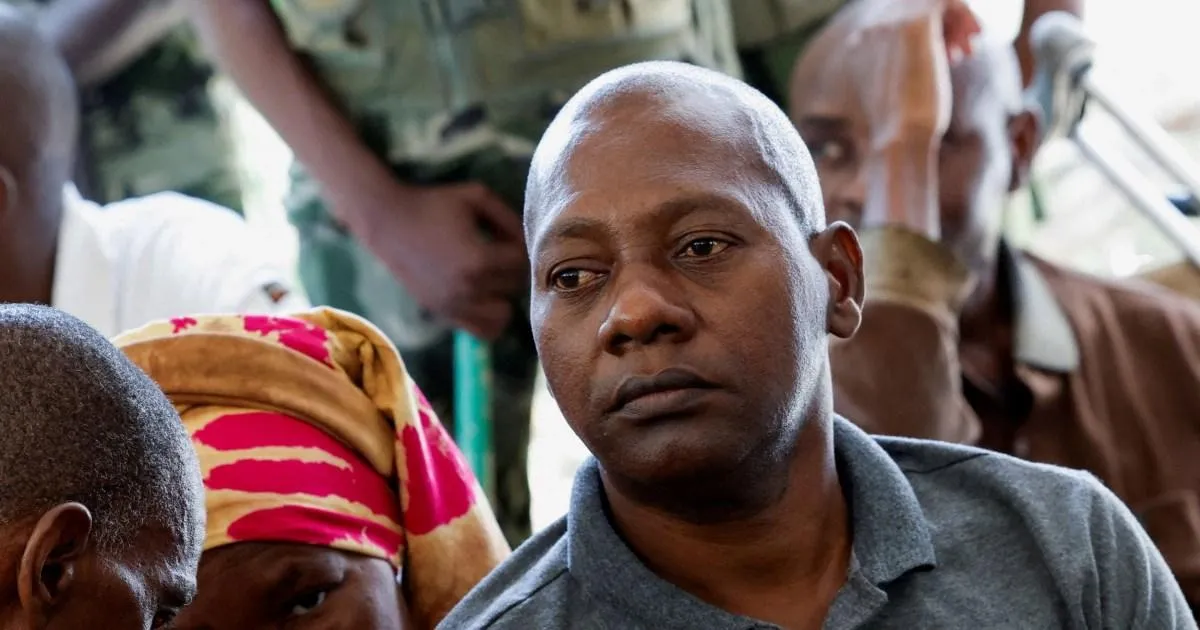
Justice Kavedza’s ruling was notably stern, describing the killings as “cold and calculated” and dismissing any attempts by the accused to mitigate their responsibility through claims of personal loss. The judge emphasized that the perpetrators had shown no remorse, with some even declaring their readiness to fast to death themselves, demonstrating the depth of their indoctrination. Throughout the sentencing proceedings, Mackenzie displayed a disturbing demeanor, frequently smiling and chatting with his assistant pastor, Smart Mwakalama, who received a 160-year sentence for his role in the atrocities. The prosecution had argued for the death penalty for Mackenzie and life imprisonment for his accomplices, reflecting the gravity of crimes that had devastated so many families and left communities in mourning.
The human cost of Mackenzie’s manipulation extends far beyond the victims who perished in the forest. Stephen Mwiti, a father who lost six children to the cult, voiced the anguish felt by many families when he spoke of his irreplaceable losses. “I lost children and I will not be able to get them back no matter what happens to Mackenzie and his accomplices,” he said, expressing hope that the cult leader would never again walk free. The tragedy also touched Mackenzie’s own family, with his son Dan revealing how he had escaped the cult’s influence by choosing to disbelieve its teachings about heaven. “I lost friends too, and my younger brother,” Dan said, acknowledging that the sentencing represented justice for those who had perished. These personal testimonies underscore the far-reaching consequences of the cult’s activities, which destroyed families, separated loved ones, and left deep psychological scars on survivors.
The aftermath of the Shakahola tragedy has prompted significant reform efforts in Kenya, with President William Ruto appointing a task force to review the legal and regulatory framework governing religious organizations. The case exposed significant gaps in oversight that had allowed Mackenzie’s operation to continue despite being on authorities’ radar since 2017. Previous interactions with law enforcement had resulted in searches and even the closure of his church in Malindi, yet Mackenzie managed to relocate to the remote forest where he continued his deadly work largely unchallenged. As Kenya awaits the implementation of new regulations to prevent similar tragedies, the families of the victims continue to grapple with their losses, finding some solace in the knowledge that Mackenzie will spend the remainder of his life behind bars. For the nation as a whole, the trial has served as a stark reminder of the dangers of unchecked religious extremism and the importance of protecting vulnerable communities from those who would exploit faith for destructive purposes.