


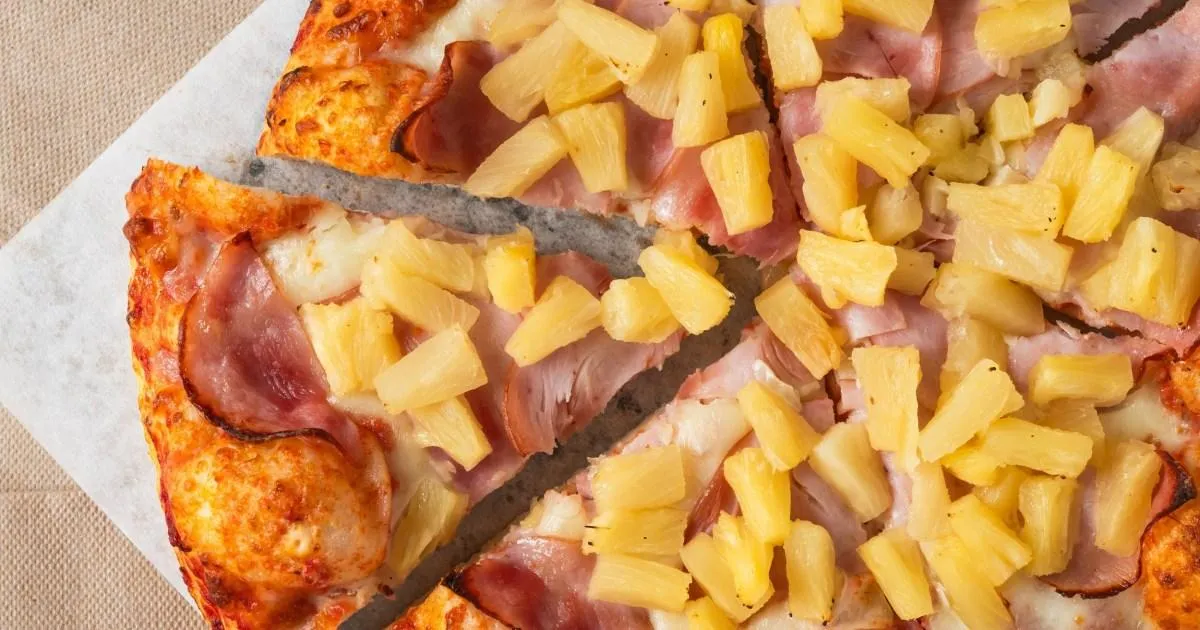
In May, at a quiet but well-regarded restaurant called La Costa in Brisbane, a seemingly trivial culinary disagreement ended a chef’s career. Davide Tamburella, an Italian cook, was asked to prepare a ham and pineapple pizza for guests at a private function. He refused. For him, this was not a matter of taste or preference; it was a matter of identity. He later described the very idea of pineapple on a pizza as an “insult to his culture.” The request put him in an impossible position, one that would ultimately cost him his job, his visa sponsorship, and his hopes of building a permanent life in Australia. The restaurant’s management had already received complaints about his behavior, and this refusal was the final straw. After a meeting about a series of ongoing issues, Tamburella was dismissed from the now-closed restaurant. Shocked and aggrieved, he took his case to Australia’s Fair Work Commission, claiming unfair dismissal. But in a ruling released on Tuesday, his claim was rejected—not because the commission decided the firing was justified, but because it had been filed too late. The story might seem small, almost silly to some—a pizza topping causing so much trouble—but beneath the surface lies a deeply human story about pride, belonging, displacement, and the strange ways we draw lines around what we consider sacred.
For Tamburella, the pizza is not just food. It is a symbol of home, childhood, and generations of culinary tradition. In Italy, pizza is governed by near-religious rules among traditionalists. The classic Neapolitan pizza, with its thin crust, San Marzano tomatoes, fresh mozzarella, and basil, is protected by strict standards. To many Italians, adding pineapple—a sweet, tropical fruit—is not an innovation but a violation. It clashes with the delicate balance of flavors and, more importantly, with the soul of a dish that has come to represent Italian culture across the globe. Tamburella reportedly told his managers that their instructions “need not be followed when it is offensive to his culture.” That sentence reveals how deeply he felt. For him, making that pizza would have been more than a simple task; it would have been a surrender, a denial of everything he believed his craft stood for. His LinkedIn profile describes him as focused on “delivering exceptional food” and “improving business performance,” which suggests a man who takes pride in his work. But pride can be stubborn, and this was not the first time he had drawn that line. The commission heard that he had refused to use pineapple on pizzas on two previous occasions over the past four years, meaning this was a long-standing personal boundary rather than a sudden outburst. To his employers, that likely looked like insubordination. To him, it was loyalty to an inheritance.
The setting of the conflict only deepens the irony. Brisbane is located in Queensland, a region widely known as Australia’s main pineapple-growing area. In Queensland, pineapple is not an exotic intruder; it is a local product, a point of regional pride. Australians have embraced pineapple on pizza for decades, largely because of the so-called Hawaiian pizza, which is said to have been invented in Canada in 1962 by a Greek immigrant who found the combination of sweet pineapple and salty ham irresistible. For many Australians, pineapple on pizza is comfort food, a fun and tasty twist on a popular dish. They do not see it as an offense but as a delicious collision of ingredients. This cultural divide is not unique. Food is one of the most powerful carriers of identity. What is sacred to one person is merely delicious to another. When Tamburella looked at a pineapple pizza, he saw a foreign object, a colonial intrusion onto Italian soil. But his Australian customers looked at the same pizza and saw something familiar, beloved, and harmless. Neither side was evil. They were simply operating from different maps of meaning. In a multicultural country like Australia, such clashes are inevitable. Migrants carry their traditions with them, but the places they move to have their own evolving food cultures. Sometimes the two can coexist peacefully; sometimes they collide.
Of course, the pizza was not the only issue. The Fair Work Commission heard that management had broader concerns about Tamburella’s behavior. There were complaints about his use of foul language, his communication style, and what was described as an “escalation of frustration in the workplace.” These phrases suggest a man who may have been struggling to cope with pressure, perhaps feeling isolated or misunderstood in a new country. Working in a professional kitchen is notoriously stressful. Kitchens are loud, fast, and demanding, and emotions often run high. A chef who feels his authority and expertise are being challenged may react with sharp words or visible irritation. In April, just a month before his dismissal, Tamburella fractured bones in his right hand after striking a metal handrail. The incident is not fully explained, but it seems to fit a picture of growing anger and despair. He had hoped that La Costa would sponsor his visa, allowing him to become a permanent resident of Australia. That hope was tied directly to his job. Losing the position meant losing the thread that connected him to his dream of a stable future. The hand injury, the escalating frustration, the pineapple argument—they all point to a person under enormous strain. It is easy to imagine him feeling trapped between his principles and his circumstances, unable to find a way through. His employers, meanwhile, had a business to run, customers to satisfy, and a team to manage. They may have decided that someone who would not follow basic instructions, no matter how principled, was not someone they could rely on.
The legal outcome did little to resolve the deeper questions. Tamburella’s unfair dismissal claim was rejected solely because it was submitted too late, according to the commission’s ruling. This means the merits of his case were never fully examined. We will never know whether the commission would have sided with him or with the restaurant. Adding to the mystery, La Costa itself has since closed, making the whole episode feel hauntingly final. Elliot Ingram, the restaurant’s managing director, told the Daily Mail that there was “more to this story than a pizza topping.” That remark is telling. It suggests that the pineapple dispute was perhaps only the tip of an iceberg, a visible symptom of a deeper breakdown between the chef and his employers. It is possible that Tamburella’s refusal was seen as part of a larger pattern of resistance and conflict, not an isolated act of principle. It is also possible that the management had already made up their minds to let him go and the pizza simply gave them a convenient reason. We cannot know. What we do know is that a man’s livelihood and dreams were lost, and a restaurant that once served pizza in Brisbane is now silent. According to his LinkedIn profile, Tamburella now works at another Brisbane restaurant, though pineapple does not appear on its menu. There is a quiet defiance in that detail, almost as if he has found a kitchen where his boundaries are respected. But the cost of that integrity was high.
In the end, this story is about more than a fruit on a flatbread. It is about the deep human need to honor where we come from, even when we are far from home. It is about the difficulty of balancing personal convictions with professional duties, and the pain that arises when those two worlds collide. Food can be a bridge between cultures, but it can also be a wall. For Tamburella, pineapple on pizza was not a creative topping; it was a betrayal. For the Australian guests, it was simply a meal they enjoyed. There is no clear villain here, only people shaped by different histories and expectations. The chef’s refusal may seem stubborn or even unreasonable to some, but it came from a place of genuine feeling, a devotion to a craft he saw as inseparable from his heritage. The restaurant’s demand, too, was understandable: customers asked for something, and the kitchen was expected to deliver it. In a perfect world, there would have been negotiation, empathy, and perhaps a compromise. But workplaces are not always forgiving, and cultural clashes do not always end with mutual understanding. Tamburella’s story is a reminder that migration is not just about moving from one place to another; it is about carrying an inner world with you, and constantly negotiating which parts of that world you are willing to bend, and which parts you refuse to break. His was a stand, for better or worse, about where he drew his own line. The pineapple was his battleground, but the real fight was about something far deeper: the right to remain himself while building a new life. And that is a struggle almost everyone can understand, no matter how they take their pizza.