

The serene quiet of a routine flight was violently shattered this past week when a chilling message, a threat of an explosive device, turned two passenger jets into high-stakes dramas unfolding over the skies of Europe. What began as a standard journey home or a trip to business became a terrifying ordeal, forcing pilots into a desperate search for safety and plunging passengers into a state of anxious uncertainty. The incidents, which occurred within minutes of each other, serve as a stark and sobering reminder of how quickly modern life can be upended, and how the specter of security threats continues to cast a long shadow over the very concept of travel.
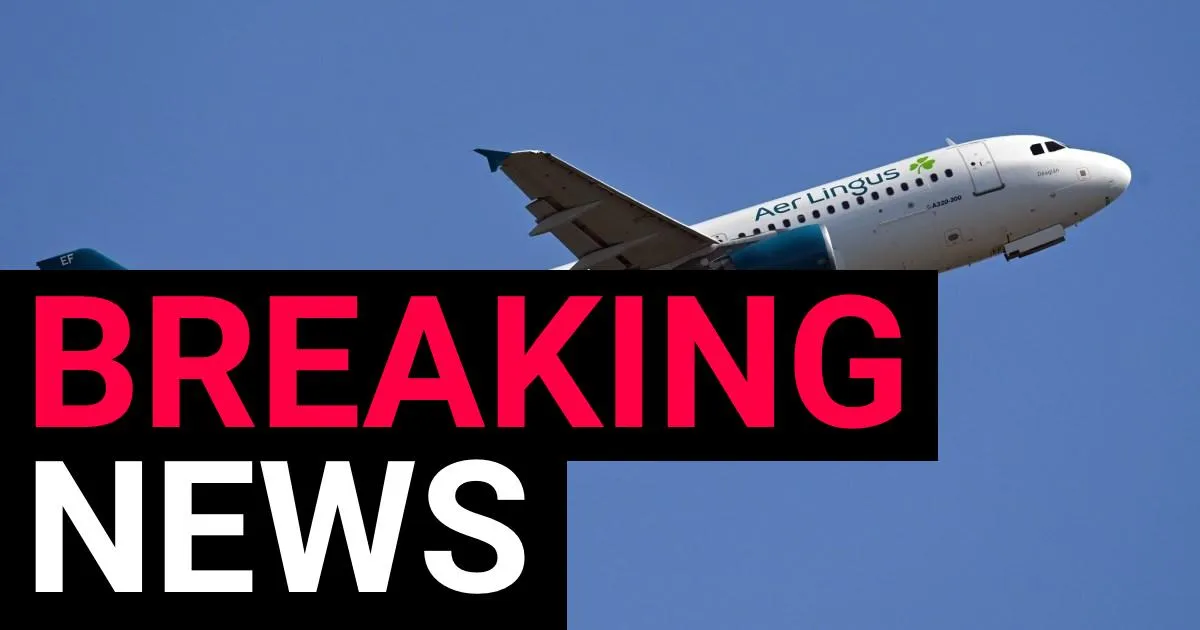
The first unfolding crisis involved an Aer Lingus flight, a routine journey from the historic streets of Dublin to the ancient heart of Rome. Somewhere between its point of departure and its destination, the cockpit received the grim news: a bomb threat was reported on board. There was no time for debate; the immediate priority was to get the aircraft and its 160 passengers and crew to the ground with utmost haste. The pilots, operating with a calm professionalism that defied the gravity of the situation, immediately initiated emergency protocols. They transmitted the universal distress signal, the squawk code 7700, which alerted air traffic control across the continent that this was no longer a scheduled flight but an aircraft in grave peril. The plane, its trajectory once a straight line towards Italy, now began a tense and drawn-out dance in the sky over northern France, circling in a holding pattern as the crew prepared for a potential emergency landing and the ground crews at a suitable airport made ready for their arrival.
The choice of diversion was the Évreux air base, a military installation in the Eure region, north of Paris. For the passengers on board, the view from their windows would have transformed from the pleasant clouds to the stark reality of a military runway. The plane descended, crossed the threshold of the airbase, and then, in a moment of high tension, did not land. It flew straight past the runway, executing a wide turn before coming back around to make its final approach. This maneuver, while perhaps unsettling for those watching from inside, was likely a standard security procedure, a way to assess the situation and ensure the runway was clear before committing to the landing. When the wheels finally touched down, the aircraft was immediately met by security and emergency personnel, who would sweep the plane for any explosive device, a process that would hold the passengers in a state of limbo for hours. Just twenty minutes later, another plane, a Wizz Air flight traveling from Milan to Warsaw, began to experience its own nightmare. The same chilling message had been received in its cockpit, and the pilots, too, transmitted the same 7700 emergency code. Their diversion was to Vienna, Austria, their flight path changing abruptly over the Czech Republic as they steered towards safety. In the span of half an hour, two separate flights, two separate airlines, two distinct destinations, were all grappling with the same terror, a coordinated or copycat attack that seemed designed to sow maximum chaos.
These two harrowing diversions, however, were not isolated events. They were the explosive peak of a wave of similar threats that had been rippling across European aviation for days, a silent and malevolent campaign targeting the very infrastructure of our connected world. Two days prior to the Aer Lingus and Wizz Air incidents, around ten commercial flights—including two departing from the United Kingdom—had also been the targets of bomb threats. That earlier wave had seen a LOT Polish Airlines flight from London Heathrow diverted to Warsaw-Modlin, and a flight from Manchester to Murcia, Spain, similarly affected. Ryanair, the continent’s largest low-cost carrier, found at least four of its flights caught in the panic, forcing them to undergo emergency checks and security sweeps. In every single case, after all the terror, the disrupted schedules, and the anxious hours spent waiting on tarmacs, no suspicious devices were found. The hoaxes were systematic, widespread, and devastatingly effective at causing disruption, even if they lacked any real destructive capability. The psychological impact was undeniable; the fear was real even if the bombs were not. It transformed the mundane act of boarding a plane into a game of Russian roulette, a leap of faith that your journey would not be the next one to be disrupted.
The response from the airline industry was one of grim resolve and procedural efficiency. A spokesperson for Wizz Air, confirming the diversion of their Milan-to-Warsaw flight, issued a statement that balanced reassurance with a clear acknowledgement of the situation’s severity. They confirmed the flight, W4 6387, had been diverted to Vienna following a bomb threat received during the flight. The spokesperson emphasized that the diversion was initiated in line with established security protocols, with the safety of passengers and crew as the “highest priority.” They pointed out that the incident was part of a series of similar threats affecting various airlines across Europe, underscoring that their carrier was not the only one being targeted. The statement concluded with a promise of full cooperation with authorities and a re-emphasis on safety, a carefully worded public assurance in the midst of an unnerving reality. This official language, however, does little to calm the frayed nerves of a traveler who has just lived through the ordeal of an emergency landing. It doesn’t capture the quiet terror of hearing the captain’s voice come over the intercom with a message that suggests something is gravely wrong. It doesn’t convey the shared, unspoken anxiety among strangers who are all realizing they are part of the same unfolding crisis.
For the passengers on board those flights, the aftermath is a cocktail of relief, anger, and lingering trauma. The relief at landing safely is overwhelming, but it is quickly followed by the frustration of being held in a sterile, often confusing environment for hours on end, surrounded by police and security personnel. There is anger at the faceless individuals who created this chaos, whose cowardly actions turned an ordinary day into a nightmare. And there is a deeper, more insidious anxiety—the thought that the next time they fly, will it happen again? The experience is a stark violation of the trust that air travel fundamentally represents. You surrender your control, your freedom, and your safety to the airline and the crew, trusting implicitly that they will get you to your destination. When that trust is so violently broken, the very notion of flight can be forever altered. The mundane rituals—checking in, queuing at security, finding your seat—can be re-framed as a prelude to potential danger. The psychological scars from such an event can linger long after the plane has been cleared and the story has faded from the headlines.
The immediate cause of this specific wave of threats may have been hoaxes, but their impact is deeply real. They serve as a potent reminder of the immense vulnerability that is inherent in our modern, high-mobility world. Air travel has shrunk the globe, connecting families, businesses, and cultures. But it has also created a target-rich environment, a system that, by its very nature, requires an immense amount of coordination and trust. A single anonymous threat can force a multi-million-dollar aircraft to be diverted, dozens of flights to be delayed, and thousands of travelers to have their lives and plans thrown into turmoil. The actions of a lone individual, or perhaps a small network of troublemakers, can create a ripple effect that is felt across an entire continent. These events are a reminder that the security we take for granted is a high-wire act, a constant battle against those who wish to disrupt and to harm. It is a war of attrition that is often invisible, fought in the quiet spaces of check-in counters and baggage scanning machines, and it can erupt into the open at any moment, turning the simple act of going on holiday into a memory of fear. As the passengers from those diverted flights eventually made their way to their final destinations, hours late and deeply shaken, the message was clear: in the skies over Europe, there is no such thing as absolute safety—only constant vigilance and the hope that the next journey will be the one that reaches its destination without incident.