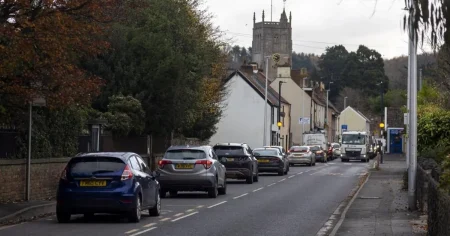



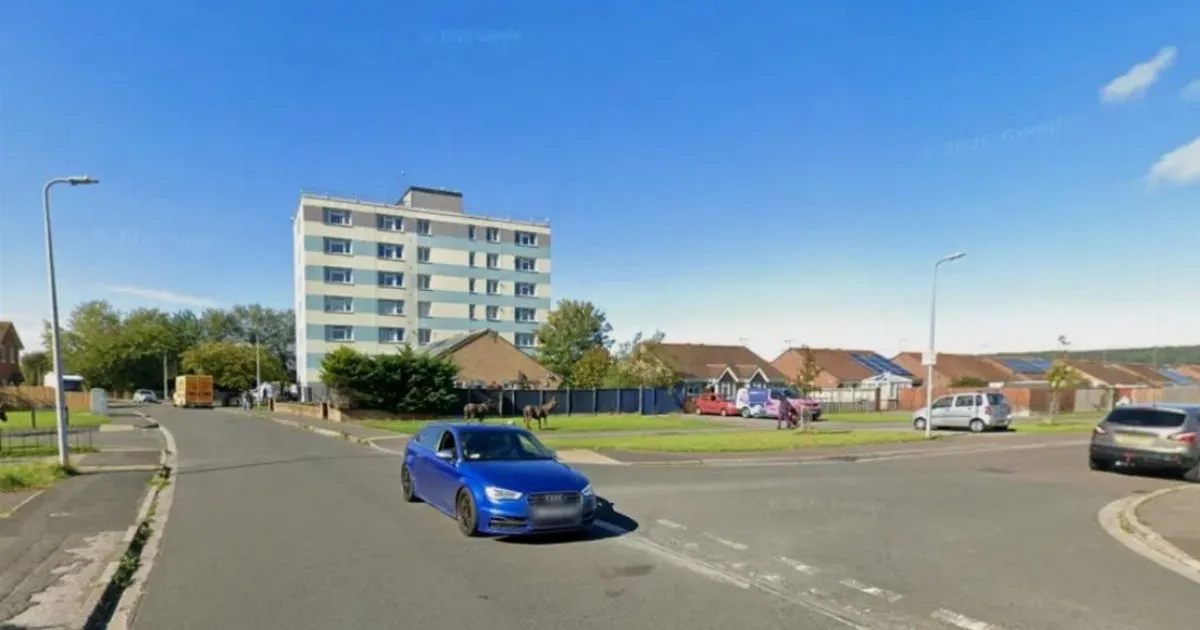
Weston-super-Mare has a quiet reputation. It is the kind of seaside town where families come for ice cream and golden sand, where the promenade is more likely to be soundtracked by seagulls than sirens. But one ordinary Sunday evening, in the residential Bournville area, that peace was abruptly disturbed. A child walking with a parent near the junction of Selworthy Road and St Ives Road was approached by two men. According to the parent, the pair were dressed in black, their faces hidden by balaclavas, and they had just jumped out of a white Ford Transit van. It is understood they did not touch the child or make any physical contact, but the intention behind their approach is under urgent investigation. Understandably, the parent did not wait to exchange words or ask questions. The priority was to get the child to safety. Once back home, at about 8.45pm, the parent called the police. Avon and Somerset Police responded quickly, with officers on the scene within minutes. They spoke to the boy and his family, and a full investigation was launched. The small, familiar streets around Selworthy Road have now become the focus of a serious police appeal.
Let’s not gloss over the human emotion. For any parent, the image is unbearable. A child walking beside you, trusting you to keep the world safe, suddenly becomes the focus of masked strangers. Physical contact doesn’t have to be made for a line to be crossed. In those few seconds, something was stolen from both parent and child—a sense of safety, an assumption that the streets they walked were friendly. The adrenaline would have surged, the hand around the child’s hand would have tightened, and the walk home would have felt impossibly long. Even after the front door was locked and the police had arrived, the mind would keep replaying the scene. The boy might struggle to articulate what he saw: a dark shape, a covered face, the harsh sound of a van door sliding open. Adults often underestimate how deeply children absorb these moments. They may ask the same question over and over, or go quiet, or become anxious about going outside. The family must now process their fear in private, supported by those closest to them and, at least in an official capacity, by the police. Reassurance from officers helps, but it cannot erase the visceral memory of two figures emerging from the evening light. This was more than just a concerning incident. It was a violation of the ordinary, and the trauma can linger long after the headlines fade.
The police response has been measured, serious, and methodical. Inspector Paul Chaplin of Avon and Somerset Police issued a public statement describing the episode as “a concerning incident,” and confirmed that officers were working to identify the two men and establish the full circumstances of what happened. “Officers attended within minutes of the call being received and have spoken to the boy and his family,” he said. “We will continue to update them as our investigation progresses.” These are more than bureaucratic words. They signal that the report was treated with the gravity it deserved, and that the investigation is active. Detectives will be looking at every piece of available evidence: the route of the white Ford Transit van, any CCTV from nearby homes and businesses, doorbell cameras that might have captured the vehicle passing, and witness accounts from anyone who was in the area that evening. The fact that the two men wore balaclavas and moved from a van onto a pavement suggests a level of planning, even if their motive remains unclear. That is deeply unsettling. It also means the case will not be closed quickly. In the meantime, the police are asking local residents and anyone who was driving through the Bournville area around the time of the incident to think back. Did they see a van parked in an unusual spot? Did they notice anyone acting strangely? No detail is too small.
In the Bournville neighbourhood, the news has landed with a heavy weight. This is not a place that expects to feature in a suspected attempted abduction briefing. These are the streets where children kick footballs, where neighbours exchange hellos, where the biggest excitement might be a summer fete. Now, the quietest corners feel different. The junction of Selworthy Road and St Ives Road, once unremarkable, has become a landmark of fear. Parents will be holding children’s hands a little tighter on the walk to school. They will be less inclined to let teenagers wander home alone. They will notice vans idling at the roadside and question their presence. This is not panic, but it is a natural human response to a threat so close to home. Communities often surprise themselves with their resilience, and this one is likely to rally. There may be conversations on doorsteps, messages in local groups, and a renewed commitment to looking out for one another. In the coming days, the police presence will likely remain visible, offering both a deterrent and a reassurance. But the deeper comfort will come from neighbours supporting neighbours. A shared sense of vulnerability, when acknowledged and met with solidarity, can become a strength. That does not diminish the seriousness of what happened, but it offers a way forward through the fear.
Incidents like this are extraordinarily rare in statistical terms, but that fact offers little comfort when it is your street, your evening, your child. It does, however, underline the importance of talking to children about personal safety in a way that empowers rather than terrifies. The concept of “stranger danger” has been refined in recent years, with police and child safety charities now focusing on practical skills. Children need to know their full name, their parents’ names, their address, and a phone number. They need to understand that they should never go anywhere with someone they don’t know, even if that someone appears friendly, asks for help, or offers a treat. They need to know that if a car or van stops near them, they should move away quickly, make noise, and run to a safe place—a shop, a busy area, a trusted adult’s home. They should be taught that adults don’t usually ask children for help, and that a stranger in a mask is never a normal sight. Parents can practice scenarios at home, asking, “What would you do if someone stepped out of a van?” or “What would you shout if you were scared?” These conversations can be difficult, but they are far less frightening than the reality of a child who doesn’t know what to do. At the same time, adults can reinforce safety in everyday decisions: walking in pairs, staying in well-lit areas, avoiding shortcuts, and telling someone where you’re going. None of these measures can guarantee absolute safety, but they build confidence and awareness, and they make children less vulnerable.
The immediate priority, now, is to identify the two men involved and to understand what they intended. Avon and Somerset Police have asked anyone with information, including doorbell footage from the area, to come forward. It is an appeal that might sound routine, but in a case like this it carries real, urgent meaning. A neighbour who saw a white Ford Transit and thought nothing of it could hold the key. A motorist who passed through Bournville at that time might have a dashcam recording that captured the van’s registration plate. An offhand mention of two men in black clothes and balaclavas, overheard in a shop or café, could be the clue that breaks the case. The family, meanwhile, will be living with the emotional aftermath. The wider community can support the investigation by staying alert, sharing the police appeal, and checking their own security cameras without waiting to be asked. For the child, the road home will never look quite the same again, at least for a while. But with care, with reassurance, and with justice, that feeling can slowly soften. Weston-super-Mare is a resilient town, and its residents are no strangers to looking after each other. The hope is that the police, with the public’s help, will find the answers quickly, and that a family can begin to heal in the knowledge that the men who shattered their peace have been held to account.