
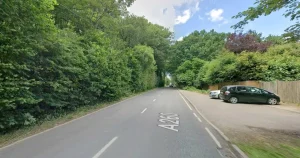

Sometimes the most extraordinary moments begin with the most ordinary decisions. On a chilly November morning in 2021, a lorry driver pulled into a lay-by on Lilliput Road in Northampton, not for fuel or for a scheduled stop, but simply because he wanted a cup of tea from a burger van. He had been on the road for hours, hauling what he believed to be 29 sealed pallets of steel furniture parts from Mexico. The paperwork was in order, the load was secure, and at that moment the most pressing thing in his world was the warmth of a hot drink and a few minutes of quiet before he continued on his way. But as he stood there, something odd caught his attention. A grey Transit van pulled up directly behind his HGV, and a group of people got out. Instead of heading toward the burger van, they moved quickly to the rear of his trailer and began removing large, wrapped packages. It was a sight that made no sense. There had been no delivery scheduled, no authorised stop, no reason for anyone else to touch the cargo. The driver did not hesitate. He called the police, and by the time officers arrived the group had already fled, leaving the van behind. What the driver did not yet know was that his simple act of paying attention had disrupted a plot worth tens of millions of pounds. Hidden inside those supposedly innocent pallets of steel furniture parts was not furniture but a massive quantity of cocaine, and the people he had interrupted were not thieves who had stumbled onto a random lorry. They were part of a carefully planned operation, and his decision to stop for tea had just thrown a match into the middle of it.
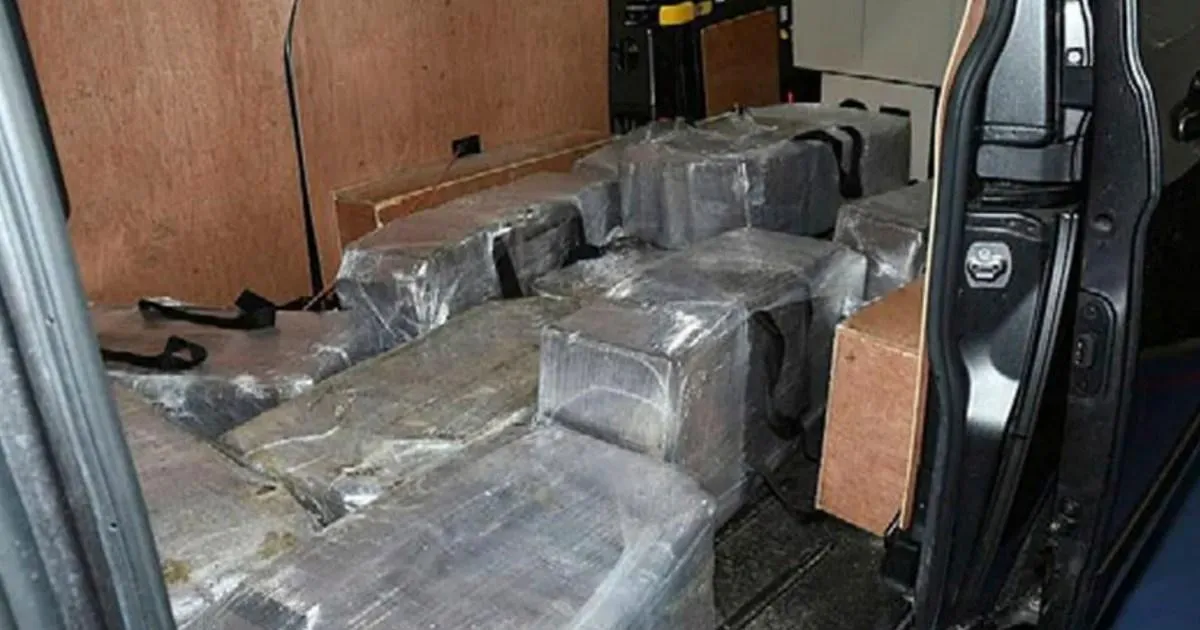
When Northamptonshire Police officers reached the scene and began examining the area, the scale of what had happened slowly came into focus. The grey Transit van that had been used in the attempted heist was found nearby, and inside it were 11 holdalls stuffed with packages of cocaine. But that was only part of the story. When officers searched the lorry itself, they discovered that the group had been forced to abandon their work halfway through. Seven more holdalls of cocaine were still inside the trailer, left behind in the chaos of being discovered. In total, police recovered 18 holdalls containing 780 kilograms of cocaine. The street value of that much cocaine was estimated at more than £80 million. To put that in perspective, this was not a small street-level drug deal or a local operation. This was an industrial-scale shipment, the kind of load that could flood cities and towns across the country with a dangerous and destructive drug for months. The drugs had apparently been concealed among legitimate goods moving through Felixstowe port, one of Britain’s busiest entry points, and they were meant to disappear into the hidden economy of supply and demand. Instead, because a lorry driver trusted his instincts and made a phone call, all 780 kilograms were intercepted. The operation that had likely been planned for weeks, with vehicles, people and routes carefully arranged, collapsed into an abandoned van on a Northampton lay-by. The driver had thought he was carrying steel furniture parts. In reality, he had been unwittingly transporting a hidden fortune, and his decision to stop for tea ended up saving countless lives and untold harm.
The three people behind the attempted heist were eventually identified and brought to justice, and their stories show how far they were willing to go to avoid detection. Craig Le-Mare, 36, was sentenced at the Old Bailey to 20 years in prison for conspiracy to supply cocaine. Kelly Robertson, 46, of Peregrine Close in Watford, was sentenced at Snaresbrook Crown Court in November 2024 to 15 years for the same offence. Michael Weston, 57, was sentenced at Snaresbrook Crown Court in May to 12 years and nine months. In total, the three received combined sentences of more than 47 years. But it was not for lack of trying. The group went to extraordinary lengths to cover their tracks. According to police, they switched cars, changed number plates, split up into different groups, and even falsely reported the Transit van as stolen after the heist went wrong. They knew the stakes were high, and they behaved like it, moving through the country with the caution of people who understood that failure meant prison. At moments, their behaviour was almost darkly comic. While following the lorry on the morning of the heist, Weston sent a message to his partner saying, “things are happening for me v soon.” Later, after news of the police seizure broke, he texted a friend a link to a BBC article about the discovery, complaining that he was now “skint” for Christmas. Behind the mask of hardened criminals were human beings making foolish, desperate choices, and their own words would come back to haunt them.
The investigation that brought them down was just as painstaking as the planning that had gone into the heist. Specialist officers from the Metropolitan Police took on the case and began to trace the gang’s movements with the kind of patience that defines serious crime work. They gathered CCTV footage from across the country, tracked vehicles, studied phone records, and slowly built a picture of a plot that had been in motion for weeks. The gang had been working for about a month before the attempted heist, hiring vehicles and moving people into position. Financial records revealed that they had arrived in Ipswich on the same day the shipment reached Felixstowe port on November 12, 2021. From there, they booked rooms at a budget hotel, hired a van, and apparently even ordered large takeaways to their rooms while they waited. It is a strangely ordinary image: a group of criminals, sitting in a cheap hotel room, eating fast food, waiting for the moment when a lorry full of cocaine would leave the haulage yard. They did not have to wait long. On the morning of November 26, 2021, they followed the lorry as it left the yard, driving in a black Ford Mondeo, a grey Vauxhall Astra, and a white BMW. For 125 miles, they trailed it across the country, from the Felixstowe area all the way to Northampton, coordinating their movements and waiting for the right opportunity. When that opportunity came, at the lay-by on Lilliput Road, everything seemed to go according to plan. What they could not have known was that a lorry driver would be watching.
The arrests did not happen overnight. It took years of meticulous work to unravel the network and prove the roles of everyone involved. Robertson was arrested on December 14, 2023, after detectives had finally pieced together enough evidence to show her part in the conspiracy. Le-Mare had left the United Kingdom shortly after the drugs were seized, likely believing that distance would protect him, but the law has a long reach. He was arrested at Gatwick Airport on January 25, 2025, after returning to the country, almost certainly unaware that his name was already on the list. Weston, whose own messages had helped tie the group together, was also sentenced after the investigation closed in on him. Detective Inspector Dean Grafton, who led the Metropolitan Police investigation, spoke afterwards about what the case had involved. “This investigation exposed an intricately planned operation,” he said, “where the defendants hoped to make millions by selling cocaine across the UK. Officers worked for two years as they meticulously unravelled their operation, conclusively proving their role in the attempted heist.” Those two years changed the lives of everyone involved. For the police officers, it was a long, grinding process of following paper trails and digital footprints. For the defendants, it was the slow crumbling of a plan they had believed would make them rich. And for the lorry driver, it was a reminder that one moment of attention can have consequences far beyond anything he could have imagined.
Assistant Chief Constable Emma James, of Northamptonshire Police, made clear what the case meant in human terms. “The discovery of this substantial quantity of cocaine in Northamptonshire led to a significant investigation,” she said, “which ultimately prevented dangerous drugs from reaching communities across the UK. While the Metropolitan Police led the subsequent investigation, the swift response by Northamptonshire Police officers at the outset helped secure crucial evidence and disrupt the criminal group’s plans.” She also spoke about the deeper damage done by cocaine, which extends far beyond the people who use it. The drug trade fuels exploitation, violence, and wider criminality, damaging families and neighbourhoods in ways that can last for generations. Every kilogram of cocaine that is taken off the streets is a small victory against that cycle of harm, and 780 kilograms is an enormous victory. What makes this story so striking is not just the scale of the seizure, but the humanity at the center of it. A professional detective spent years chasing down every clue. A police force worked across jurisdictional boundaries. Three criminals made choices that led them to prison. And an ordinary lorry driver, looking for a cup of tea on a cold November morning, saw something that did not look right and decided to do something about it. In the end, the £80 million heist was foiled not by an elaborate intelligence operation, but by one person’s willingness to stop, look, and trust their instincts. Sometimes the smallest breaks in routine make the biggest difference.