

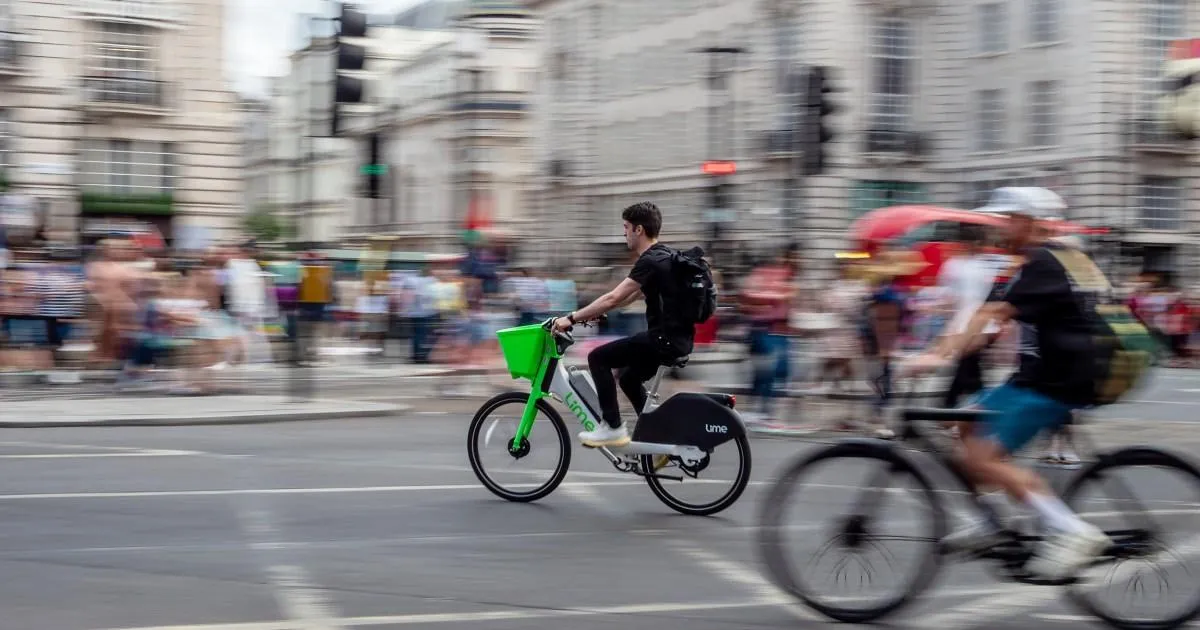
London’s streets have become a curious battleground between progress and frustration. In just a few short years, e-bikes have slid into the fabric of city life, offering a fast, affordable and greener way to dodge traffic and zip between meetings. You see them everywhere: riders weaving through morning commuters, couriers balancing lunch orders, tourists discovering hidden corners of the capital. But alongside this revolution has come a growing sense of chaos. Pavements are getting blocked by toppled bikes, pedestrians are being forced into the road, and every day there seems to be another video of someone treating a red light as a mere suggestion. The goodwill that welcomed these bright share bikes is starting to fray, and now the authorities are stepping in. In a move that signals the end of what many have called the e-bike “wild west,” London councils are set to receive new powers to crack down on irresponsible riders, including those who choose to ride under the influence. The message is clear: e-bikes might be here to stay, but the days of doing whatever you want on them are about to be over.
At the heart of the new proposals is a push for national standards, brought forward by the Department for Transport. The idea is to create a consistent set of rules that apply across the country, replacing the current patchwork of local agreements and half-enforced guidelines that have left riders, operators and local authorities confused. Among the most eye-catching measures is the ability for law enforcement and council officials to issue fines on the spot for anti-social behaviour, including drunk riding, dangerous manoeuvres and illegally parked bikes that block pavements. But the changes go beyond simply punishing individual riders. The government is also looking at introducing insurance requirements for operators like Lime, Forest and Voi. This would be a significant shift, because it would mean that if someone is injured by an e-bike rider, they would have a clear route to compensation instead of being left with mounting medical bills and no one to turn to. It is a pragmatic response to a problem that has been growing for years, and it has been welcomed by leaders who have long argued that the existing rules are simply not fit for purpose. Sadiq Khan, the Mayor of London, has been particularly vocal, pointing out that he has been calling for these powers since 2017, when the first dockless bikes appeared on the capital’s streets. For him, the announcement is not just a policy tweak but the beginning of a long-overdue reckoning.
The human story behind these dry government documents is one of everyday friction. Imagine an elderly woman trying to get to her doctor’s appointment, only to find the bus stop blocked by a cluster of carelessly abandoned bikes. Picture a parent pushing a buggy through a narrow street, forced to step into traffic because an e-bike has been left propped against a lamppost. Think of a cyclist who is clipped by an e-bike speeding through a red light, left with a scraped knee and a shaken sense of security. These are not extreme scenarios; they are the routine realities of modern London life, and they have been building for years. That is why Andy Burnham’s words resonate. Speaking about the plans, he said that e-bikes can make getting around easier, but when they block pavements or are used irresponsibly, they become a genuine frustration. His hope is that by giving communities more control over where bikes are parked, and by making sure companies and riders play by the rules, the streets can become safer for everyone. It is a small but important everyday fix, he argued, and one that recognises the huge benefits of e-bikes without ignoring their real-world costs. There is no desire to ban them or to turn the clock back; the goal is simply to make sure that the freedom of one person does not become a burden for everyone else.
Unsurprisingly, the e-bike companies themselves have been watching these developments closely, and their responses suggest a careful balancing act between defending their business model and accepting the need for change. Lime, which has become the largest shared e-bike operator in the UK, struck a tone of cautious optimism. The company pointed out proudly that “Liming” has become a verb, and that millions of people now use its bikes to get to work, meet friends and run errands, making urban travel easier and less dependent on cars. But it also acknowledged that the current system is confusing for everyone involved. Riders do not know where they can park, councils do not know how to regulate, and operators are left navigating a maze of inconsistent rules. For Lime, the consultation represents an important step toward clarity, and they say they are eager to work with the government and local authorities to create a framework that benefits everyone. Forest, another major player, echoed that sentiment with an even more passionate plea. Its founder, Agustin Guilisasti, spoke of founding the company with the hope of a greener London, and described the rise of cycling as something to celebrate. But he was also honest about the challenges. With around 350,000 shared e-bike trips taking place in London every day, he said, there is a real opportunity to make cycling an easy, everyday choice. That means having enough bikes in the right places and enough parking, not an endless scattering of abandoned bikes clogging up the streets. Forest wants national standards and a coherent, well-regulated system that is better for riders and, crucially, better for pedestrians.
What makes this moment particularly significant is that it is not just a London story. The consultation launched today is a national one, and the decisions made here will shape how e-bikes are used in cities and towns across the country. That is a big responsibility, and it raises some delicate questions. How do you encourage sustainable transport without creating new hazards? How do you hold individual riders accountable when they are often anonymous, hidden behind helmets and ride-share accounts? How do you balance the needs of cyclists, pedestrians and motorists, all of whom have legitimate claims to the same limited space? The proposals start to answer these questions, but they are only a beginning. The insurance requirement, for example, could be transformative, but it will need to be designed carefully so that it does not stifle innovation or make the bikes unaffordable for the people who rely on them most. The fines for anti-social behaviour are welcome, but they will need to be enforced consistently, not just in the busy tourist spots where cameras are always rolling. And the national standards will only work if they leave room for local flexibility, because the problems facing a dense urban borough like Westminster are very different from those in a quiet market town. The consultation is an invitation to think these issues through properly, and to do so with the input of the people who actually use these bikes every day.
In the end, the debate over e-bikes is really a debate about what kind of city we want to live in. The bikes have already proven their worth in many ways. They have reduced car journeys, cut emissions, and given people who would never have considered themselves cyclists a reason to climb onto two wheels. They have made getting around more affordable and more fun, and they have helped change the image of cycling from a niche hobby to a mainstream activity. But none of that justifies the chaos that has come with them. No one should have to dodge a speeding bike on the pavement. No one should have to trip over a fallen e-bike in the dark. And no one should feel that their safety is being compromised by riders who think the rules do not apply to them. The new measures are not about punishing the many for the misbehaviour of the few; they are about creating a framework that protects everyone. They are about making sure that the person who chooses to ride drunk faces real consequences, that the operator who floods a neighbourhood with bikes takes responsibility for where they end up, and that the vulnerable pedestrian gets the same consideration as the confident commuter. If the consultation succeeds, the streets of London and other cities could become calmer, safer and more welcoming for all. The promise of e-bikes has always been that they could help us move better, not just faster. With these changes, there is a chance to finally make that promise real.