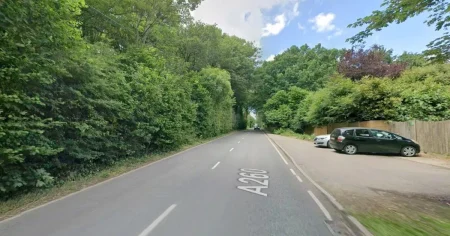


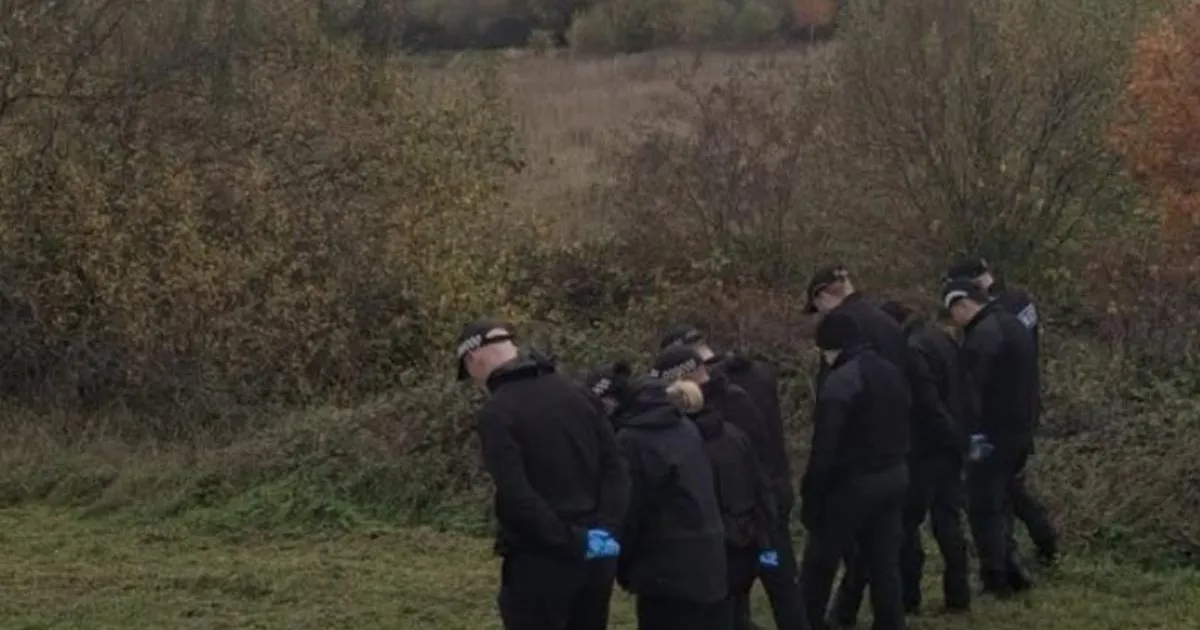
The Trans Pennine Trail is one of those places where people go to escape the noise of everyday life. In the Bolton-upon-Dearne area, the stretch between Mexborough Road and Harlington Road has long been a familiar route for walkers, joggers, cyclists and dog owners. But on Wednesday afternoon, that sense of peace was shattered. Police were called at around 2.50pm to reports that a woman had been raped on a popular hiking trail. Officers arrived to find a scene that no community ever wants to imagine. Detectives and forensic teams quickly descended on the area, and a major investigation began. The woman, described only as the victim, is being supported by specialist officers and medical professionals. Her attacker, she said, had been wearing a dark jumper, black gloves and a black face covering. He spoke with a southern accent. He was tall and stocky. Those details would become the foundation of a public appeal for information. As news of the attack spread, the quiet path became a place of concern, with forensic examinations replacing the usual calm. The investigation is focused on a specific section of the trail between Mexborough Road and Harlington Road, and officers are scouring every inch of it for clues. But this is not just a crime scene. It is a place where a woman’s life was changed in a moment, and where a community is now struggling to make sense of something deeply unsettling. The initial response has been described as extensive, with every available resource being used to identify the man responsible. The message from police is clear: they are determined to find him, and they need the public’s help. This is a story with many layers: a victim, a suspect, a place, and a set of questions that will need answering in the days to come.
The woman at the centre of this ordeal has shown a kind of strength that is difficult to put into words. In the aftermath of an attack, memory can be fragmented, but she was able to recall key details about the man who assaulted her. She described him as wearing a dark jumper, black gloves, and a black face covering. She said he spoke with a southern accent. She noted that he was tall and stocky. For investigators, these are not just details; they are a starting point. The black gloves and face covering suggest an attempt to hide his identity, but an accent and a build are harder to disguise. The victim is continuing to receive support from officers and medical professionals, which is a reminder that the consequences of sexual violence extend far beyond the moment itself. Her willingness to speak to police and to share such personal information is an act of bravery. It also gives the investigation a chance. A description like this one may be the key that unlocks a memory in someone else’s mind. Perhaps someone saw a man matching this description near the trail before the attack, or afterwards, walking quickly, trying not to draw attention. Maybe he was seen waiting, or leaving, or looking out of place. Someone, somewhere, knows who he is. The police have asked anyone who recognises this description to come forward immediately. They have also stressed that no detail is too small. The release of this information is deliberate: it puts the suspect’s image in the public mind and asks the community to help identify him. Behind the description is a woman whose life has been turned upside down. She will need care, time and justice. The least the rest of the community can do is listen, remember, and speak. It is also a reminder that the effects of such a crime ripple outward. Friends and family of the victim are suffering too. And the community, in its own way, has been violated as well. The public response to this appeal will say a great deal about who we are.
Detective Inspector Helen Hughes, the senior investigating officer, has been the public face of this investigation. She has spoken directly to the community, acknowledging the fear and anxiety such a case inevitably brings. “We know the impact an incident of this traumatic nature has on our local communities,” she said. “People will be rightfully concerned, and we completely understand why this is the case.” She went on to explain that the investigation is underway and that every resource is being used. “We are utilising every resource we have at our disposal,” she said, “to pursue every line of enquiry with determination to provide answers and secure justice for the victim.” The scale of the response has been considerable. Forensic sweeps have already taken place, and officers are continuing to explore CCTV and witness opportunities. The area between Mexborough Road and Harlington Road has become a focal point, with detectives working methodically through the scene. Hughes described the attack as “horrific,” and her language reflected the seriousness of the case. She did not ask for sympathy, but she did ask for information. She also reminded the public that behind every statistic is a real person, and that the victim is being supported throughout the process. The investigation is not just about catching a suspect; it is about restoring a sense of safety to a community that has been shaken to its core. When a sexual assault occurs in an open, public place, it sends a signal that no one is exempt and no location is completely safe. That is why the police response must be visible and robust. It is not only about solving a crime; it is about demonstrating that the community will not be broken by fear.
Detective Inspector Hughes continued by praising the victim’s courage. “The victim has shown immeasurable strength and remembered some key details about the suspect,” she said. Those details, already made public, are central to the appeal. “Did you see someone matching the description of the suspect? Do you have information which you think could be relevant? If so, please get in touch immediately.” She also revealed something that adds another layer to the investigation: police are aware of previous reports involving a man behaving suspiciously on the Trans Pennine Trail. “We are keeping an open mind and factoring these reports into the range of enquiries we are conducting,” she said. This suggests that the trail may have been the focus of earlier concerns, and that officers are treating those reports seriously. The appeal has been underway for some time, and Hughes thanked those who had already contacted police. “We issued an appeal in relation to our ongoing investigation earlier today and I want to thank everyone who has contacted us with information already,” she said. But she stressed that the work is far from complete. “If you have relevant information but are yet to contact us, then please do so as your intelligence could be crucial to our enquiries. Even the smallest piece of information could be an important part of the overall picture.” Her final words were for anyone feeling anxious about the situation. “If you have any concerns, please speak to officers in your local community to report information or to raise any issues you have as they are there to help you and keep you safe.” It is a message that combines urgency with reassurance. She acknowledged that such incidents do not happen in a vacuum. They leave questions in the air. Did anyone see him before? Did anyone see him after? Is there a pattern? Is there a link to previous reports? These are the questions the investigation will seek to answer.
Behind the police statements, however, there is a human story that cannot be captured by the word “incident.” The Trans Pennine Trail in this part of the country is not just a route between two roads. It is a place where people take time for themselves, where the world feels a little quieter. The idea that someone could be attacked there in the middle of the afternoon is frightening. It is entirely natural that residents should feel uneasy, especially parents, people who walk alone, and those who have always considered the trail safe. The reference to previous reports of a man behaving suspiciously on the trail only adds to that unease. Yet in the same breath, police have made it clear that they are not jumping to conclusions. They are keeping an open mind, and they are asking the public to help them build a picture. This is a delicate balance: acknowledging fear without causing panic, sharing information without compromising the investigation, appealing for help without making promises. In times like these, the role of a community becomes vital. A neighbourhood can offer support, but it can also offer information. Someone may have seen something that seemed odd at the time but didn’t think much of it. Another person might have noticed a man in a dark jumper near the trail and remembered his accent. The smallest observation could be the missing piece of a larger puzzle. Police are not asking people to speculate or to spread rumours. They are asking them to think carefully, to trust their instincts, and to come forward with anything that might assist. The presence of detectives and forensic officers in the area is a reminder that this is being taken extremely seriously. But it is also a reminder that the public is part of the response. For the local community, the process of healing may begin with something as simple as talking. Neighbours will discuss what has happened; regulars on the trail will look at each other with new concern. That collective awareness can make a difference. It can also be a source of strength. No one should feel that they have to deal with this alone.
The days ahead will be difficult for everyone connected to this case. The victim continues to receive support from officers and medical professionals, and that support will not end when the headlines move on. The investigation will continue, with every line of enquiry pursued and every piece of evidence examined. But the search for the man who carried out this attack cannot happen in isolation. It depends on the cooperation of the public. It depends on someone recognising a description, on a memory surfacing, on a conscience making contact with police. Detective Inspector Helen Hughes has called on the public to help, and her appeal carries the weight of a community that wants answers. The trail between Mexborough Road and Harlington Road may never feel quite the same to those who live nearby. The memory of this attack will linger, as it should. But there is also hope in the response. Hope that the victim’s bravery will lead to justice. Hope that the person who knows something will decide to speak. Hope that the trail, once a place of peace, can become again a place where people feel safe. Until then, the search continues. Officers are still there, working through the site, watching hours of CCTV, waiting for the phone to ring. The message they want the public to hear is simple: no piece of information is too small, no sighting is too insignificant, and no one should stay silent. If you saw something, heard something, or know something, contact the police. If you are frightened, speak to an officer in your community. The investigation is about securing justice for a woman who has shown immeasurable courage. But it is also about protecting everyone who walks that trail, and ensuring that the man responsible is removed from the streets before he can harm anyone else. The human side of this story is the part that matters most. It is a story of trauma, but also of strength. It is a story of a community coming together to help, to support, and to demand answers. And it is not over yet.