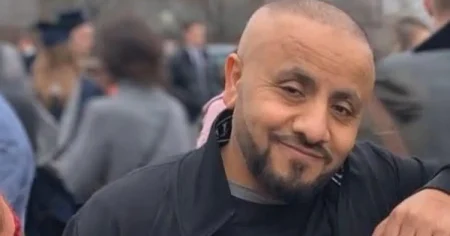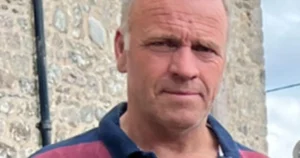

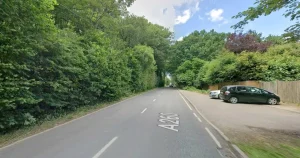

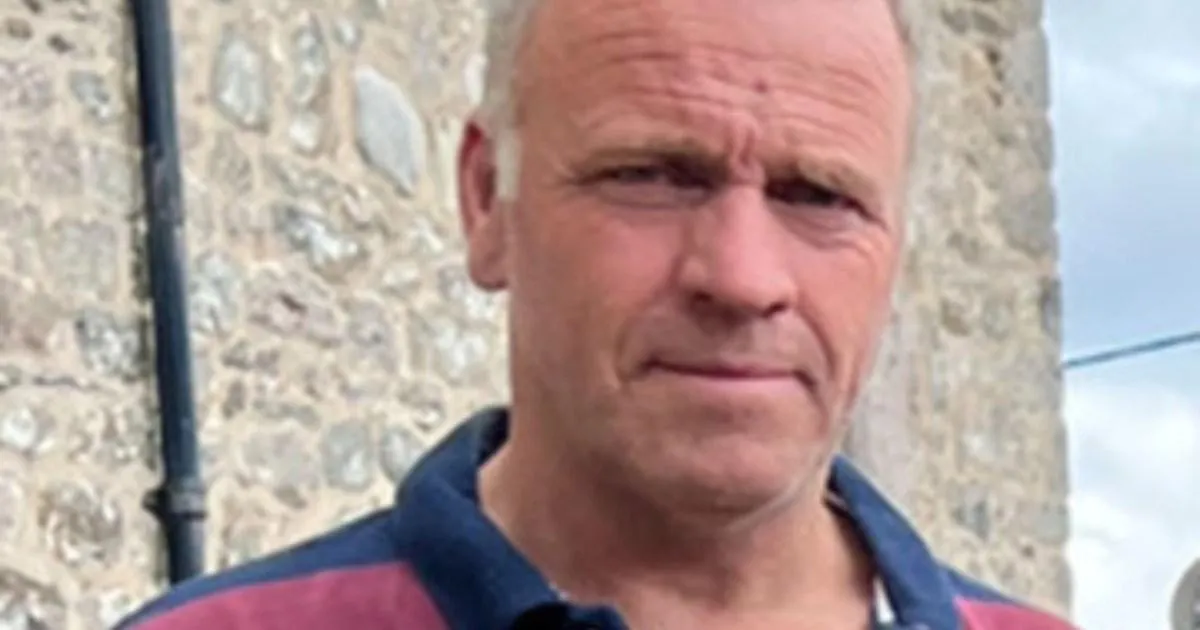
In May last year, Andy Lloyd, a 56-year-old lorry driver from Llanelian in Conwy, did something that was ordinary and extraordinary at the same time: he took his son to work with him. The boy was 14, on work experience, and Andy ran a family business, so this was not just a ride in a cab. It was a father passing on his knowledge, his habits, his sense of responsibility. The two of them drove to Tan y Dderwen Farm in Betws-yn-Rhos, where a load of hardcore needed to be delivered. It was exactly the kind of work Andy had done for years: steady, physical, unglamorous, the sort of work that keeps a small business going and puts food on the table. Perhaps they talked about the day ahead, or perhaps they sat in the familiar silence of people who know each other well. Whatever happened in that cab, it was the last ordinary drive they would ever share. When the lorry’s grab arms swung up and touched the overhead cables, the vehicle became a live conductor of 11,000 volts. Andy climbed down from the cab and touched the metal step. In that instant, the current tore through his body. He was electrocuted in front of his son. What was later described as a freak accident was, for those who loved him, simply the day their world broke. Less than a month after that morning, Andy had been due to marry his partner Hayley. Instead, a wedding became a funeral, and a boy was left with an image that would never leave him.
At the inquest at Ruthin Coroner’s Court, the details of the accident were laid out with the careful, unavoidable clarity of the law. The court heard that Andy had climbed down from the cab while the lorry was still sitting against the 11,000-volt cables. He was electrocuted after touching the metal step. The most painful evidence came from his son. In a statement, the teenager described watching the grab arms come into contact with the overhead cables. A child’s instinct can be faster than an adult’s awareness, and the boy understood, in that terrible moment, that something catastrophic was happening. He shouted to his father to be careful. But Andy had already stepped out of the cab. Perhaps he did not hear the warning. Perhaps he heard it and had no time to respond. Perhaps the words reached him at the same moment the electricity did. Witnesses at the farm saw flames coming from the rear tyres of the lorry. They saw Andy’s boots burning. Then he collapsed. The whole thing lasted only seconds, but for the boy in the cab it must have felt endless. He had watched his father die. He had called out to protect him, and the warning had not been enough. There is no way to understand the weight of that memory, and there is no way to put it down.
The men at the farm responded with the kind of bravery that comes from instinct rather than training. One of them noticed the boy still in the lorry and rushed to help him down, guiding him away from the vehicle and the still-live danger surrounding it. Another man dropped to his knees and began CPR, pressing on Andy’s chest in a desperate, unrelenting attempt to bring him back. The farmyard must have been filled with smoke, the smell of burnt rubber and scorched fabric, the sound of people shouting, the rhythm of compressions. Paramedics arrived quickly and took over, but the 11,000-volt shock had stopped Andy’s heart. No amount of effort could restart it. A 56-year-old father, partner, and businessman was pronounced dead at the scene. The boy was physically unharmed, but emotionally he had been shattered. He had been brought along to learn how to work, and instead he had learned how fragile life is. The men who tried to save Andy were not professional responders; they were ordinary people doing the only thing they could. But no one can outrun electricity. No one can restart a heart destroyed by that kind of current. All that was left was the silence after the chaos, and a 14-year-old boy standing in a farmyard, trying to understand a loss that made no sense.
Hayley Lloyd, Andy’s partner, was just weeks away from becoming his wife. They had plans, a future, a date to hold onto. The wedding was less than a month away, and all its details—flowers, guests, promises, a dress—were part of a life that was supposed to begin. Instead, Hayley found herself facing the unbearable task of planning a funeral. In the aftermath, she found words that captured both her grief and her love. She said Andy’s last moments were spent in his truck with his son beside him. She said he cared quietly but fiercely for those around him. That phrase, “quietly but fiercely,” is the kind of tribute that tells you everything about a person. Andy was not the kind of man who performed his love in public or announced his emotions in grand speeches. He showed love in the things he did: getting up early, running the family business, taking his son on work experience, making sure the people around him were safe and provided for. His love was steady, dependable, and so woven into ordinary life that it might have been easy to overlook. But it was also fierce. It was the kind of love that would have done anything for his family, and it was exactly what connected him to his son in his final moments. Hayley’s grief is not something any of us can measure. But her words have given the rest of us a way to remember Andy not as a victim, but as a man who loved completely.
The official inquiry reached its conclusion at Ruthin Coroner’s Court, where senior coroner John Gittins recorded a verdict of accidental death. The inquest heard evidence from Devon Locke, an engineer with Scottish Power, who had been sent to investigate after the electricity supply tripped. When he arrived, the lorry was still in contact with the cables running above the field. The scene was not safe. The same lines that had killed Andy were still live, still dangerous, still capable of claiming another life. Plans had to be made to isolate the power and make the area secure before anyone could approach the vehicle. That detail matters more than it might seem. The accident did not end when Andy collapsed. The danger remained above the farm, invisible and patient, waiting for someone to make it safe. The engineer’s work was methodical and technical, but it was also a reminder of how close tragedy had come to being even worse. The coroner’s conclusion of accidental death was probably expected. There was no suggestion that anyone had intended harm, no evidence of criminal negligence. It was a terrible, random alignment of circumstances. But for the family, the word “accident” could never be enough. It explained what happened, but it did not explain why Andy was gone. It did not explain how a 14-year-old boy was supposed to go on without his father. The legal process closed, but the grief did not. It simply moved out of the courtroom and into the spaces where Andy used to be.
Andy Lloyd’s death is a tragic reminder that the wires running above us are not part of the landscape. They are not harmless scenery. They carry enough electricity to kill in the time it takes to open a door, touch a step, or lift a piece of machinery. Every year, workers and drivers are killed in exactly this way, and every year safety campaigns repeat the same message: look up, lower your equipment, assume every line is live, keep your distance. Those campaigns exist because of stories like Andy’s. But Andy was not a statistic. He was a father who wanted his son beside him on a working day. He was a partner who was about to make a lifelong promise. He was a man who cared quietly but fiercely. His son will carry the memory of that May morning forever, but he will also carry the love that made his father take him along in the first place. Hayley will carry the pain of a wedding that never happened, a future that vanished, a voice that went silent. Yet in her own words there is something tender and true: Andy’s last moments were spent in his truck, with his son beside him. He was not alone. He was doing the job he did for the people he loved, watched by the boy who mattered most. That does not make the loss fair, and it does not make it easier. But it tells us who Andy Lloyd was. And it reminds us that even in the cruellest moments, love is the thing that stays.