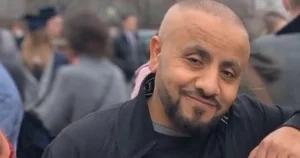



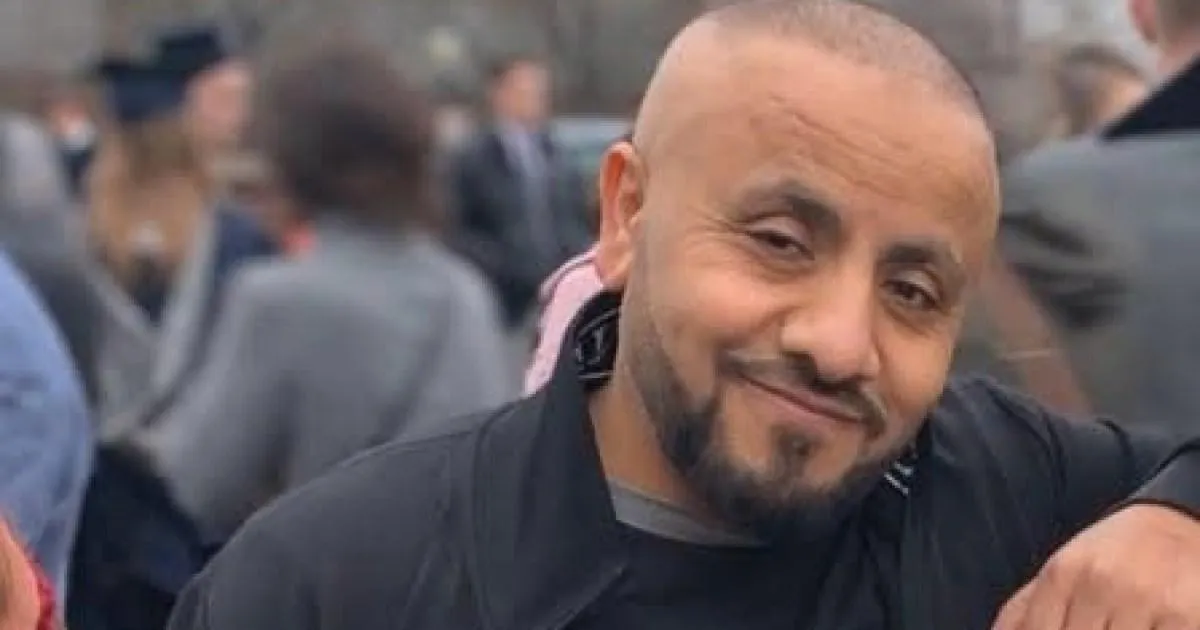
In the tightly woven communities of Liverpool, some people become landmarks without ever intending to. Abdo Ali was one of them. The 52-year-old father of five ran the Shop and Save Mini Market, a small corner store that was far more than a place to pick up bread, milk, or the everyday necessities of life. For his customers and neighbours, Ali—the name by which almost everyone knew him—represented constancy, kindness and a gentle humour that made even a quick errand feel human. That is why the news of his death, after a sudden and strange incident on Berkley Street on October 29, has left such an enormous silence. The first reports were difficult to absorb: a disturbance, a push, a heavy object falling, a beloved shopkeeper struck down. According to police and witnesses, an altercation broke out in the area. In the confusion, a punch bag machine was pushed over. The heavy equipment landed on Abdo, causing a serious head injury. He was rushed to hospital, where his condition was soon described as critical. For days, family and friends maintained a helpless vigil, waiting for updates, sending messages of love, and praying that a man who had given so much to so many would somehow pull through. But the damage to his head was too extensive. Abdo slipped away, leaving behind five children and a neighbourhood that could barely believe he was gone. The tragedy felt especially cruel because it was so random, so sudden, and so entirely out of character for the environment he had spent his life creating. Those who knew him could not reconcile the image of Ali laughing behind the counter with the sterile reality of a hospital bed. They could only watch as a life full of warmth was reduced to police reports and court proceedings, and wonder how a person who had brought so much joy could be claimed by something as ordinary as a punch bag machine.
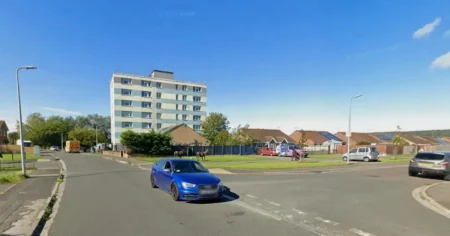
The events that led to Ali’s injury are now a matter for the courts, but the broad shape of what happened has emerged through police work and the accounts of those nearby. Berkley Street, like many streets in this part of Liverpool, is not a place where people expect to hear that violence has ended a life. It is a street of ordinary routines: people walking to shops, neighbours saying hello, children making their way home from school. On October 29, however, ordinary routine fractured. It is understood that an argument escalated quickly, and that in the heat of the confrontation, a punch bag machine—a sturdy, weighted piece of equipment designed to absorb the impact of punches—was knocked over. The machine was not new to the area; such devices are often found in amusement arcades, gyms, or fairgrounds, offering people a chance to test their strength. In a terrible irony, this object, meant to measure force or provide harmless entertainment, became the cause of a fatal injury. The blow to Abdo’s head was severe. Emergency services arrived to find a scene that no amount of training could make routine, with bystanders doing what they could before the ambulance took him away. At the hospital, doctors fought to save him, but the pressure on his brain was too much. His family, who had rushed to his side, were left with the unbearable task of sitting by a bedside and waiting for news that never came. In the days between his injury and his death, they had to confront the possibility that the man who had always been the centre of their world might not come home. An investigation quickly began. Officers appealed for witnesses, trying to piece together a sequence of events that must have unfolded in seconds. A cordon went up, and the street took on the strange, suspended quality that follows any sudden death. People stood in small groups, trying to understand how a familiar face could be gone. The answer, when it came, only deepened the bewilderment: not a weapon, not a longstanding dispute, but a terrible accident during a momentary burst of chaos. That discovery made the loss even harder to accept. There was no enemy to hate, no clear narrative of good versus evil—only a series of small decisions that led to a catastrophic outcome. When he passed, the grief was not only his family’s. It belonged to every person who had ever benefited from his patience, his generosity, or his quiet sense of fun.
In the midst of their grief, Abdo’s family released a statement, and their words painted a picture of the man the public had lost. “Abdo Ali, known to so many simply as Ali, was a loving father to five children, a friend to many and a man with a heart of gold,” they said. “As the much-loved owner of Shop and Save Mini Market, he was more than just a shopkeeper; he was a familiar face, a friend and a source of laughter to so many in the community.” The statement continued: “His kindness, generosity and charitable nature touched countless lives, always willing to help anyone in need. He leaves behind an enduring mark on everyone who knew him, and his warmth, laughter and big heart will never be forgotten. A truly special man who was loved by many and will be missed by even more.” These are not the formal words of a press release; they are the words of people trying to hold onto the essence of someone they loved. They describe a man who did not separate his work from his humanity. A shopkeeper, yes, but also someone who used his position at the counter to build relationships rather than simply make sales. He was the person people went to when they needed more than groceries—sometimes just a bit of encouragement, sometimes a listening ear, sometimes a joke that could lift the weight of a bad day. To his five children, he was simply Dad. To his customers, he was Ali. To the wider community, he was proof that a local shop can be far more than a commercial transaction, and that a small business can be the beating heart of a neighbourhood. There are people who pass through life quietly, doing their work, paying their bills, and never leaving a trace. Abdo Ali was not one of them. He left a trace in every conversation he had, every customer he helped, every person who walked out of his shop feeling a little lighter than when they walked in. That is not an accident. It is a life. And it is why the grief is so deep.
In the days after his death, the community responded in a way that would have meant a great deal to him. There were flowers and messages left near the shop, tributes from people who had known him for years and from those who had only met him once. Social media filled with stories of his kindness: the time he let a child choose a treat when they did not have enough money, the way he greeted elderly customers by name, the patience he showed toward teenagers who came in laughing and noisy. Maybe not every detail of these memories can be verified, but together they capture a truth more important than any single anecdote. Abdo had a way of making people feel seen. In a world where anonymous transactions are becoming the norm, he represented the old-fashioned value of knowing your neighbours and looking after them. A small shop on a corner can easily be overlooked, but when that shop disappears, something vital goes with it. The Shop and Save Mini Market was not just a business; it was a meeting point, a place where news was exchanged, where problems were shared, where the first few words of the day were spoken to a friendly face. It was also a place where trust was the currency that mattered most. People did not go to Ali merely because the prices were fair; they went because he made them feel welcome, because he remembered their preferences, because he asked about their families and genuinely listened to the answers. That kind of hospitality cannot be bought, and it cannot be replaced. Without Ali, the space will never feel the same. The community has lost not only a shopkeeper but a source of laughter, a charitable soul, and an unintentional guardian of the neighbourhood’s warmth. In the long days ahead, the grief will settle into something quieter, but it will not go away. Every time someone walks past the shop, they will remember the man who stood at the door, ready with a smile. Every time they need something small, they will miss the face they used to see. And every time the door opens in another shop, they will think of Ali and what he built.
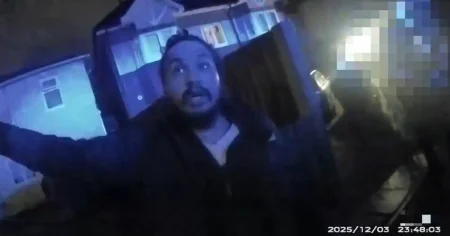
While the community mourns, the legal process has begun to take its course. Iliasse Alhag, 22, of Percy Street, has been charged in connection with the incident. He faces charges of affray, assault and wounding without intent, all relating to the disturbance on Berkley Street and the injury that led to Abdo Ali’s death. On Monday, November 2, Alhag appeared at Liverpool Remand Court, where the charges were put to him. The court will now consider the evidence, and it will be for judges and, if necessary, a jury to determine what happened and what responsibility should follow. Under the law, Alhag is presumed innocent until proven guilty, and no amount of public emotion should obscure that principle. At the same time, for the people who loved Abdo, the courtroom is not the place where justice will truly be felt. No verdict can bring him back; no sentence can replace his laughter or fill the empty chairs at his family’s table. What the legal system can do is provide an answer to the questions that have haunted his family since the first terrible phone call: How did this happen? Why did it happen? Could it have been prevented? The charges suggest that the police believe the disturbance was not simply an accident, but a confrontation with consequences that went far beyond what anyone intended. The word “without intent” is a reminder of how tragedy does not always require cruelty. Sometimes a moment of anger, a push, a single reckless action, can create a wound that no one planned and no one can heal. The court’s job is to untangle those complexities, and to decide what kind of accountability is appropriate. Whatever the outcome, it will not change the fact that a 52-year-old father is gone too soon. It will not restore the time his children should have had with him. It will not give his customers another chance to share a joke with him. But it can help a grieving family and a shaken community begin the slow process of accepting that some questions may never have satisfying answers, and that the best they can do is hold onto the memory of the man himself.
Every sudden death is a reminder of how fragile life is, but the death of Abdo Ali seems especially hard to make sense of. He was not a man who lived on the edges of danger; he was a man who spent his days in a small shop, surrounded by the ordinary things of life—shelves of canned goods, the hum of a refrigerator, the jingle of the door as it opened. His dream was not power or fame; it was simply to provide for his children and to be a good person to the people around him. That makes his loss feel closer and more personal, because it could happen to anyone, in any neighbourhood, on any ordinary day. Yet the story does not end with the accident. It ends with the way people respond to it. It ends with the family who found the strength to speak about his heart of gold. It ends with the customers who will carry his kindness in their memories. It ends with a community that will not allow him to be reduced to a headline or a statistic. Ali was a man who made people laugh, who helped when he could, who gave more than he took. In the end, the punch bag machine that caused his death does not define him. What defines him is the love he gave, the lives he touched, and the quiet courage his family has shown in the face of unimaginable pain. As Berkley Street slowly returns to its everyday rhythms, those who knew him will see his shadow in the doorway of the shop, hear his voice in their memories, and feel the loss of a truly special man. The phrase is easy to say, but in Abdo Ali’s case, it is true: he was loved by many and will be missed by even more. And in being missed, he will not be forgotten. The street will continue to see buses pass, doors open and close, and new days begin. But the heartbeat of the Shop and Save Mini Market is gone, and with it, a little piece of the old, human Liverpool that knows the value of a local shopkeeper. Ali gave that community something precious. In return, they will remember him. That is not a summary. That is a promise.