


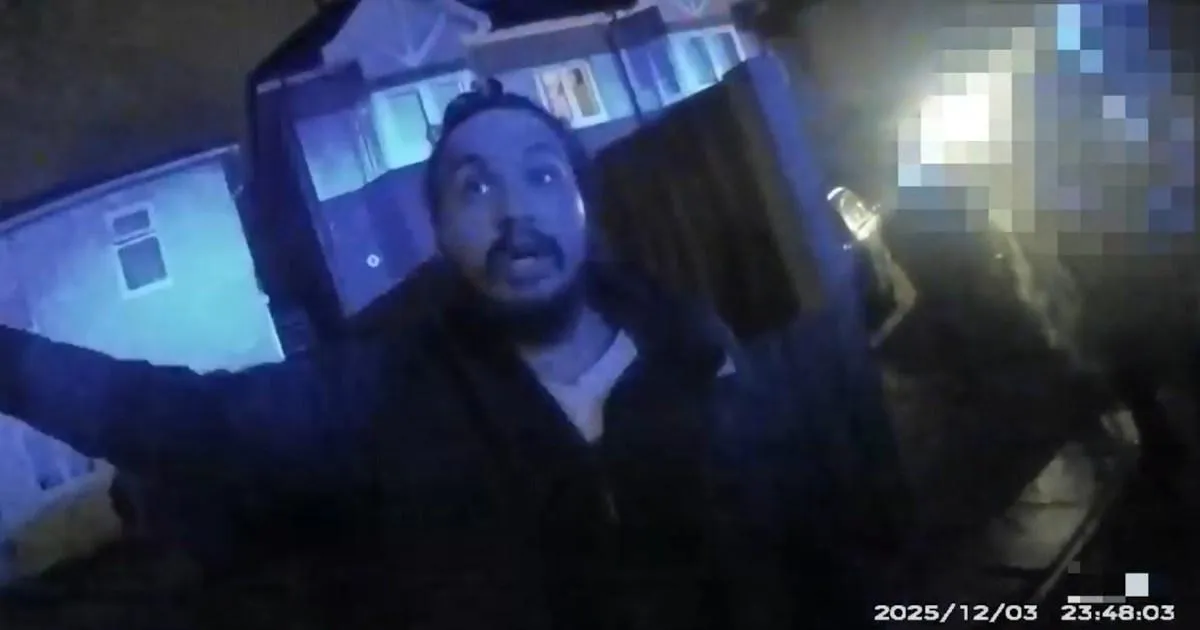
The brutal killing of 18-year-old Henry Nowak in Southampton has taken another harrowing turn, as the man convicted of his murder, Vickrum Digwa, has had his prison sentence significantly increased by senior judges who condemned his actions as displaying “incomprehensible cruelty.” The case, which has already sparked widespread public outrage due to the release of police body-worn camera footage, saw Digwa’s minimum term uplifted from 21 to 25 years. The appeal judges ruled that the original sentence was not just lenient, but “unduly so,” failing to adequately account for the profound suffering inflicted on Henry not only during the attack itself but also in its terrifying aftermath. The ruling brings a measure of legal vindication for Henry’s grieving family, yet their statement rings with the hollow pain that no judicial decision can ever truly heal their loss. The heart of this tragedy lies not only in the senseless violence but in the calculated, vicious cruelty that Digwa exhibited as his victim lay dying on the pavement, an act of psychological torture that the court has now firmly recognized as an aggravating factor of the highest order.
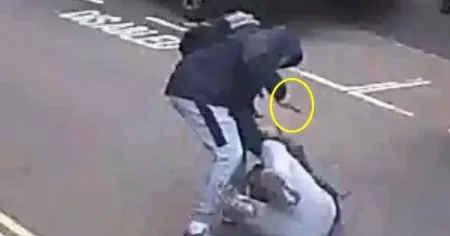
The events of December 3rd last year unfolded with shocking speed and brutality. Henry, a young man with his entire life ahead of him, encountered Digwa, then 23, in the street. What began as a chance meeting was transformed in an instant into a fatal confrontation, as Digwa, armed with a ceremonial kirpan, repeatedly stabbed the unarmed teenager. The savagery of the attack was only the beginning of the horror. As Henry lay on the ground, his life ebbing away, Digwa did not show remorse or render aid. Instead, he took out his phone and recorded a video, zooming in on Henry’s face, hurling abuse and goading him, telling him he had “f***ed up” as his condition deteriorated. This footage, alongside the police body-worn video, painted a damning picture of a perpetrator devoid of any empathy. The cruelty was compounded by Digwa’s callous lie to responding officers, claiming that Henry had racially abused him, an attempt to deflect blame and vilify his victim even in death. It was this entire sequence of events—the attack, the filming, the taunting, and the lying—that the Lady Chief Justice, Baroness Carr, and her fellow judges took into account when they increased his sentence at the Court of Appeal.
The legal proceedings on Thursday marked a critical juncture in the pursuit of justice for Henry. Attorney General Ellie Reeves had referred the original 21-year minimum term to the Court of Appeal, arguing that it was “unduly lenient,” while Digwa himself had attempted to challenge the sentence as “manifestly excessive.” The judges unanimously rejected his challenge as “unarguable” and instead found merit in the Attorney General’s referral. Jonathan Polnay KC, representing the Attorney General, articulated the profound aggravating features of the case, highlighting that Digwa “repeatedly deployed” the knife against an “unarmed and defenceless stranger.” He also pointed to two deeply disturbing elements: the abuse of his religious privilege to carry the blade in public, and the act of filming Henry, during which he “zoomed in on Henry’s face whilst verbally gloating.” The court’s decision to increase the sentence to 25 years sends a unequivocal message that such levels of depravity will attract the most severe penalties. As Lady Carr stated, a minimum term of 21 years “did not adequately reflect the overall seriousness of the murder,” a sentiment that underscores the court’s recognition that the emotional and psychological violence inflicted on Henry was as reprehensible as the physical act itself.
Following the ruling, Henry’s family spoke with a dignity that belied their immense grief, stating, “This decision represents an important step towards justice for Henry and our family. But no sentence, however long, can ever give Henry his life back.” They spoke not of victory, but of a life sentence of their own—a life irrevocably shaped by loss. “Our son was just 18-years-old. He had his entire future ahead of him, a future that was so cruelly and needlessly stolen from him,” they said, capturing the senselessness of the crime. Their statement was a poignant reminder that the legal system, for all its power, can only offer a shadow of justice. While welcoming the court’s decision, they made it clear that their fight is “far from over.” They referenced an Independent Rapid Review announced in the wake of the murder and expressed their determination to pursue “truth, accountability and meaningful change.” This resolve speaks to a deeper quest for answers, perhaps about the events that led to the encounter, and a desire to ensure that no other family has to endure such a profoundly avoidable tragedy.
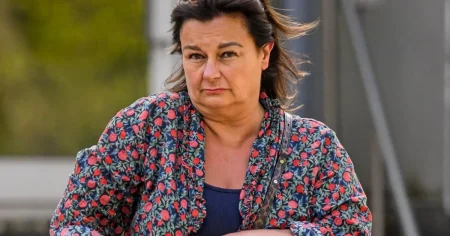
The pain of the family was further compounded by the developments in a related case. Digwa’s mother, Kiran Kaur, who was jailed for assisting an offender by removing the murder weapon from the scene, had her own legal challenge abandoned. It emerged that she is likely to be released from prison within weeks of the hearing, having been eligible for the Government’s early release scheme despite receiving a three-year sentence. This news was met with disbelief and anger by Henry’s father, Mark Nowak, who expressed his outrage to ITV News, saying, “It’s an absolute disgrace… She was convicted in May of this year. She’ll be out in December of this year having received a three-year sentence. How on earth can that be right?” His words, “She’ll be out for Christmas, and I won’t have Christmas with Henry,” cut to the very core of the injustice felt by the family. The contrast between the swift release of an offender and the permanent, life-altering sentence imposed on the victim’s family creates a profound sense of imbalance and frustration that no court ruling can fully redress. It highlights the systemic realities of the justice system that often add a layer of pain to the bereaved, who must watch as others move on with their lives while theirs remains frozen in grief.
In the end, the increased sentence for Vickrum Digwa stands as a testament to the gravity of his crime and a recognition of the extraordinary suffering he inflicted. As he was sentenced via video link from HMP Frankland, he showed no visible reaction, a chilling echo of the lack of remorse he has displayed throughout the proceedings. His challenge to his sentence was rejected, and the new 25-year minimum term reflects the court’s clear view that his actions fell far outside the bounds of acceptable human behaviour. For Henry’s family, who attended the hearing in London, the day brought a small measure of judicial affirmation. They have endured the unthinkable, and while the length of a prison term can never equate to a lost life, it does serve as a formal, legal denouncement of the cruelty that ended it. Their fight for a full account and for systemic change continues, but on this day, the legal system acknowledged the profound wrong that was done to their son. The memory of Henry Nowak, an 18-year-old with a future stolen in a moment of inexplicable violence, is now indelibly linked to a landmark ruling on the severity of punishment for those who torture their victims even as they die.