


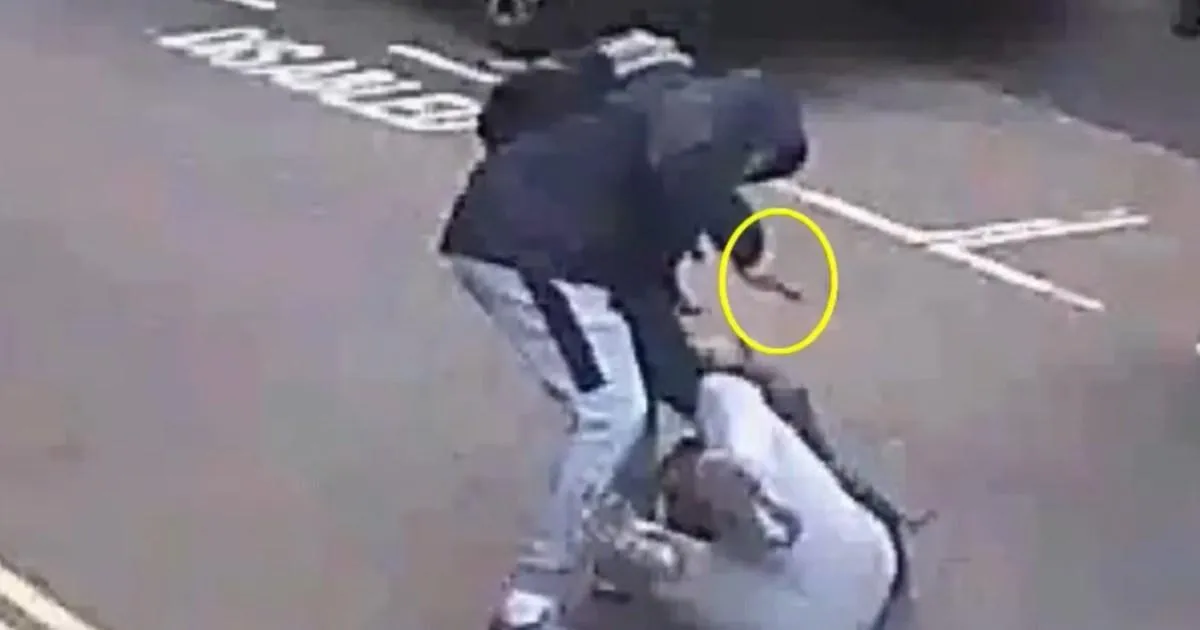
One day last September, in the middle of the usual rush and rhythm of King’s Cross, a 27-year-old man came within seconds of losing his life. The place is one of London’s busiest transport hubs, full of commuters, students, tourists and people simply trying to get from one part of the city to another. But on September 15 2025, that ordinary movement was shattered by an act of shocking violence. Reece Williams, a 30-year-old from Hackney, was captured on CCTV lunging at the man and stabbing him repeatedly in what detectives would later describe as a ferocious eight-second assault. The victim was left with wounds to his head and body, and his life hung in the balance. It was an unprovoked attack, the kind that makes headlines but never fully captures the terror of the moment itself. What the footage could not show was the victim’s fear, the pain, or the helplessness of being attacked without warning. And just as quickly as the violence began, it was over. Reece’s younger brother, Darrell Williams, 27, was waiting nearby. His role was not to hold the knife, but to drive his brother away from the scene. This week, both brothers appeared at Wood Green Crown Court, where the full weight of the law caught up with them. Reece was sentenced to life imprisonment with a minimum of 12 years after admitting grievous bodily harm with intent and possession of a blade. Darrell was sentenced to eight years for GBH and possession of a knife. Together, the brothers were handed combined sentences that amount to at least 20 years behind bars. For the victim and his loved ones, the sentences may bring a measure of relief, but they cannot erase the memory of those eight seconds, the fear, the blood, or the long and painful road to recovery.
The attack itself was captured in stark detail, and the CCTV images tell a story that no words can soften. Reece Williams is seen launching himself at the victim, the blade in his hand, lunging again and again in a burst of violence that lasted just eight seconds. To call it frenetic is almost an understatement. It was brutal, relentless, and utterly senseless. The footage shows a young man being stabbed repeatedly, his head and body bearing the brunt of the attack, while the world around him continued to move. It does not show the sound of the struggle, the cries for help, or the moment when the victim realised he was fighting for his life. It does not show the fear in his eyes, or the thoughts that must have raced through his mind as he tried to understand what was happening and why. And it does not show the aftermath, when he lay wounded and bleeding, with strangers perhaps rushing to help or simply frozen in shock. What the footage does show is Darrell Williams, ready and waiting to drive his brother away from the scene. The getaway was part of the plan. The brothers had clearly thought about how to escape, but they had not counted on the determination of the Metropolitan Police. They had not counted on hundreds of CCTV cameras following their route, on detectives piecing together their movements, or on the evidence that would eventually lead officers to their door. The eight-second attack may have been over in a flash, but its consequences were just beginning. For the victim, those eight seconds will never really end. They will replay in his mind for years to come, in nightmares, in moments of silence, in the ordinary street corners that suddenly feel dangerous. A knife can do more than cut flesh; it can steal a person’s sense of safety, their peace of mind, and their ability to trust the world around them.
Behind the arrest and the eventual sentencing was a painstaking police investigation that deserves its own recognition. Detectives did not simply stumble upon the brothers. They collected hundreds of CCTV clips, tracing the attack from the moment it happened to the point where the Williams brothers escaped. They followed the trail through the streets of London, using technology and old-fashioned detective work to build a picture of what had occurred. The evidence led them to Hackney, where both brothers lived, and eventually to the family home. It was there that officers found the clothes the brothers had worn at the time of the attack. Those clothes, preserved as evidence, would later help to link them to the crime. It is the kind of painstaking work that rarely makes headlines, but without it, justice would not have been possible. Detective Chief Inspector Sarb Kaur, whose team led the investigation, spoke clearly and powerfully after the sentencing. She said: “This was a violent and unprovoked attack, which left a man fighting for his life. Our officers responded quickly, identifying both brothers, establishing their roles and bringing them to justice.” Her words were not just a statement of fact; they were a promise to the victim, to the community, and to the wider public. “These sentences send a clear message,” she added, “those who inflict serious violence on our streets will be pursued and held accountable.” For the victim, this investigation meant that he was not abandoned. It meant that, even while he lay in a hospital bed fighting for his life, detectives were working to ensure that the people who did this to him would not walk free. There is something profoundly human about that commitment. In a city as large and fast-moving as London, it would be easy for one person’s suffering to be lost in the noise. But it was not lost. The police saw the CCTV, they saw the violence, and they followed the truth wherever it led.
The sentencing hearing at Wood Green Crown Court brought the case to its legal conclusion, but it also laid bare the human costs of knife crime. Reece Williams, 30, stood before the court having admitted grievous bodily harm with intent and possession of a blade. His sentence of life imprisonment, with a minimum of 12 years, reflects the severity of what he did. Darrell Williams, 27, was sentenced to eight years for GBH and possession of a knife, a recognition of his role as the getaway driver and his participation in the attack. Both men are from Hackney, both are brothers, and both will now spend years of their lives in prison. But the courtroom was not just about them. The victim, now a survivor of a brutal attack, was at the centre of it all, even if he was not physically present. His life has been altered forever. The wounds to his head and body may heal, but the psychological scars are far deeper. He will have to live with the knowledge that two men, strangers to him, decided to attack him without reason. He will have to find a way to rebuild his sense of self, his confidence, and his place in the world. For his family and friends, the pain is also real. They watched him fight for his life, they sat by his hospital bed, and they will now walk beside him through the long process of recovery. No sentence can give back the time that was stolen from him. No sentence can erase the memory of that day. But the sentences do matter. They matter because they tell the victim that his suffering was seen and taken seriously. They matter because they tell the community that violence will not be tolerated. And they matter because they tell the brothers that their actions have consequences, not just for the victim, but for themselves and their own family as well.
It is uncomfortable to think about the lives of those who commit such violence, but humanizing this story means acknowledging that the Williams brothers are not abstract monsters. They are human beings who made choices, terrible choices, that devastated another person’s life. They grew up somewhere, probably in Hackney, surrounded by the same complexities and pressures that affect so many young men in London. They have a family, and that family is now facing its own kind of grief. Two sons, two brothers, are now behind bars. Their loved ones must reconcile the people they thought they knew with the images captured on CCTV. That is not an easy thing to do. It is also not an excuse. There is no justification for what happened near King’s Cross. The attack was violent, unprovoked, and utterly avoidable. But understanding that the perpetrators are human does not mean forgiving them; it means recognizing that knife crime is a social tragedy, not just a legal one. It is a tragedy that affects victims and perpetrators alike, though never in the same way. It leaves families shattered on both sides. It leaves communities afraid. It leaves young people growing up in a world where carrying a knife seems, to some, like a necessity or a source of power. The Williams brothers bought into that lie, and their victim paid the price. The challenge for the rest of us is to look at cases like this and ask how we can prevent the next one. How do we reach young people before they pick up a blade? How do we create communities where conflict does not end in bloodshed? How do we help victims heal and perpetrators change? These are not easy questions, but they are necessary ones. Justice has been done in a court of law, but true justice would mean no more victims, no more hospital beds, no more families torn apart by a few seconds of violence.
In the end, the story of Reece and Darrell Williams is not a story of triumph. It is a story of loss, pain, and the long, difficult work of rebuilding lives. The victim will carry this with him for the rest of his life. He will pass King’s Cross, perhaps, and feel a tightening in his chest. He will hear a loud noise and flinch. He will wonder if he will ever feel completely safe again. The brothers will spend years in prison, separated from their family, their futures rewritten by a moment of violence. And the wider community will be left to make sense of it all. The police investigation was thorough, the legal process was swift, and the sentences were severe. Detective Chief Inspector Sarb Kaur’s message was clear: those who inflict serious violence on our streets will be pursued and held accountable. That is a message worth hearing. But the deeper message, the human message, is that every single person in this story is more than a headline. The victim is not just a statistic. He is a person with hopes, dreams, and people who love him. The brothers are not just criminals. They are products of a world that too often fails to protect young people from the lure of violence. And the community, the city of London, is not just a stage for crime. It is a place where people live, work, love, and try to build better lives. There is no easy ending to this story. The victim’s recovery will be long. The brothers’ time in prison will be hard. The ripple effects of that eight-second attack will continue for years. But perhaps, in the midst of all the pain, there is a small measure of hope. Hope that the victim will find strength he did not know he had. Hope that the justice system, for all its flaws, can offer some comfort to those who have been harmed. And hope that one day, fewer young men will choose to carry knives, and fewer families will have to stand in courtrooms and wonder where it all went wrong. Until then, the memory of what happened near King’s Cross remains a warning, a wound, and a reminder that violence changes everything, in an instant, forever.