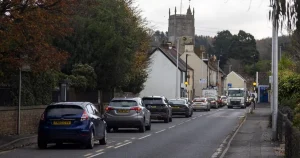

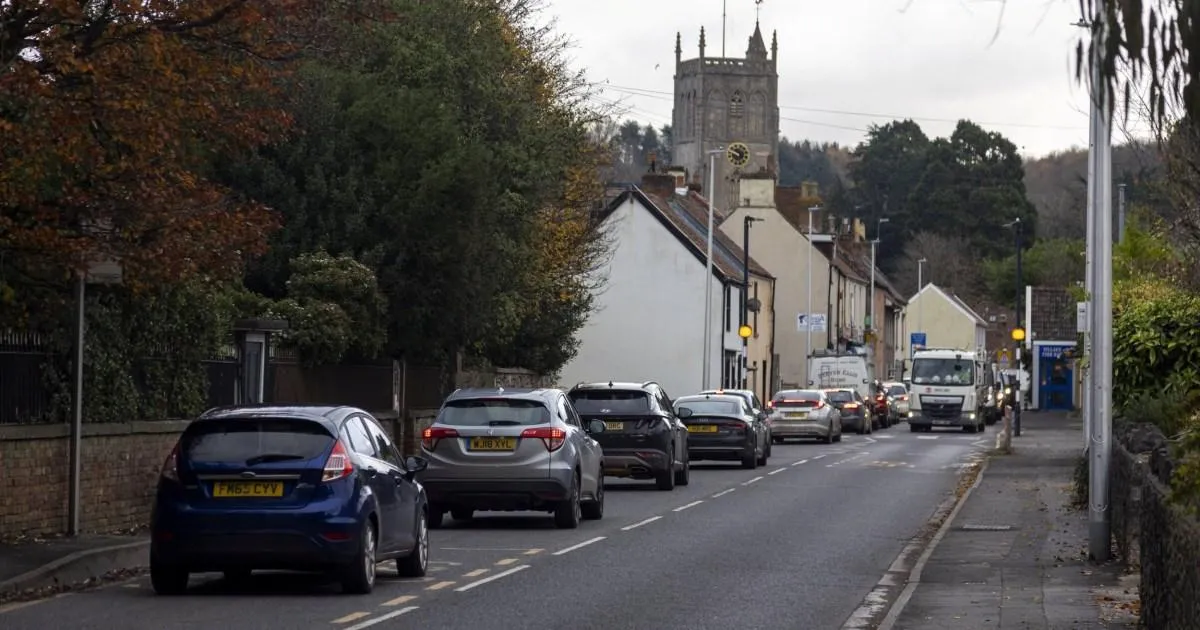
Some villages are defined by their churches, their markets, or the landscape around them. Banwell, in North Somerset, has spent the past century defined by something more elusive: a bypass. First proposed in 1927, when petrol was cheap and traffic was light, the road has become one of the longest-running projects in British history. Year after year, decade after decade, the village has watched plans arrive and vanish. The traffic never vanished. It only grew heavier. The village centre, with its narrow streets and old buildings, was never made for the volume of vehicles that now squeeze through it every day. Commuters, lorries, school-run parents and holidaymakers all filter through Banwell, turning the high street into a roaring, fuming corridor. For residents, it has been a nightmare for generations. They have waited for relief from the congestion, waited through meetings and consultations, waited through every optimistic announcement and every quiet postponement. Now, after nearly one hundred years, they have been told to wait a little longer. The latest delay—another six months—means the bypass is not expected to open until later in 2027, rather than in the summer as planned. By the time the first cars use it, exactly one hundred years will have passed since the original idea was put forward. The project has outlived the people who first dreamed of it, but it has finally reached the point where construction is underway. The problem is that in Banwell, even good news carries a hint of weariness.
To understand why the bypass has taken so long, one has to understand the strange rhythm of infrastructure in Britain. The scheme was revived, shelved, redesigned and reimagined over the decades, each generation assuming it would be the one to see it built. It was not until 2023, almost a century after that first proposal, that formal approval was finally given. By then, the reasons for the road seemed even more urgent. Banwell’s village centre was never designed for the volume of vehicles that now use it every day. Lorries squeeze past parked cars, buses inch through narrow bends, and pedestrians take their lives in their hands. The congestion is not merely an inconvenience; it has become a defining feature of life in the village. The latest delay is connected to water mains, not tarmac. Officials say that work to divert underground pipes must be completed before construction can progress, because the project involves extensive ground improvements, including piling. It sounds routine, technical, even dull—but in Banwell, every routine technical detail has the power to send hearts sinking. The delay means the bypass is now expected to open later in 2027, rather than in the summer as originally planned. North Somerset Council insists progress is being made, and perhaps it is. But to the people who live in the village, the words “progress” and “delay” have become almost interchangeable. They have watched too many ground-breaking ceremonies and read too many announcements to get excited. A century of waiting has taught them a certain scepticism. Yet there is also something remarkable about the fact that the project is finally happening at all. After a lifetime of false starts, the dream that once belonged to an earlier generation is now visible in the shape of construction vehicles and fenced-off land. The road is coming. It is just not coming quickly.
The financial history of the bypass is almost as tangled as its planning history. It was initially backed with £56 million in government funding through Homes England, a significant sum that seemed enough to get the job done. Then the original contractor pulled out, costs rose, and the total bill is now expected to exceed £105 million. That is a dramatic leap by any standard, and it is easy to focus on the numbers—the millions of pounds, the years of work, the endless invoices. But for the residents of Banwell, the real cost has never been measured in money. It has been measured in lost time, in stress, in conversations cut short by the roar of engines, in sleepless nights near a road that never sleeps. It has been measured in children who cannot safely cycle to school and elderly people who struggle to cross the high street. It has been measured in the growing number of shop closures—perhaps thirty or forty over the years—as passing traffic made it harder for anyone to stop, browse, and buy. The economic cost of living without a bypass is something no spreadsheet can capture. Steve Voller, chairman of Banwell Parish Council, summed up the mood when he said that the delay “extends the inconvenience and stress to those that live in the village and for anyone trying to get through it—especially at peak times.” He also spoke of something even more alarming: watching an ambulance turn around because the village centre was at a standstill. That image stays with you. A vehicle carrying someone whose life depended on getting through, trapped by traffic that had nowhere else to go, forced to reverse and find another route. It is a reminder that this is not just about convenience. It is about access, safety, and the difference between living in a village and living in a corridor.
Mike Bell, leader of North Somerset Council, responded to the latest delay with words intended to reassure. “We continue to make good progress on site and the century-long wait will soon be over,” he said. It is the kind of statement that has become familiar in Banwell—optimistic, bureaucratic, entirely sensible—and yet it does little to soothe the frustration that has built up behind the wheel of a car on a bad morning. Anyone who has ever sat in traffic with the engine idling, watching the minutes slip away, knows that there is something deeply personal about the experience. It saps your energy, shortens your temper, and makes you resent a place you might otherwise love. For the people of Banwell, this has not been the occasional bad day; it has been the background music of their lives. The pandemic, remote work, and changing travel habits have changed the way many people use the road, but the fundamental problem remains. Too many vehicles, too few alternatives, and no escape route. The village has become a chokepoint on a network that was never designed for modern traffic, and the residents have paid the price every single day. The latest delay may only be six months, but it is six more months of diesel fumes, of buses running late, of tractor trailers reversing at awkward angles, of parents holding their children’s hands just a little too tightly as they try to cross the road. It is six more months of telling visitors not to come at rush hour, and six more months of watching the news for any sign that the end is truly near. In the long story of Banwell’s bypass, six months is almost nothing. But in the lives of the people who live there, it is another long season of waiting.
Perhaps the most moving part of the story is how deeply personal it has become. Roy Rice, a lifelong Banwell resident and local historian, recalls his uncle Wally Richards helping to survey the original route when he was just eleven years old. “My uncle, Wally Richards, when he was 11, helped the survey and put the pegs in of the original bypass plan,” Roy said. “It was a different variation in 1927. He is no longer with us but I am sure he would be very surprised we are still talking about it 100 years later.” The image of an eleven-year-old boy walking the fields with survey pegs, helping mark out a road that he himself would never see built, carries the whole story in miniature. It speaks to a village where memories run deep, where family names stretch back generations, and where the bypass has become a kind of inherited dream, passed down like a watch that has stopped working but is too precious to throw away. Roy hopes the new road will breathe life back into Banwell. He believes that around thirty to forty shops have closed over the years, partly because the traffic made it difficult for people to stop and linger. If through-traffic disappears, he reasons, maybe the cafes and small businesses will return. He is not naive enough to think the bypass will solve every problem, but he believes it is a chance. Wally Rice, another lifelong resident and a former councillor, is now eighty-five. He remembers talking about the road when he was still at school. “There has been 30/40 years of meetings about it and it never seemed like a viable option,” he said. He does not think the scheme is perfect, but he added: “It is not a perfect solution but is a damn sight better than what we have at the moment.” The phrase carries the weariness of a man who has heard every argument, seen every promise, and still has enough hope left to welcome the bulldozers.
When the bypass does finally open, it is intended to do much more than move cars out of a village centre. Studies suggest that it could cut traffic travelling through Banwell by up to 78 percent. That is an extraordinary number, and for the people of Banwell it represents something close to liberation. It means quieter streets, cleaner air, safer crossings, and a centre that belongs to the people who live there rather than to the cars merely passing through. The project also includes new routes for walkers, cyclists, and horse riders, linking to the Strawberry Line—a former railway line now used as a walking and cycling trail. There will be areas of woodland, wetland, and grassland, the kind of greenery that softens the edges of a village and invites people to linger. In a strange way, the bypass is not just a road; it is an attempt to turn the clock back, to regain something of the community that was lost under the weight of all that traffic. It will not be perfect, and the people of Banwell seem to know that. But it is a promise kept, finally, after a century of waiting. When the first car drives along the new route, it will pass over ground that was first surveyed by a boy with pegs nearly one hundred years earlier. Wally Richards is no longer here to see it, but his village will be, and so will the grandchildren and great-grandchildren of the people who waited with him. The road will not erase the decades of frustration, the missed opportunities, or the long list of postponed deadlines. But it will, at last, allow Banwell to be a place where people do not have to plan their lives around a traffic jam. After a century of patience, that is a victory worth celebrating.