


At Winchester Crown Court, a trial is unfolding that exposes the darkest corners of betrayal, trust, and human cruelty. Richard Wilkins, 62, a taxi driver from Toothill, Swindon, is accused of raping Joanne Young while she lay drugged and incapacitated in her own bed, a woman who has made the deeply courageous decision to waive her right to anonymity so the world can know what was done to her. Wilkins told jurors that he responded to an advert on Craigslist placed by Joanne’s husband, Philip Young, who has already admitted to more than 50 charges of drugging and abusing his wife. When Wilkins arrived at the family home in Swindon, he says he was led to a bedroom where Joanne was shackled and blindfolded. Instead of registering alarm, he claims he heard a snoring noise and decided it was “part of the role-playing scenario” that Young had advertised. “I considered this was still part of the role-playing scenario that I was acting out,” he said. That single sentence captures the moral and legal question at the heart of this case: how far can a person go in trusting a stranger’s story before they are responsible for questioning what they see with their own eyes? Wilkins said he believed Joanne was awake or would have been woken by someone climbing onto the bed. “If you are asleep and someone climbs on your bed, it’s going to wake you up and make you move or something,” he told the jury. He insisted he did not know she was not consenting, and had he suspected anything, he would have contacted police himself. Yet the image of a woman bound, blindfolded, and snoring is not a scene most people would associate with a normal encounter. The jury will have to decide whether Wilkins was honestly deceived by a manipulative husband, or whether he chose not to think too deeply about what was happening in front of him.
To understand the full horror of this trial, one must understand the crimes of Philip Young. The 50-year-old husband has pleaded guilty to a total of 56 charges spanning a 13-year period, including drugging and raping his wife and orchestrating her abuse by other men. Jurors have heard how he “advertised” Joanne on swingers’ websites, describing her as an object to be used and degraded. He would “pluck men from the internet” and invite them to his family home in Swindon, where he would watch as they raped his wife while she was incapacitated by drugs. The phrase used in court—that he “relished her degradation”—paints a picture of a man who treated his marriage vows as a license to destroy another human being. Joanne, meanwhile, was not a willing participant in any of this. She was a woman who trusted her husband, who believed she was safe in her own home, and who was betrayed in the most profound way possible. The court has heard that she was drugged and left completely vulnerable, unable to speak, move, or resist. It is impossible to overstate the violation. She was not simply attacked by strangers; she was handed over to them by the person who should have protected her. This context is crucial because it explains how men like Wilkins came to be at her bedside. They did not stumble into the situation by accident; they were recruited through adverts that described Joanne as though she were a product. But the law does not allow a person to treat another human being as a product, and it does not allow a man to assume consent from an unconscious, drugged body. The prosecution will argue that anyone with ordinary decency would have stopped, questioned, and walked away. The defence will argue that Philip Young was so convincing, so plausible, that ordinary men were fooled. In many ways, this trial puts human judgment on trial.
Wilkins did not rely only on the “role-playing” explanation. He offered a detailed account of what he believed was happening and why. He said that when he began having sex with Joanne, she stopped snoring and began making sounds of “moaning or groaning of enjoyment.” He claimed that she even wrapped her legs around him, a detail that, if true, would suggest she was awake and responsive. But the prosecution will likely note that these could be involuntary reactions of a drugged body, or even the result of the twisted scenario that Philip Young had choreographed. Wilkins also told the court that he did not suspect Joanne had been drugged or was drunk because there was no “drug paraphernalia” in the room and neither Philip nor Joanne smelled of alcohol. He said he believed Philip Young’s account that his wife would be a willing participant. “Philip Young is a very convincing person when you speak to him, he is a very believable person, we now know what he is like,” Wilkins said. He added that he had agreed to be filmed and had not worn a mask to hide his identity. “I didn’t have anything to hide,” he insisted. He also denied arranging with Young to come to the house in order to rape Joanne. Through all of this, a different kind of human tragedy emerges. Wilkins says he was searching for friendship after a “rough divorce,” trying to regain confidence and get on with his life. Loneliness, in the age of the internet, can lead people into strange and dangerous corners. It is easy to imagine a middle-aged man, emotionally bruised and looking for connection, stumbling across an advertisement that seemed to offer an uncomplicated encounter. But the danger of such naivety is real when it collides with an incapacitated woman. The question remains: was Wilkins a predator, or was he a man who failed to read obvious signs? The distinction matters because the court must determine not only what happened but what was in his mind at the time.
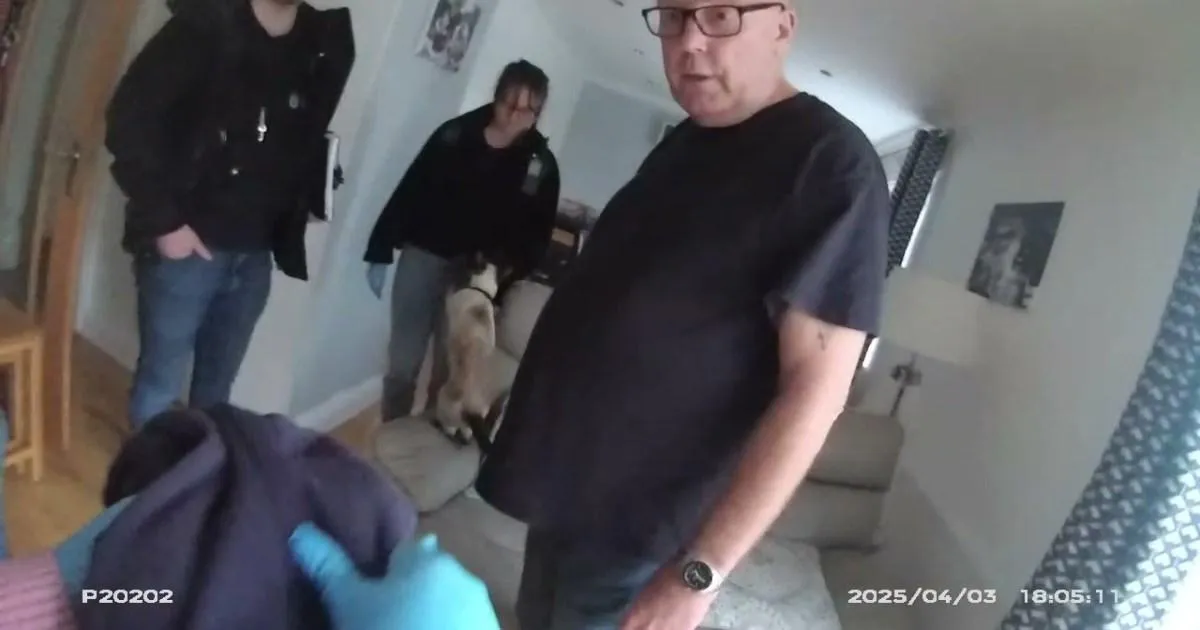
Wilkins is not the only one on trial. The wider case involves six defendants, each facing different charges arising from the same series of events. Philip Young has already admitted his role, and his confession has set the stage for the trials of the men he invited to abuse his wife. Norman Macksoni, 48, of Bedfordshire, denies one count of rape. Connor Sanderson-Doyle, 32, of Swindon, denies sexual assault by penetration and sexual touching. Mohammed Hassan, 38, of Swindon, has pleaded not guilty to one count of sexual touching of Joanne. A sixth defendant, Dean Hamilton, 47, of Somerset, has admitted one charge of assault by penetration, two of sexual assault, and one of rape. These men come from different walks of life, different ages, and different backgrounds, but all are connected by the same dark web of deception spun by Philip Young. The court has seen body-worn video footage showing the arrests, images that have given the public a glimpse of the ordinariness of the accused. They are not monsters who look the part; they are men in everyday clothes being led away by police. That ordinariness is itself part of the horror. It is a reminder that sexual violence is not perpetrated only by strangers in dark alleys, but by men who drive taxis, live in ordinary towns, and answer internet adverts. The trial will continue for some time, and the jury will have to disentangle the stories of each defendant, evaluating the evidence against each man separately. The legal process is necessarily slow, but for Joanne, this trial may be the only opportunity to see her abusers publicly confronted with what they did. Her husband has already admitted his guilt, but the men who took part in her abuse are entitled to their defences, and the court must respect that. At the conclusion of the trial, all defendants will be sentenced, and then, perhaps, Joanne can begin to rebuild her life.
Beyond the legal details, this case raises profound questions about consent, responsibility, and the limits of belief. In law, consent must be freely given for a specific act, and it can be withdrawn at any time. A person who is asleep, unconscious, or under the influence of drugs cannot give consent. No one can consent on their behalf—not a spouse, not someone who has posted an advertisement, not a partner who says “she’ll be fine.” The men who appeared at the Young family home were not invited by Joanne. They were invited by her husband, who had drugged her. If a woman is unable to say yes, then any sexual act is unlawful. Wilkins has said he believed she was consenting, and his lawyers may argue that his belief was reasonable in the circumstances. But were those circumstances reasonable? A shackled, blindfolded woman who is snoring is not a woman who is voluntarily participating in a casual encounter. That is a scene of extreme vulnerability, and the law does not allow a stranger to interpret vulnerability as enthusiasm. Even if Wilkins genuinely heard moaning or felt legs wrapping around him, the question is whether he was entitled to rely on those signals while ignoring the much larger red flags. The trial has also highlighted how easy it is for abusers to exploit the internet. Craigslist, swinging websites, messaging apps, hidden forums—these tools allow predators to connect and coordinate, often with terrifying impunity. Philip Young was able to turn his own home into a hunting ground, and he did so for years. It is a chilling reminder that the internet is not always a force for connection; sometimes it is a marketplace for the worst kinds of exploitation. The justice system can only respond after the fact, punishing those who are caught. Preventing such crimes requires more than laws; it requires a culture in which men are taught to question their own desires, to see women as human beings rather than objects, and to walk away from any situation where consent is not clear and enthusiastic. In this courtroom, however, the focus is on individual responsibility. Did Wilkins and the other defendants cross the line? That is for the jury to decide.
Perhaps the most remarkable figure in this whole case is Joanne Young herself. By waiving her automatic right to anonymity, she has chosen to be named publicly in connection with one of the most degrading and intimate betrayals a human being can endure. This is not a choice every victim would make, and it should not be demanded of any victim. But Joanne’s decision speaks to a determination to reclaim her story, to put the shame where it belongs—on the men who abused her, not on her. She has survived a 13-year nightmare that most people cannot imagine. She was drugged by her husband, violated by strangers, filmed and photographed, and treated as a prop in her husband’s fantasies. And now she is sitting through a trial, listening to testimony about the most painful moments of her life, all in the hope of seeing justice done. That resilience is staggering. There is no single outcome that can undo what happened. No verdict, no sentence, no punishment can give Joanne back the years that were stolen from her. But the trial matters. It matters because it acknowledges publicly that what was done to her was wrong, that she was not to blame, and that the men who used her must answer for their choices. It also matters because it reminds society that abuse often hides in plain sight, behind closed doors, inside marriages, within ordinary communities. The case has already forced people to confront uncomfortable truths about how beliefs can be manipulated, how trust can be weaponised, and how easily a woman can be silenced. As the trial continues, the jury will weigh the evidence, and eventually the defendants will be sentenced. Joanne will have to live with the aftermath for the rest of her life. But by speaking out, by insisting on her name, she has shown that the victim is not powerless. The abusers may have controlled her body for a time, but they cannot control her voice. And in the end, her voice—and the testimony of the law—will be the final word.