

There’s something about American politics that always manages to pull the rest of the world in, even when we know, deep down, that a lot of it is pure theatre. It’s like watching a firework display from across the street — you can see the flashes and hear the bangs, but you’re never really in danger, and you’re not entirely sure why you can’t look away. Take Katie Zacharia, for example. Her stint as White House press secretary lasted barely five days last month, which was enough to send the British commentariat into a little spiral of gleeful disbelief. We all had a good chuckle, shared a few memes, and then moved on. But did it change anything in the UK? Not a single thing. If the French president’s press secretary had been sacked within a week, or the Chinese foreign ministry spokesperson had quit over a minor disagreement, we wouldn’t have given it a second thought. So when the American midterms rolled around, it felt fair to wonder whether this was just another case of us getting swept up in someone else’s drama for no real reason. Are these results actually relevant to our lives, or are we just addicted to the spectacle? The honest answer is complicated, but one woman who has spent a lot of time thinking about it thinks the midterms matter a great deal — and it all comes down to a war that is being fought thousands of miles away, yet somehow showing up in our energy bills, our food prices, and our sense of economic dread.
Dame Emily Thornberry, the chair of the Parliamentary Foreign Affairs Committee and a former shadow foreign secretary, has a front-row seat to how global events ripple back to Britain. Speaking to Metro earlier this afternoon, she made it clear that the one issue tying the US midterms to our daily lives is the Iranian war. This is the conflict that has been quietly squeezing household budgets across the UK, pushing up the cost of everything from petrol to groceries, and making life harder for millions of ordinary people who have no say in any of it. The war is not our war, and there is little we can do to stop it, but we still feel the consequences every time we fill up the car or do a weekly shop. That is the strange cruelty of a connected world: the decisions made in Washington, or the decisions avoided in Washington, end up shaping the price of bread in Manchester and the cost of heating a home in Glasgow. Dame Emily’s point is that the midterms have shifted the political ground underneath all of this. Even though Donald Trump remains in charge of the armed forces until the next president is sworn in, the Democrats now have a very different kind of mandate — one that many of them believe includes bringing the Iranian war to an end. The election results have been interpreted by many as a signal that Americans are exhausted by endless conflict and the cost-of-living pressures that come with it. The question is whether that signal can be turned into action, and whether the people who want to change course can actually do so before Trump makes things even worse.
The mechanics of stopping a war are never simple, especially when the person holding the nuclear football is still the one who wants to keep fighting. Dame Emily outlined a few possible paths, and none of them are easy. There is the War Powers Act, for example, which has been floated by Georgia senator Jon Ossoff as a way for Congress to force a withdrawal or at least restrict military engagement. It’s a blunt instrument, but it exists for exactly this kind of situation — when the executive branch and the legislative branch are at odds over whether the country should be at war. Then there is the funding lever. Congress controls the purse strings, and it is entirely possible that the Democrats could say: we will only approve military spending if it is not used in the Gulf. That would put Trump in an incredibly difficult position, because he would have to choose between his war and his government’s ability to function. But there is also the darker possibility, the one that keeps Thornberry awake at night: Trump might decide that he has nothing left to lose. If he feels the walls closing in, if he senses that the new Congress is going to make his life miserable, he could choose to hammer Iran even harder before the new congressmen and senators are sworn in on January 3. In other words, the period between the midterms and the new session of Congress could be extremely dangerous. Dame Emily thinks Trump will be advised to “get it sorted one way or the other” before then, because the incoming members are likely to give him a hard time over the war. But whether he is capable of sorting it out — or whether he will simply escalate in a fit of defiance — is another matter entirely. It’s a nerve-wracking thought, and it makes the midterms feel a lot less like distant entertainment and a lot more like a ticking clock.
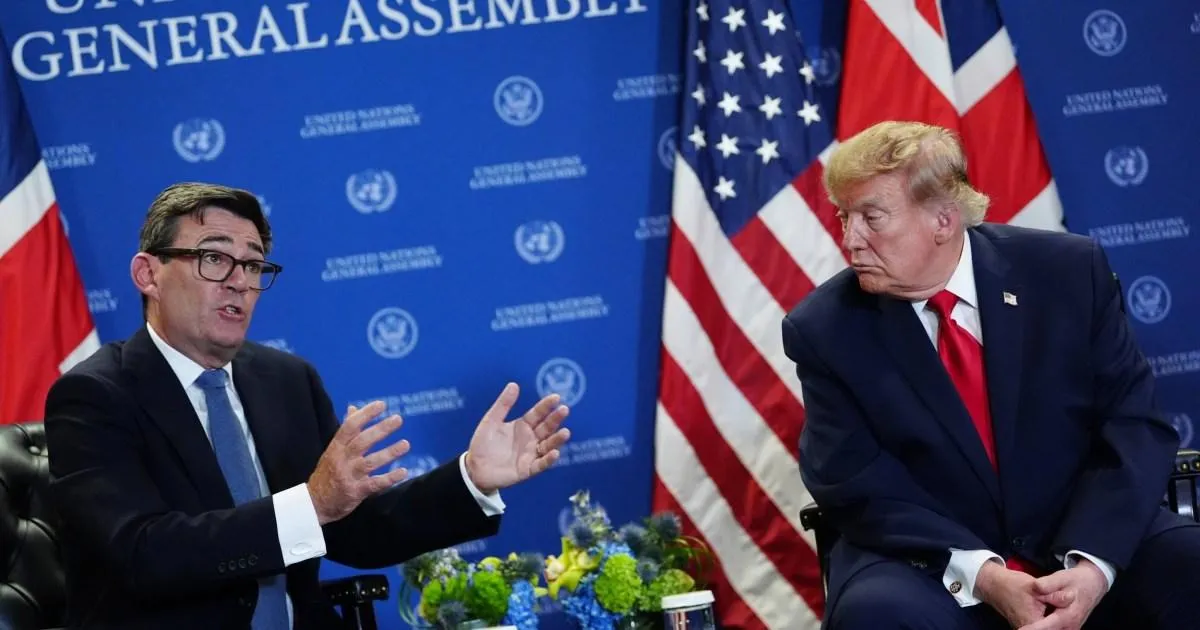
Andy Burnham, the Mayor of Greater Manchester and a politician who has never been afraid to speak his mind, offered a slightly different reading of the situation when he spoke to the BBC’s Chris Mason in Antigua. He said he would be working for de-escalation and making “very clear” that he wants the Strait of Hormuz open again. The Strait of Hormuz is one of those geographic chokepoints that most people have never thought about, but it is vital to the world’s oil supply, and when it becomes unstable, everyone feels the shockwaves. Burnham seems to see the midterm results not so much as a referendum on Trump specifically, but as a backlash against the pressures stemming from the Iranian war. From his perspective, voters in the United States were saying, with a laser-like focus, that they have had enough of the cost-of-living crisis. They want politicians to stop worrying about foreign adventures and start worrying about what matters at home — the price of fuel, the cost of food, the ability to pay the bills at the end of the month. That message will resonate with a lot of people in Britain too, because we are going through the exact same struggle. Burnham’s framing is humanising in a way that pure political analysis often isn’t. It reminds us that elections aren’t just abstract battles between ideologies and personalities; they are also opportunities for ordinary people to say, “We are hurting, and you need to listen.” The fact that this message is coming out of the United States rather than, say, France or Germany doesn’t make it any less relevant to our own political moment. If anything, it makes it more relevant, because the American economy is so deeply intertwined with our own.
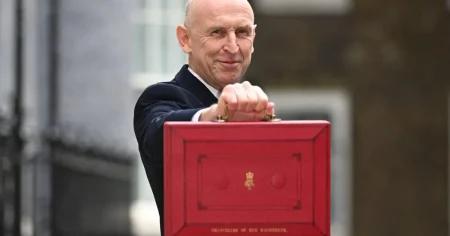
The broader picture is grim, and it was laid out starkly in the Budget last week by John Healey, who was clear about the devastation being wreaked on the British economy by a war that we neither support nor have any power to end. That is the cruel position we find ourselves in: we are collateral damage in a conflict that is not ours, and no amount of diplomacy from London seems to be able to change the trajectory. Every time the situation in the Gulf worsens, every time oil prices spike, every time markets get jittery, the British economy takes another hit. Businesses struggle, families feel the pinch, and the government is forced to make impossible choices about spending and taxation. It is no wonder that there is a sense of nervousness in Westminster about what happens next. The midterms have thrown a major variable into an already volatile equation. If the Democrats find a way to rein in the war, there is at least a chance that the economic pressure will ease, and that the cost-of-living crisis will become slightly more manageable. But if Trump decides to double down, or if the political deadlock in Washington simply continues without any meaningful change, then we are all in for a very rough ride. The irony is that the United States is supposed to be the world’s most powerful democracy, the place where change can happen through the ballot box. Yet sometimes it feels like the rest of the world is just holding its breath, waiting to see which version of America gets out of bed in the morning.
So, do we really need to know about the US midterms? The honest answer is yes, but not for the reasons we might think. We don’t need to know every twist and turn of the election night coverage, or every bizarre detail of Trump’s latest rant, or every viral moment that has nothing to do with policy. What we do need to know is how the balance of power in Washington will affect the things that matter to us: our finances, our security, our ability to plan for the future. The war in Iran is a perfect example. It is not being fought on our streets, and British troops are not in the line of fire, but it is still shaping our lives in profound and often invisible ways. The midterm results have opened a window of possibility — a chance for a different approach, a chance for de-escalation, a chance for the world to exhale. But windows don’t stay open forever, and the next few months could go in either direction. The best thing we can do is stop treating American politics as a spectator sport and start treating it as what it actually is: a force that touches all of us, whether we like it or not. That doesn’t mean we should get swept up in every piece of drama, but it does mean we should pay attention to the big picture. Because when the United States sneezes, the world catches a cold, and Britain — with its open economy and its reliance on global trade — catches pneumonia. The nerve-wracking wait begins now, and there is nothing to do but watch, hope, and prepare for whatever comes next. Maybe, just maybe, the message from American voters will be heard loud enough to change the course of a war. But even if it isn’t, the next few months will tell us a lot about just how much our lives are tied to decisions made across the Atlantic — and how little control we have over our own destiny.