
-
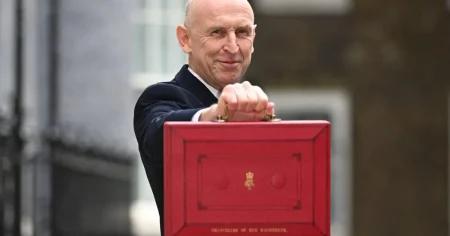
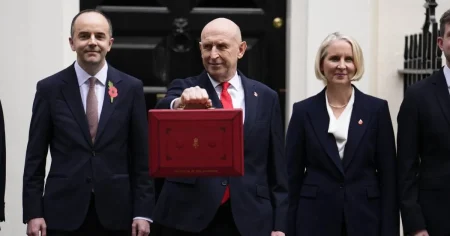
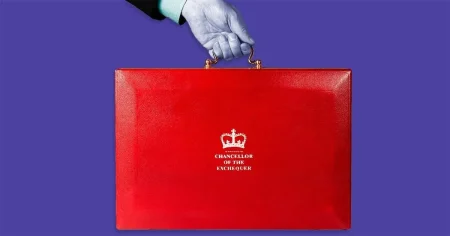
Budget day in Westminster is supposed to be one of the most serious afternoons of the political year. There is a familiar ritual to it: the Chancellor walks steadily to the despatch box, the red box is placed on the table with ceremonial weight, and the whole chamber leans forward to hear exactly how the country’s money will be raised, spent, borrowed and balanced. It is a day of numbers, forecasts, policy statements and carefully rehearsed phrases about discipline and fairness. But on this particular Budget day, the most heated argument in Parliament had nothing to do with tax thresholds, spending reviews or economic forecasts. It was about something far more human, far messier and far more physical: the unexplained absence of Nigel Farage. As the Chancellor stood up to deliver the statement, reporters in the press gallery scanned the green benches and noticed something odd. Reform UK’s seven MPs were sitting in their usual spot, squeezed in behind the Liberal Democrats, but the party leader himself was nowhere to be seen. In a chamber where presence is a statement, where every empty seat tells its own silent story, Farage’s absence was immediately noticed. It became the first question, the first raised eyebrow, the first whispered comment. A Budget is meant to be about the nation, but Westminster is a village, and in a village people notice when a familiar face is missing from church.
-
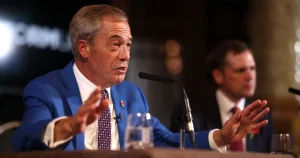
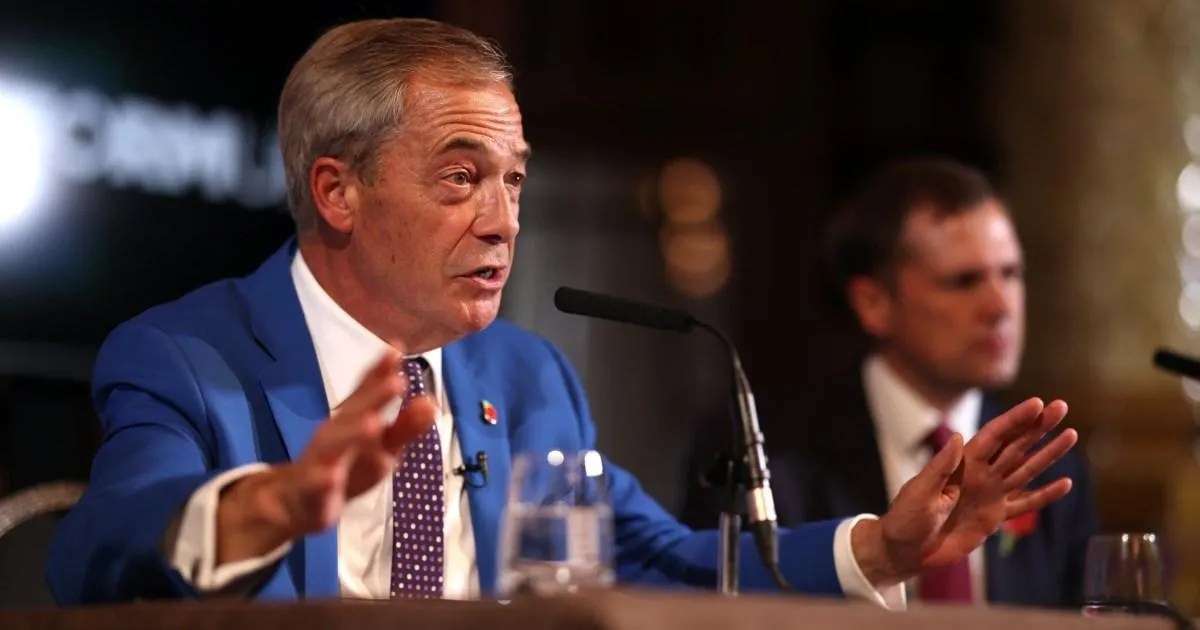
At a press conference later that afternoon, Farage was asked about his absence. His answer was the kind of thing that guarantees no one forgets him. He did not say he was ill, or busy, or unavailable. Instead, he said that at the state opening of Parliament in May, he had become involved in something he had not wanted. “I got involved… I didn’t want to… but I got involved in a physical altercation with an MP in the chamber,” he said. He added that he had not made a fuss, had not complained, but that he could see he was heading towards another physical altercation because his “prayer card” had been removed. For those unfamiliar with parliamentary customs, the prayer card is a small piece of paper used by MPs to reserve a seat in the House of Commons. It is a strange, almost schoolroom practice: a Member places a card on a bench to claim it, and that card is supposed to be respected. If Farage’s card had been removed, it meant he would not be guaranteed a place to sit during the Budget. And rather than risk another confrontation, he simply stayed away. His words were carefully chosen. He presented himself as the victim, the one who had been drawn into conflict against his will, the one who had chosen diplomacy over drama. But the phrase “physical altercation” hung in the air, deliberate and loaded, and it was obvious that this was not a story that would quietly disappear.
-
The response from across the political aisle was swift, blunt and, in places, contemptuous. Rosie Duffield, the independent MP who once sat for Labour, described Farage’s claim as “utter rubbish”. She said the Budget “wasn’t rammed at all” and that even without a reserved seat, Farage would not have struggled to find somewhere to sit. It was a dismissive response, the kind of response that suggests those who were actually in the chamber found his story hard to believe. Alicia Kearns, a Conservative MP, was even more direct. She called it “total bull” and pointed out that any of the seven Reform MPs could simply have given up their seat for their leader. If the prayer card had been removed, why did his own colleagues not make room? The question was simple, and the embarrassment was obvious. But the most intriguing response came from Caroline Voaden, a Liberal Democrat MP, who seemed to be personal. She wrote on X: “And we both know that’s not true Nigel don’t we? I’m still waiting for the apology you were required to write to me… Though I won’t hold my breath.” That single tweet changed the nature of the story. It was no longer a vague complaint about a removed card. It was now a direct reference to an apology, to an obligation, to a woman who felt she had been wronged and was still waiting for the score to be settled. The subtext was clear: Farage’s version of events was not just disputed, it was mocked by someone who claimed to know the truth.
-
The fuller picture began to emerge when Daisy Cooper, the deputy leader of the Liberal Democrats, gave her account of what happened at the state opening of Parliament. Speaking to Sky News, she was careful to say that she had not witnessed the moment herself, but the party’s understanding was clear. “My understanding is that he physically shoved one of our female MPs out of the way,” she said, “and that one of our male MPs then challenged him on that.” The allegation was serious, but it became slightly softer when a Lib Dem spokesperson repeated it, saying that Farage had merely “attempted to shove” a female MP. That small adjustment of language mattered in a story already full of he-said-she-said. Reform UK’s response was immediate and total denial. A spokesperson said Cooper’s account was “not true at all”, insisting that it was the Lib Dem MPs who had been aggressive towards Nigel. They added, with a flourish of partisan bitterness: “This is typical Lib Dem dishonesty in an attempt to stay relevant.” Then Robert Jenrick waded into the fight, and somehow made everything stranger. Asked about the incident on Sky News, he described the unnamed Lib Dem MP as “some petty, bolshie Lib Dem MP” and admitted he did not know their name because, as he put it, he did not know most Lib Dem MPs’ names. It was an odd combination of condescension and self-inflicted ignorance, and it did little to reassure anyone that Reform was taking the matter seriously. Instead, it made the whole affair feel tribal, petty and deeply personal.
-
The absurdity of the row was not lost on anyone. Here were two political parties, Reform UK and the Liberal Democrats, spending one of the most important news days of the year trading accusations about who pushed whom, who removed a small piece of paper, and who owed an apology. The fact that the incident had happened five months earlier only made it more remarkable. This was not a sudden flare-up in the heat of the moment. It was a grudge that had been carried through the summer, nursed in silence, and then brought out on the day of the Budget, when the cameras were rolling and the political world was watching. The argument revealed something very human about Members of Parliament: they are not just walking manifestos and policy positions. They are people with bodies, with pride, with memories of slights both real and imagined. They can feel a shove, an insult, an injustice. And when they feel wronged, they do not always let go. While all this was unfolding, the Budget itself was still happening. The Chancellor’s plans were beginning to land across the country, affecting wages, benefits, taxes, mortgages, the cost of living and the future of public services. But the loudest noise in Westminster, at least for a few hours, was not about policy. It was about physical altercations, prayer cards, and the strange, fragile egos of politicians who cannot leave an old argument buried.
-
Perhaps there is a lesson in all of this. Politics is often presented as a battle of ideas, but in practice it is a collision of people—flawed, tired, easily irritated people who sit in a very old building and argue about very old things. The prayer card incident is a reminder that institutions run on rituals, and rituals can be weaponized. A small piece of paper can become a symbol of exclusion. An unkind word can become a formal complaint. A shove, if it happened, can become a story that follows someone for years. But the deeper issue is that this kind of drama distracts from the work MPs are sent to do. While they argue about who was aggressive first, the country faces bigger questions about housing, health, education, employment and the economy. The Budget, not the brawl, should have been the story. Yet we are naturally drawn to human conflict. We want to know who is right, who is lying, who is bluffing and who will blink first. And so the row will probably continue, with more statements, more denials, more tweets, more opportunities for politicians to look, for a moment, less like statespeople and more like squabbling schoolchildren. But if the political class learned anything from this strange episode, it might be that the public is watching—and that most people are less interested in the removal of a prayer card than in the removal of the pressures that keep them up at night. Until then, the soap opera goes on, and the very human truth remains: democracy is not a machine of clean procedures, it is a messy, emotional, deeply personal affair. And on Budget day, in the middle of all the graphs and forecasts, it was the memory of an old fight that captured the day.