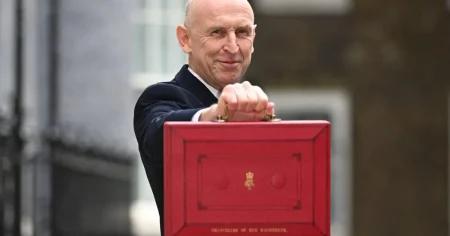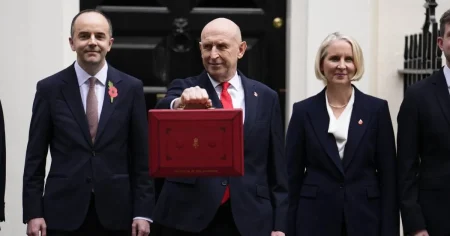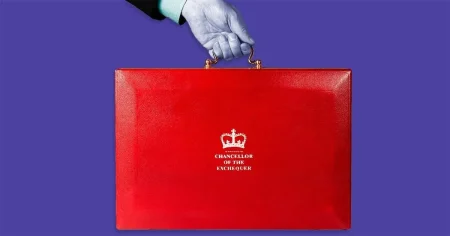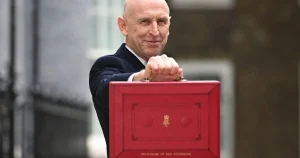

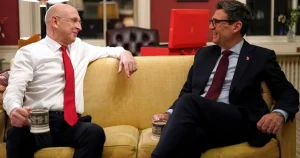

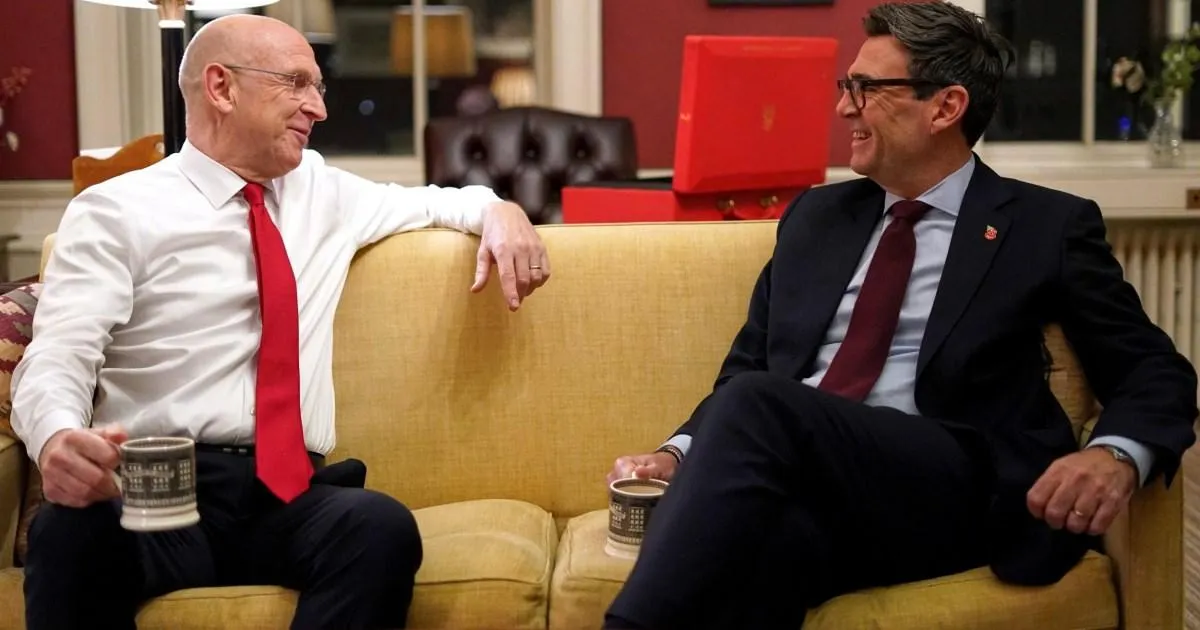
Let’s be honest: by now, we could probably write an Andy Burnham speech in our sleep. There’s the bit about hope, delivered with the earnest energy of a man who genuinely believes the next chapter can be better. There’s the rhetorical tic of ending sentences with “doesn’t it?” or “hasn’t it?”, as if he’s checking we’re all still with him. And there’s the obligatory stroll through recent history, to the moment Margaret Thatcher entered Downing Street and, in his telling, the country took a wrong turn from which it has never quite recovered. So when his Chancellor, John Healey, stood up to deliver the Budget, many of us braced for something similarly sweeping: bold reversals of decades of economic orthodoxy, grand plans, maybe a few sentences to make the tea go cold. But what we got was rather different. Healey’s first Budget wasn’t a revolutionary manifesto. It was careful, cautious, and at times frustratingly pragmatic. It probably tells you more about governing than any grand gesture could. Think of the scene: a Downing Street photo, two men in suits, no confetti, just the weight of expectation. Social media had spent weeks speculating about tax overhauls, property levies, a possible refashioning of local government finance. Instead, Healey seemed almost keen to lower the temperature. His tone was less “we’re going to change the world” and more “we’re going to manage your expectations while quietly steering the ship.” It was the kind of performance designed not to plunge the markets into a sweat or send commentators into a frenzy. Which is, in its own way, a very political statement.
Because once you peeled away the rhetoric, the substance was decidedly modest. There was no immediate, dramatic realignment of the country’s foundations. By the time the next Budget arrives, most of us will be paying much the same taxes in much the same way, although presumably everything will be a bit more expensive. Consider the council tax chatter. For months there were whispers that the whole system might be overhauled and replaced with a proportional property tax based on a percentage of a home’s current value. It sounded bold, even logical, but in the end we got nothing like that. The only council tax-related announcement was a £100 payment for households in bands A to D, landing in bank accounts this winter to help cushion the expected energy bill spike in January. That is not a blueprint for a new social settlement; it’s a sticking plaster. But it was exciting enough to crash the website where people checked their council tax band, which tells you how desperate households are for any relief. Why wasn’t the Budget more radical? There are two reasons. One is that Healey’s role is to act as a counterbalance to the prime minister’s ambition. Burnham can talk about reversing 40 years of neoliberalism; Healey is the one who has to reassure the markets that the sky won’t actually fall in. The other is that the country is in a precarious economic place. Healey wants to be seen as serious about meeting the fiscal rules laid down by Rachel Reeves, including getting the government’s current budget into the black by the end of the decade. That constraint looms over everything. So instead of a bold new settlement, he opted for largely small-scale measures to ease the cost-of-living crisis for those worst off, without blowing a hole in the Treasury’s arithmetic.
That focus on small-scale measures is the most human part of the story. It might not make a good poster or a rousing conference speech, but when people are struggling to pay their bills, they don’t need a philosophical lecture about the failures of the post-Thatcher consensus. They need to know that something concrete will happen before winter is out. The £100 council tax rebate is a good example. It won’t transform anyone’s life or pay off debts, but it’s the kind of measure that says: we see you, we know the next few months will be hard, and here is a small token of help. It’s also the kind of measure that gets lost in the noise of Budget day, with all its charts and forecasts and jargon about fiscal headroom. Perhaps that’s the point. A Budget that makes headlines is not the same as a Budget that helps people. The former is about drama; the latter is about multiplying thousands of tiny, unglamorous decisions. Healey appears to be betting that a battered British public will appreciate quiet competence, even if it doesn’t give them much to get excited about. Of course, quiet competence is harder to feel than a tax cut. But after years of chaos, a little dullness might be a welcome change. Yet there is a risk in this approach. Politicians love sweeping announcements because they give people a sense that something has changed, that a line has been drawn, that the future will be different. This Budget mostly seemed to say: the future will look a bit like the present, only slightly more bearable for the poorest. There were no hand grenades lobbed across the despatch box, no sudden surprises, no grand reimagining of capitalism. Instead, there was a sense of a government finding its feet, trying not to break anything while working out which levers actually do anything. The challenge for Healey is whether he can keep the public on side while delivering so little immediate drama. People don’t need fireworks in every Budget, but they do need to believe that quiet competence will eventually produce something visible in their everyday lives.
Yet for those listening carefully, there were a few scattered hints of genuinely bold policy buried beneath the cautious veneer. One came on energy. Healey pledged to “begin the radical reform of energy” that would bring down bills in the future. The wording mattered. He made clear the government would now prioritise cheaper energy, not necessarily cleaner energy, although he said clean power would be “key” to the whole endeavour. That is the language of a politician trying to please multiple audiences at once. To the green-minded, he offers reassurance that renewables remain central. To the pragmatic majority, he offers the promise that sky-high energy bills will not last forever. And to the markets, he sends a signal that this is a government serious about the cost of living, not a pressure group in suits. Whether the radical reform materialises in time to make a difference this winter is another matter, but at least the direction of travel is there, hidden between the cautious paragraphs. You could almost hear the collective sigh of relief from households and businesses exhausted by two winters of terror over what the next bill might bring. Cheaper energy is one of those rare policies that transcends divides. It may not look radical on day one, involving long, tedious negotiations about grid connections, planning permissions and subsidies. But if Healey can pull it off, it would alter the foundations of the country in the sort of way people remember at election time. It would also prove that the Burnham project is not all rhetoric. The prime minister talks about hope and turning the tide; the chancellor, if his energy plans work, will have made that hope tangible. The first Budget was never going to fix a decades-old problem in a single afternoon. But it has at least opened the door, and that matters.
The other hint was on one of Burnham’s very favourite topics: devolution. By the end of this decade, Healey said, 100% of business rates would be kept by the local authorities where they were collected, and by 2028 local areas would also get “a share of income tax.” It doesn’t sound like the sexiest topic. Mention business rates at a dinner party and watch the conversation grind to a halt. But this commitment to fiscal devolution is where Treasury figures pointed when asked if this was a Budget that sounded the death knell for 40 years of neoliberalism. The idea is simple: if local mayors keep the money raised in their areas, they can spend it on projects that matter to their communities. Think of Sadiq Khan’s long-mooted Bakerloo line extension, or the regional transport, housing and skills schemes that never quite make it into central government Budgets because they’re not eye-catching enough for national headlines. These are the things people notice, the improvements that make a city feel more liveable, the difference between a place that is merely administered and a place that is actually governed. It’s important not to get carried away, though. Sharing a bit of income tax and retaining business rates is not the same as full fiscal autonomy. There will be strings attached, conditions to meet and plenty of arguments between Whitehall and local leaders about what counts as “a share.” But even the direction of travel is significant. If you believe the country has been too centralised for too long, this is the beginning of putting that right. It may take years for people to feel the effects, but it is a structural change, not a gimmick. No one will wake up tomorrow feeling more empowered because their mayor has a theoretical claim on a slice of income tax. But in a decade, when the Bakerloo line finally opens or a northern town gets a rail link it was promised decades ago, the connection will be clear. That is the long game.
All of which brings us to the central tension of Healey’s Budget. The boldest measures lie far in the future. Energy reform takes years. Devolution takes a decade. The £100 council tax rebate is now. And that is the problem. The chancellor’s challenge, between now and the next Budget, is to convince a hard-up and frankly weary country that the minor, modest moves he is making now will be enough to carry people through to the point where the real foundation-shaking radicalism can begin. It is a plea for patience, for trust, for a bit of time. But the British public have been asked for patience before, and they have often been disappointed. The appetite for another “jam tomorrow” political project is limited. Healey must know this. That’s why he reached for the small, tangible things: the £100 payments, the promise of lower bills, the reassurance that the government isn’t going to do anything reckless. It’s a delicate balancing act, offering enough to keep hope alive without over-promising and setting himself up for failure. Where does that leave us? Probably where we always end up with Andy Burnham: with a feeling that something important is happening, even if we can’t quite see it yet. The speech had the hope, the rhetorical questions, the nod to the Thatcher era. The Budget had a chancellor being deliberately, insistently pragmatic. The two are not at odds; they are two sides of the same coin. Burnham supplies the vision, the direction, the belief that things can be different. Healey supplies the wiring, the caution, the financial homework that has to be done before the light comes on. It is not glamorous and it is not political theatre, but it is at least a start. The next Budget will tell us more, and the one after that even more. For now, we are being asked to accept that genuine, lasting change is a slow burner. The question is whether the country has the patience to let it cook.