


Perched high on a hill in North London, with the city sprawled beneath it and the skyline of Canary Wharf glinting in the distance, Alexandra Palace has long felt like a place that belongs to the imagination as much as to the map. Locals know it simply as Ally Pally, a beloved Victorian oddity of glass, brick and grand ambition, and for more than a century it has been a stage for everything from circuses to rock concerts. But this autumn, the venue has claimed a new and deeply fitting title: a World Origin Site, formally recognised as the birthplace of broadcast television in the United Kingdom. The honour arrives in November, exactly 90 years after the BBC made its first televised broadcast from this hilltop landmark, a transmission that wasn’t just a local milestone but a genuine world first. On that day in 1936, a young announcer named Leslie Mitchell looked into a camera and uttered a sentence that would echo through the decades: “This is direct television from the studios at Alexandra Palace.” Those words, at once mundane and electrifying, marked the beginning of the world’s first regular public high-definition television service. It is hard now, in an age of streaming platforms and pocket-sized screens, to imagine how extraordinary that moment was, but the quiet revolution that began inside those studios transformed the way billions of people experience news, entertainment and culture.
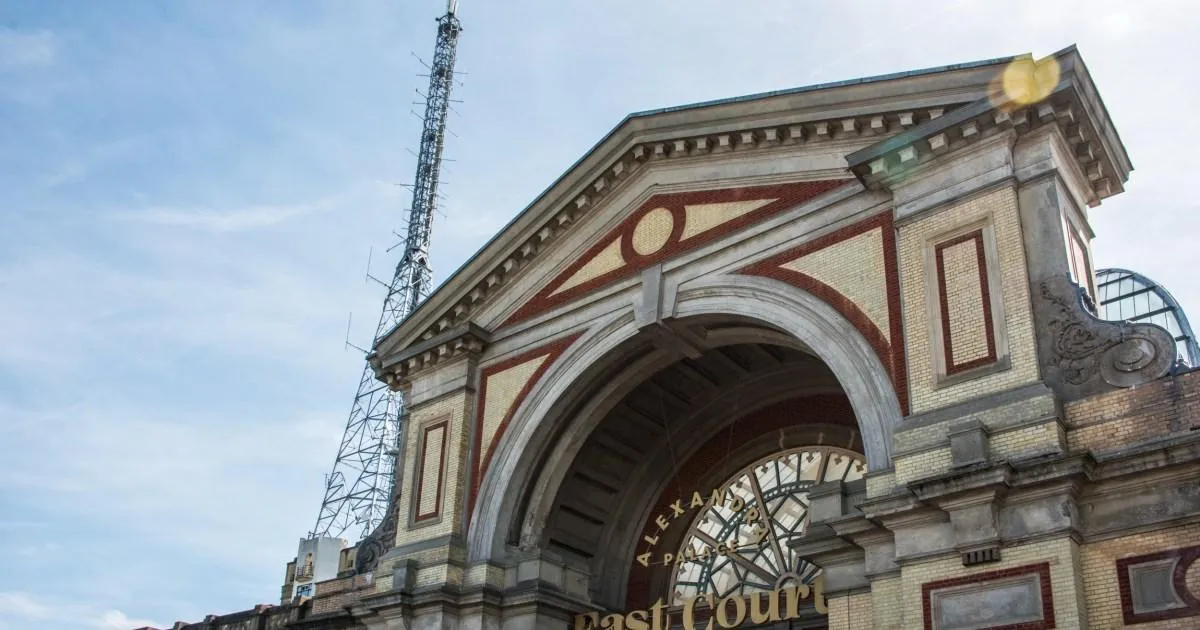
To mark the anniversary, a commemorative plaque was unveiled on November 2 in Ally Pally’s east court, not far from the studios where the original broadcasts were made. The ceremony is part of a wider season of events under the banner “BBC TV 90 at Ally Pally,” which runs across the venue this autumn. There are screenings of vintage programmes, talks from historians and broadcasters, and performances that celebrate the pioneering spirit of the site. The programme is deliberately reflective, asking audiences to look back at the ingenuity and nerve of the people who made television possible at a time when the medium itself did not yet exist. “Receiving the world origin site plaque is a wonderful recognition of Alexandra Palace’s place in broadcasting history,” said Kirsten Forrest, curatorial and interpretation manager at the venue. “What began here in 1936 went on to change the way people across the world experience news, entertainment and culture. It’s an extraordinary part of our history, and the plaque helps keep that story alive and at the forefront of the cultural conversation.” Even the BBC’s Director-General, Matt Brittin, took note, writing on LinkedIn that “innovation to serve audiences defined the BBC from the start. We must tap into that pioneering spirit to re-imagine the BBC for the future.” Today, the palace is run by a charity and is best known as a buzzy events space, hosting theatre performances, intimate gigs, food festivals and sporting spectaculars, but the anniversary is a powerful reminder that its true legacy is far older and stranger than the queues for winter ice skating or summer comedy nights.
Why Ally Pally, of all places? The answer lies in geography and gravity. The Victorian palace sits at the top of a steep, windswept hill between Wood Green and Muswell Hill, and in the 1930s that height was everything. Television signals need unobstructed paths to travel, and a transmitter placed at about 180 metres above sea level gave the fledgling BBC the best possible chance of beaming pictures across London. The transmitter tower fixed to the roof of Alexandra Palace allowed engineers to raise their aerial to exactly the right height, and from that vantage point they sent flickering moving images into the homes of the roughly 200 people in London who owned a television set in 1936. The first broadcast itself drew a live audience of only around 500 people, many of them crowding into the studio to watch history happen. By today’s standards, those early pictures would look blurry, shaky and faintly surreal, but at the time they were considered astonishingly sharp, high-definition in the truest sense of the word. There was also something wonderfully chaotic about the early days of experimentation. During test transmissions in August 1936, staff in the palace canteen discovered that the powerful electrical energy generated by the new equipment could make sparks fly from their forks and knives. Some versions of the story claim that the workers deliberately held their cutlery together just to watch the little electric fireworks crackle between the tines. It is a small, human detail that helps capture the atmosphere of a place where nobody was entirely sure what they were doing, but everybody understood that they were part of something huge.
The people who made those early broadcasts were a curious mix of theatre-trained performers, engineers and accidental innovators, and many of the television formats we still recognise today were invented almost by instinct in those draughty studios. The BBC’s first televised election results programme, for example, came from Ally Pally in 1950, with Richard Dimbleby anchoring coverage that began at 10.45pm on February 23 and brought results and analysis into living rooms as events unfolded for the very first time. A few years earlier, in 1936, a presenter named Cecil Henry Middleton had walked into a purpose-built garden at the palace to present a programme called “In the Garden,” casually establishing the gardening show format that remains a staple of daytime television to this day. What is perhaps less well remembered is how many of the early stars were women at a time when broadcasting was dominated by men in other roles. The BBC’s most popular pre-war magazine-style programme was hosted by Canadian actress Joan Miller, while Jasmine Bligh and Elizabeth Cowell were among the very first television announcers, their faces becoming familiar to the tiny but devoted viewing public. Yet broadcasting back then also had a very different rhythm from today. Gerald Cock, the television director of the time, was a passionate advocate for breaks between broadcasts because he believed that staring at the screen for too long would damage viewers’ eyes. Schedules were carefully designed so as not to interrupt domestic life, which meant nothing was transmitted during mealtimes or children’s bedtimes. It all feels impossibly gentle now, a reminder that the medium was once small, personal and deeply courteous.
For two decades, Alexandra Palace served as the BBC’s primary production centre, with studios, dressing rooms, scenery stores and technical facilities all housed under its magnificent roof. The palace was not just a transmitter site; it was a fully functioning television factory, churning out drama, variety and educational programming long before the word “broadcasting” had entered the everyday language. It continued to be used for BBC news broadcasts until 1969, and even as late as 1981 it was home to the Open University’s television programmes, helping to bring higher education into the homes of students who could not attend traditional universities. By that point, television had changed beyond all recognition. What had begun as a novelty for a few hundred wealthy Londoners had become a universal medium, shaping elections, sports, music, fashion and conversation across the globe. Yet the thread that connects all of it runs back to this single hilltop in North London. The innovation that started at Ally Pally was not just technical; it was cultural. It gave ordinary people a window into worlds they could never otherwise see, from royal weddings to football matches, from moon landings to the first notes of a new song played on a late-night music show. The palace itself, stubborn and magnificent, survived fires, neglect and changing tastes, and its character is inseparable from the stories it has housed. It has been a concert hall, a skating rink, a meeting place, a refuge and, for a while, the very beating heart of British television.
Today, the transmitter tower still stands above the palace, although it is no longer in active use. Rather than broadcasting signals, it now serves a gentler purpose. It is routinely lit up to mark anniversaries, honour national events and support charitable causes, a luminous landmark that brings people together in much the same way that it was designed to do 90 years ago. When it glows red for Remembrance Sunday, or blue for the NHS, or in a rainbow of colours for Pride, it is a reminder that this strange old building remains woven into the fabric of national life. The plaque in the east court may be physical, but the true monument is the very idea of television itself, the invisible magic that once flowed from this hilltop into the homes of a few curious Londoners, and then into the world. The 90th anniversary is an invitation to pause and marvel at how far we have come, and perhaps to feel a little gratitude for the fizzing, crackling, imperfect beginnings of it all. Alexandra Place looked over North London long before television was imagined, and it will still be standing long after our screened obsessions have evolved into something we cannot yet picture. But for six decades, it held the future in its red-brick arms, and it whispered to the world that the impossible was simply a matter of time. That is not just a piece of broadcasting history; it is a story about human courage, curiosity and the relentless urge to connect, and it deserves a place among the world’s great origin sites.