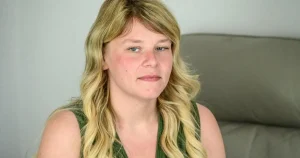

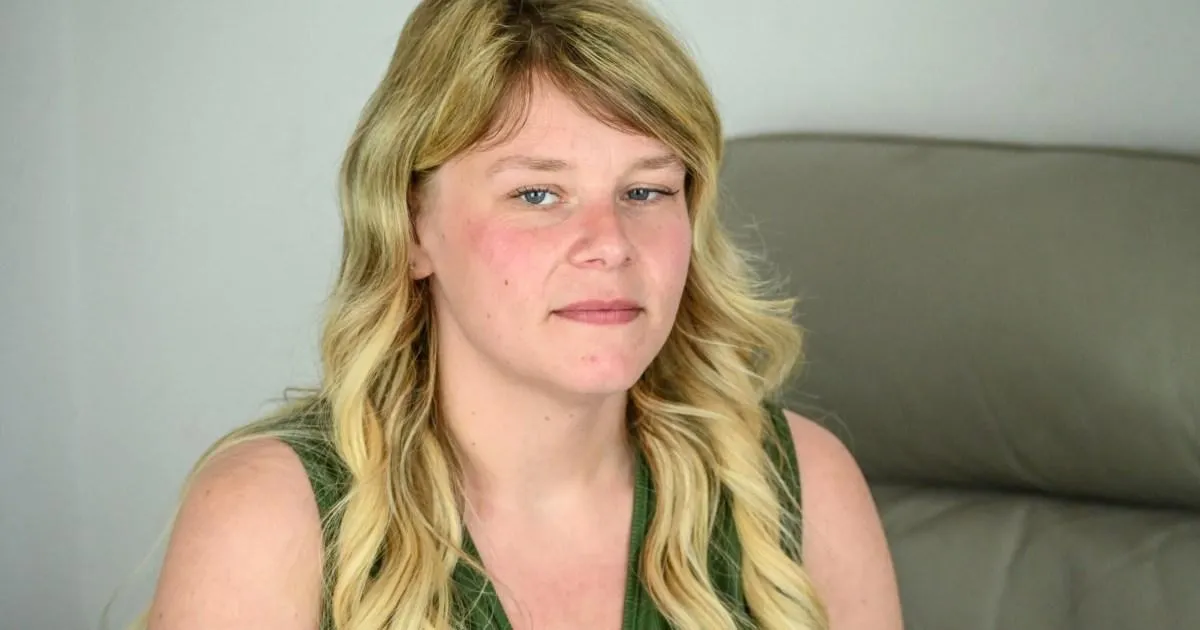
For months, Paris Shears lived in a state of quiet, grinding terror. The 31-year-old mother of three from Southampton had already survived an abusive relationship that ended with her ex-partner being sent to prison, but just weeks after that relief, a new nightmare began. It started with an Instagram message from an account she didn’t recognize, one with no profile picture and a name that meant nothing to her. When she opened it, her stomach dropped. There was a deepfake pornographic image of her own face, digitally grafted onto someone else’s body, designed to humiliate and degrade her. More messages followed, each one more sinister than the last. There were AI-generated nude videos, fabricated from photos she had never consented to share, and then parcels started arriving at her home containing her own underwear—items that should have been in her bedroom, not in the hands of a stranger. The messages came from bogus accounts with IP addresses traced outside the UK, and police told her they couldn’t find the sender. Paris was left with no answers, no protection, and no way to know who was watching her. She began sleeping with a knife under her bed, certain that if someone came for her or her children, she would have no choice but to fight for their lives with everything she had. The fear consumed her days and nights, and the uncertainty of not knowing who was behind the campaign of cruelty made it even harder to bear.
The messages only grew more relentless, and the parcels became more disturbing. Paris would spend hours reviewing footage from CCTV cameras she had installed around her home, jumping at every small noise, terrified that her tormentor was close by. She told her friends and family that if anyone broke in, someone would leave in a body bag. “I will fight to the death for my children,” she said, because they were all she had, and the thought of being taken from them was horrifying. Then, on August 3, a message arrived that changed everything: “Did you get your parcel? It was left at the end of your road.” The location of the parcel made Paris’s blood run cold. A restraining order was in place barring her ex-partner from entering her road, so she immediately suspected he was behind it. But when she opened the package, she found something far worse than she had imagined. Inside were four sheets of paper covered with images of her, including the deepfakes that had been haunting her, along with a love letter and a small bag containing what appeared to be semen. The accompanying message told her she could “insert it into herself.” Paris was disgusted and shaken, but she didn’t believe the substance was actually semen. She thought it was moisturizer or something else, a sick joke designed to frighten her. The realization that this person had been inside her home, had taken her things, and had left them for her like a twisted gift made her feel violated in a way she could barely put into words. She had given her closest friends detailed instructions on what to do if she was forced to kill someone in self-defense, because she truly believed her life and her children’s lives were in danger.
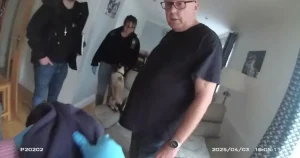
During this ordeal, Paris had one person she leaned on more than anyone else: a childhood friend named Jakob Emmanuel Ward. Ward, 28, had been part of her life since she was 16. He came into her family as her sister’s boyfriend, and over the years he became like a brother to her in every sense except biology. He was there through everything—the highs, the lows, the abuse, the court case, the aftermath. When Paris received the first deepfake messages, she confided in him completely. She would send him messages describing how she was feeling, how scared she was, and he would always respond with warm, encouraging words. “You will get through this,” he would say. “You have overcome tough things before.” He knew her history, he knew what she had been through, and he always seemed to know exactly what she needed to hear. He was her support system, her sounding board, the person she trusted with her darkest fears. That is why, when DNA evidence finally led police to the person responsible, Paris was utterly horrified. Weeks after the parcel arrived, forensic testing on the contents linked the evidence to Ward—the same man who had been comforting her, encouraging her, and pretending to be her ally. The revelation shattered her. “It was horrendous, especially when I found out that the person responsible for this was someone I knew, someone I trusted,” she later said. “He was a brother in every sense of the word apart from biologically.” The betrayal was not just personal; it was a violation of her entire family’s trust, because Ward had been welcomed in, loved, and treated as one of their own for over a decade.
In a statement read to the court, Paris tried to explain the devastating impact of Ward’s campaign of abuse. She wrote that she had been “denied the opportunity to consent,” and that she felt as though she had been “sexually assaulted in a way that is very difficult to explain.” The deepfakes, the parcels, the invasion of her home—all of it had stripped away her sense of safety and control. She had trusted this man with her deepest vulnerabilities, and he had used them against her in the most calculated and cruel way imaginable. The court heard how Ward had used two Instagram aliases, Tommy Jacks and Leo Sands, both with no profile pictures, to send the messages and track her movements. He had been playing a double game all along, pretending to be her protector while secretly being the source of her terror. Ward was eventually sent to prison, and Paris felt a brief moment of relief. But that relief did not last. She quickly realized that under the Government’s early release scheme, Ward could be let out long before his full sentence was served. She said, “I thought, ‘Great, now I have nine months to pack up my house and move elsewhere.’” She does not believe he will stop. She believes he will be angry, and that his anger will make him even more dangerous. She has become a vocal opponent of the early release scheme, calling it a “victims’ punishment policy.” She cannot understand the logic of letting people who have caused so much harm back onto the streets before their time is up, leaving victims like her to live in fear of what might happen next.
Paris’s fear is not just about Ward, though. She is also still dealing with the aftermath of her relationship with Robert Lee Hastings, 31, the ex-partner whose abuse initially sent her into the nightmare that Ward exploited. In April, Hastings was convicted of intentional strangulation and assault by beating at Southampton Crown Court and was jailed for 18 months. His conviction was a victory for Paris, but it also exposed a flaw in the justice system that she is now determined to fix. Hastings had entered a late guilty plea, which meant he received a reduced sentence. To Paris, that felt like another form of abuse. Her abuser was still controlling her, still manipulating the system to his advantage, and still making her feel as though her suffering did not matter. She launched a petition for what she calls “Paris Law,” a proposed change that would remove sentencing reductions for late guilty pleas and prevent abusers from continuing to exercise control over their victims through the justice system. The petition gained enormous traction, reaching 100,000 signatures in May, which meant it was debated in Parliament. She has met with MPs, secured support from across the political spectrum, and has meetings with ministers scheduled later this year. For Paris, this is not just about her own case. It is about every victim who has been forced to relive their trauma in court, only to watch their abuser get a lighter sentence because of a legal technicality.
Despite everything she has been through, Paris Shears is determined to turn her pain into purpose. She is campaigning for changes that could protect other women from the kind of torment she endured, both at the hands of an abusive partner and at the hands of a trusted friend who used technology to violate her in ways the law is still struggling to address. Deepfake pornography is a growing threat, and Paris’s story is a chilling reminder of how easily it can be used as a weapon of abuse. She is optimistic about the future of her campaign, saying, “I am really optimistic. I have meetings with ministers scheduled later this year, support for Paris’s Law from MPs. This is just the beginning.” But beneath that optimism, there is still a woman who is afraid to sleep without a knife nearby, who is planning to uproot her family and move somewhere new, who is constantly looking over her shoulder because she knows the men who hurt her could one day walk free. Her courage in speaking out is remarkable, but it comes at a cost. She has been forced to relive the most terrifying moments of her life in courtrooms and interviews, all while trying to keep her children safe and her own sanity intact. Paris’s story is not just a warning about the dangers of deepfakes or the failures of the justice system. It is a story about survival, about the strength it takes to fight back when everything feels hopeless, and about the resilience of a mother who refuses to let the men who tried to break her win. She may still be living in fear, but she is also living with purpose. And that purpose, she hopes, will eventually give her the peace she has been fighting for all along.