
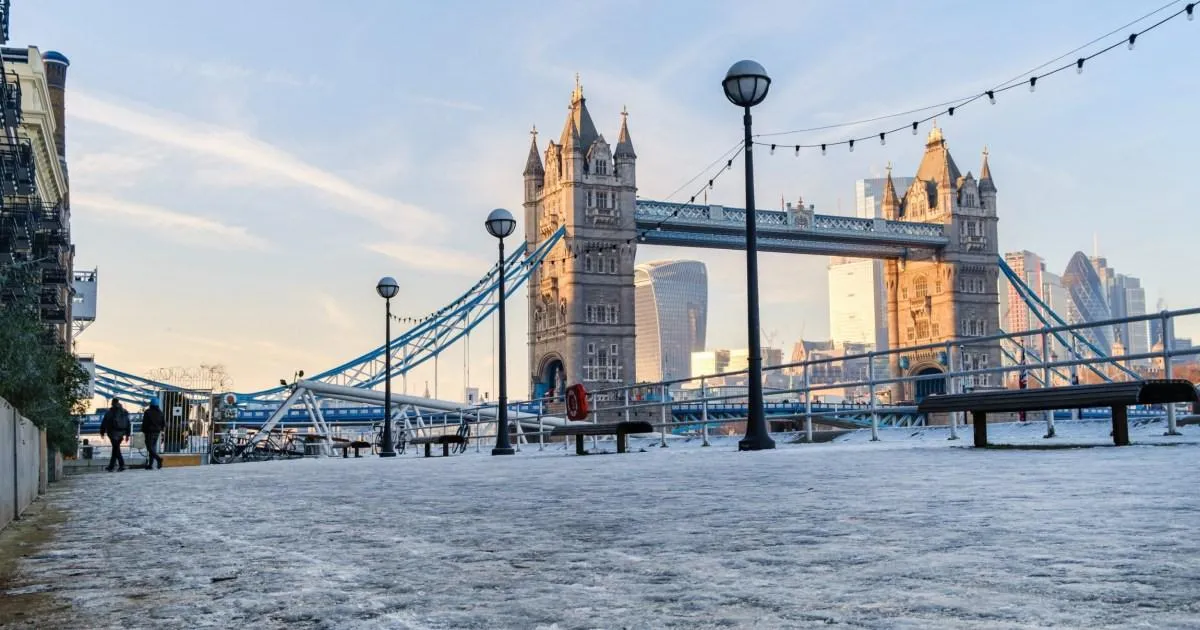
Winter in the UK is never a straightforward affair. One week you’re enjoying a crisp, blue-sky morning, the next you’re battling rain, sleet, and wind on the commute while wondering why you ever left the house. Every autumn, the same question appears on social media: will this be a proper white winter or another grey drizzle-fest? This year, the answer may be a bit of both, and forecasters are raising an eyebrow at something bigger than the usual seasonal mood swings. The Met Office has warned that Arctic winds could drift further south than they typically do, meaning the UK could be in for a winter that is unseasonably cold, snowy, or windy. The culprit is a disruption in the polar vortex—a huge zone of low pressure and freezing air that normally sits around the Earth’s poles. This vortex is now behaving in a highly unusual way, and if it tips into what meteorologists call a major Sudden Stratospheric Warming, it would be the earliest such event on record. To put that in perspective, these events are rare enough when they happen in the depths of winter; having one brew up this early is a red flag that something unusual is happening in the atmosphere. For ordinary people, the takeaway is simple: the deep freeze that usually stays near the Arctic could be heading our way, and with it the possibility of heavy snow and biting northerly winds. That doesn’t mean we are guaranteed a snowed-in winter, but it does mean the atmosphere is primed for surprises. So while the longer-term forecast remains uncertain, it’s probably not the year to toss your coat into the back of the wardrobe just yet. It’s also a good time to remember that in the UK, weather forecasts can change quickly, and this winter could bring anything from quiet, cold days to full-blown storms in the space of a week.
To understand what’s going on, it helps to know a little about the polar vortex. According to the National Oceanic and Atmospheric Administration, it’s a large area of low pressure and cold air surrounding both of the Earth’s poles. It always exists near the poles, but it weakens in summer and strengthens in winter. Think of it as a frozen whirlpool spinning high in the sky, holding together a mass of bitterly cold air. When it’s healthy and strong, it keeps the coldest air bottled up around the Arctic Circle. When it weakens or gets disturbed, that cold air can spill out to lower latitudes like air escaping from a balloon. A Sudden Stratospheric Warming happens when the air high above the Arctic warms quickly, disrupting the vortex. That might sound counterintuitive—warming causing cold weather—but it’s exactly the kind of twist that can send polar air south into Europe and North America. The Met Office says the current disruption is highly unusual, and if it becomes a major SSW, it will be the earliest such event on record. This is not just a niche weather-geek concern. It has real consequences for how we live: heating bills spike, trains and roads grind to a halt, schools close, and vulnerable people can find themselves in danger. When forecasters talk about a disrupted polar vortex, they are not just talking about a few flurries. They are talking about the kind of weather that can change daily life in a hurry. That’s why the warnings are being taken so seriously, and why you should probably pay attention even if you normally roll your eyes at dramatic weather headlines.
Adding to the complexity is El Niño, a natural climate pattern that begins in the tropical Pacific and sends ripples of disruption around the world. This year’s El Niño is still developing, and the Met Office climate spokesperson Grahame Madge has said it has already surpassed the magnitude of previous events, including the one in 2015/16. Globally, an El Niño event alters rainfall patterns and increases the overall global temperature. But its effects are never simple. In the UK’s case, the same El Niño system may allow colder air to drift southwards into Europe and North America, potentially bringing blizzard conditions with heavy snow. It also heightens the potential for wet weather, stormy conditions, and therefore flooding. So the UK isn’t just facing one type of severe weather—there could be a mix, with storms and floods at some points and snow and ice at others. It’s a bit like the atmosphere is playing tug-of-war with itself, and we’re standing in the middle wondering which way to run. El Niño is a reminder that weather is a global system. A disturbance in the Pacific Ocean can end up influencing whether you wake up to frost on your car or find your street flooded three months later. Scientists are still studying how these patterns interact with a warming world, but the key point for this winter is that El Niño has pushed the odds of unusual weather into new territory.
Given all this, when should we expect to feel the effects? The honest answer is: no one knows yet. The Met Office’s long-range forecast is deliberately cautious, saying: “We may start to see some colder conditions spread from the north. While the nature of this colder outbreak is very uncertain, it could bring some wintry showers to the northern UK briefly.” That’s a far cry from blanket warnings of snow across the country, but it shows the direction of travel. The winds are likely to come from the north or north-east, which in the UK usually means colder and drier conditions, with the greatest risk of snow in northern areas and on higher ground. In early October, Londoners were already advised to prepare for potentially severe weather, including keeping emergency food supplies for up to three days. That kind of advice can sound alarmist, but it’s actually sensible. If a storm or heavy snow hits, it’s better to have a few extra tins of soup, some bottled water, a torch, and a warm blanket than to join the panic-buying rush at the supermarket. For commuters, for schools, for the NHS, a sudden cold snap can be a real headache. But a little preparation can make a huge difference. It’s also worth remembering that the forecast is uncertain, and the Met Office itself says the nature of any colder outbreak is very uncertain. So don’t cancel your plans or start stocking up on shovel and salt just yet—just keep one eye on the sky and the other on the weather app.
El Niño’s effects are not limited to Britain, and this is where the story becomes both bigger and stranger. While the UK could be shivering under Arctic winds, other parts of the world may face the exact opposite: extreme heat, drought, and wildfires. The Met Office has pointed out that globally, an El Niño event alters rainfall patterns and increases the overall global temperature. A concerning report has even suggested that this El Niño could cause more than 450,000 heat deaths between June 2026 and February 2027. That sounds shocking, and it should be a reminder that while we are worried about snow and ice, other regions are dealing with deadly heat. This is the strange paradox of weather and climate: even as El Niño nudges cold Arctic air toward the UK, it is also pushing global temperatures upward. It’s easy to focus on our own forecasts, but weather doesn’t respect borders. The same atmospheric disruption that brings snow to the north of Scotland can bring scorching conditions to parts of Asia or South America. For those of us shivering through a cold snap, it’s important to remember that we are all connected in this shared atmosphere. The scale of these systems is almost impossible to grasp from the end of your driveway, but it’s exactly why meteorologists and climate scientists spend so much time studying them. They are trying to make sense of a system that can seem chaotic, yet follows patterns that affect billions of people.
So what does all this mean for you right now? First, don’t panic. The winter may be rough, but it’s not the apocalypse. Second, do pay attention to the forecast, especially if you are planning to travel or if you have elderly relatives who might need help. Check that your heating system works, think about how you would manage if there were a power cut, and maybe get some basic supplies in. There’s no need to build a bunker, but a little forward thinking goes a long way. If the Arctic winds arrive, wrap up warm, check on your neighbours, and remember why the UK has such a strong tea-and-cuppa culture—sometimes comfort comes in small, warm moments. The weather is one of the few things we can’t control, but we can control how we respond. In the end, winter is as much about how we cope as about what the sky does. If the worst happens, at least we will have a shared story to tell about the winter the polar vortex came to visit, the year the forecasters warned us early, and the season when El Niño and the Arctic decided to team up. Stay safe, stay warm, and don’t forget your umbrella—because this winter, you might need it, along with a snow shovel, a good pair of gloves, and maybe an extra packet of biscuits at the back of the cupboard.