

A Night of Fire and Chaos: Scotland’s Bonfire Night Under Siege
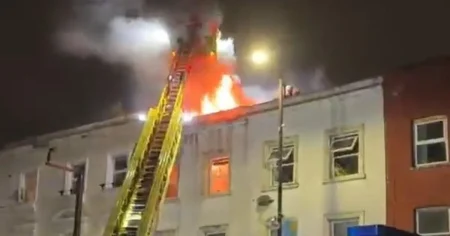
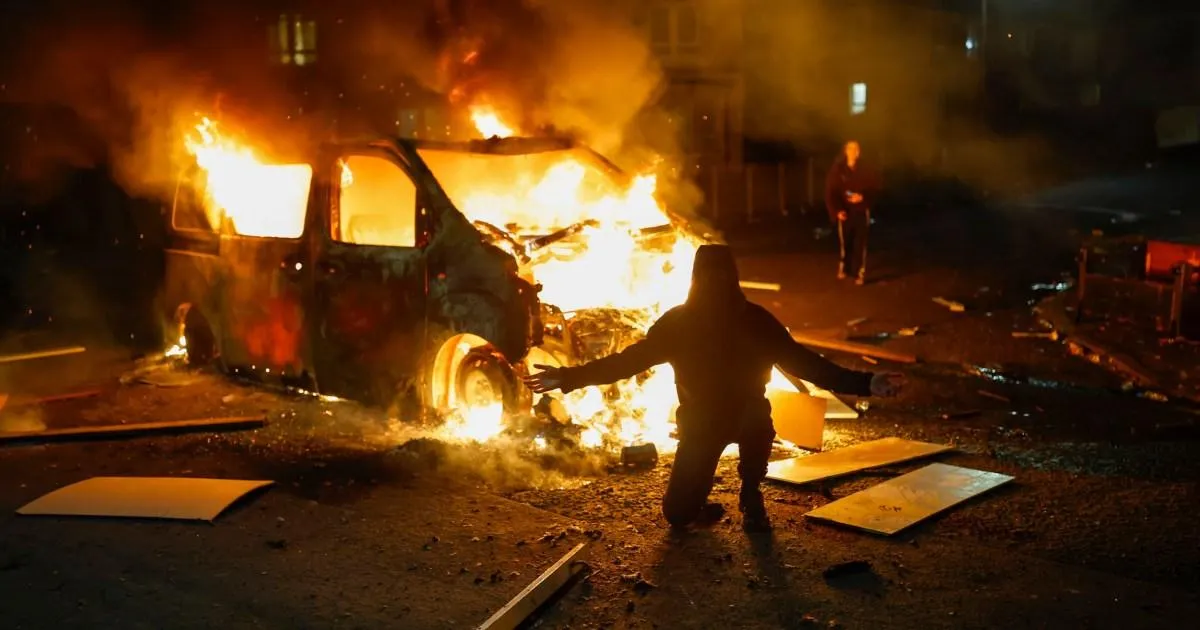
The acrid smell of smoke hung heavy in the air, mingling with the sharp crackle of fireworks that were never meant for celebration. What should have been a night of family gatherings, warm drinks, and dazzling displays of color in the night sky descended into something far darker—a coordinated assault on the very people who run towards danger when everyone else is running away. Seven individuals were apprehended in what became Scotland’s most significant police mobilization since the visit of a former president, a stark indicator of just how far the forces of order had to stretch to contain the mayhem. The epicenter of the chaos was Glasgow, where the thin blue line was tested to its absolute limit. The scene on Greenside Street was one of pure pandemonium; emergency services had been dispatched to help an injured man, a routine call that would rapidly devolve into a nightmare scenario. As officers and ambulance staff tended to their patient, they were ambushed by a hail of projectiles, the festive explosives transformed into weapons of aggression. In a horrifying turn, a police vehicle was engulfed in flames, its charred skeleton becoming a grim monument to the breakdown of respect and civility. An ambulance worker was caught in the crossfire, sustaining minor injuries, a physical testament to the violence that was unleashed upon those who had come to help.
The chaos was by no means confined to the city’s streets. It rippled outwards, infecting the very heart of Edinburgh’s communities. In the quiet residential areas of Oxgangs and around Colinton Mains, the peace of the evening was shattered as bins were tipped over and set ablaze, creating crude barricades of fire in the middle of the roads. This was not spontaneous mischief; it was a calculated act of disruption. Groups of youths, their faces likely illuminated by the flickering orange glow, used the cover of darkness and smoke to launch further volleys of fireworks directly at the emergency services who were attempting to restore order. Locals watched in disbelief as their neighbourhoods became warzones, with one resident describing the terrifying scene of young people “setting fire in the park and shooting fireworks at the police and firemen.” The fear was palpable; this was no longer about enjoying a Guy Fawkes tradition but about evading and attacking authority. Firefighters were forced into an impossible position, having to withdraw from tackling bin fires in the south of the city as they themselves became targets, their equipment and bravery no match for the relentless onslaught of anti-social behaviour.
The sheer scale of the disorder necessitated a response that was as impressive as it was concerning. Police Scotland, in a proactive move, invoked Operation Amberlight, a specialized plan designed to deal with public disorder. The operation was so extensive that it required reinforcements to be drafted in from police forces across England and Wales, creating a unified front against the wave of lawlessness. This collaboration created the largest single deployment of officers in the country since the visit of Donald Trump the previous year, highlighting the gravity with which the authorities viewed the threat. The statistics from the night paint a bleak picture: attacks on fire crews were reported in the Knightswood and Castlemilk areas of Glasgow, extending out to Cumnock in Ayrshire, Larkhall in South Lanarkshire, and even as far as Blackridge in West Lothian. In Clydebank, the violence was not even restricted to the uniformed; fireworks were indiscriminately thrown at members of the public simply trying to enjoy their evening. The map of Scotland was dotted with hotspots of aggression, each one demanding a response and stretching the resources of the emergency services to their breaking point.
It is crucial to step back and ask a fundamental question: what drives this annual descent into violence? This is not an isolated incident, but rather a disturbing pattern that has become increasingly prevalent. It speaks to a deeper societal fracture, a growing disconnect between a segment of the youth and the community around them. For some, it is a misguided thrill, the adrenaline rush of transgression without thought for the consequences. For others, it is a form of rebellion, a way to assert power and chaos in a world where they feel powerless. The targets are not random; emergency services are the most visible symbols of authority and civility. Attacking them is a perverse way of lashing out against the very structures designed to protect society. The fact that this behaviour is now anticipated enough to warrant a massive, cross-border policing operation is a sad indictment of our times. It forces us to confront an uncomfortable truth: that the simple joy of a bonfire night is being eclipsed by a darker, more cynical form of entertainment rooted in destruction and disrespect.
The statistics of the night—the seven arrests, the injuries, the damaged vehicles—only tell a fraction of the story. The full cost is far higher. There is the psychological toll on the police officers, firefighters, and paramedics who, regardless of the danger, continue to suit up and answer the call. They are not just doing a job; they are performing a public service, and to be met with such venom is a demoralising blow. The physical damage is also immense, not just in terms of damaged vehicles and burnt-out bins, but in the financial cost to local councils and public services, money that could have been better spent on community projects or improving the very services that were attacked. Furthermore, there is a profound social cost. When a neighbourhood is terrorized by groups of youths, it erodes the sense of community safety. It makes citizens afraid to leave their homes and creates an environment of mistrust and fear. The images of a burning police car are not just a matter of property damage; they are a symbolic attack on the order and safety that we all rely upon.
As the embers of the bonfires fade and the smoke clears, we are left with more questions than answers. The arrests made are a small consolation, a promise of legal consequences, but they do little to address the root causes of such widespread anger and disrespect. The police operation, while successful in preventing an even greater catastrophe, is a reactive measure, a firebreak against a blaze that will inevitably reignite. The conversation now must turn to prevention. How do we engage with disaffected youth? How do we rebuild the respect for the emergency services that has been so badly eroded? How do we reclaim these communal traditions from the destructive minority? It requires a multi-faceted approach involving education, community outreach, and youth engagement. Parents, schools, and community leaders all have a part to play in fostering a sense of responsibility and belonging. The alternative is to accept that this is the new normal—that every Bonfire Night will be a test of our resilience, a night where the safety of our emergency services is put in jeopardy, and where our communities are held hostage by a small, violent few. The charred shell of that police car serves as a stark reminder that the social contract we all take for granted is more fragile than we think, and that preserving it demands more than just a police presence—it demands a collective societal effort.