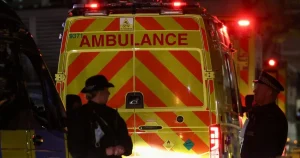

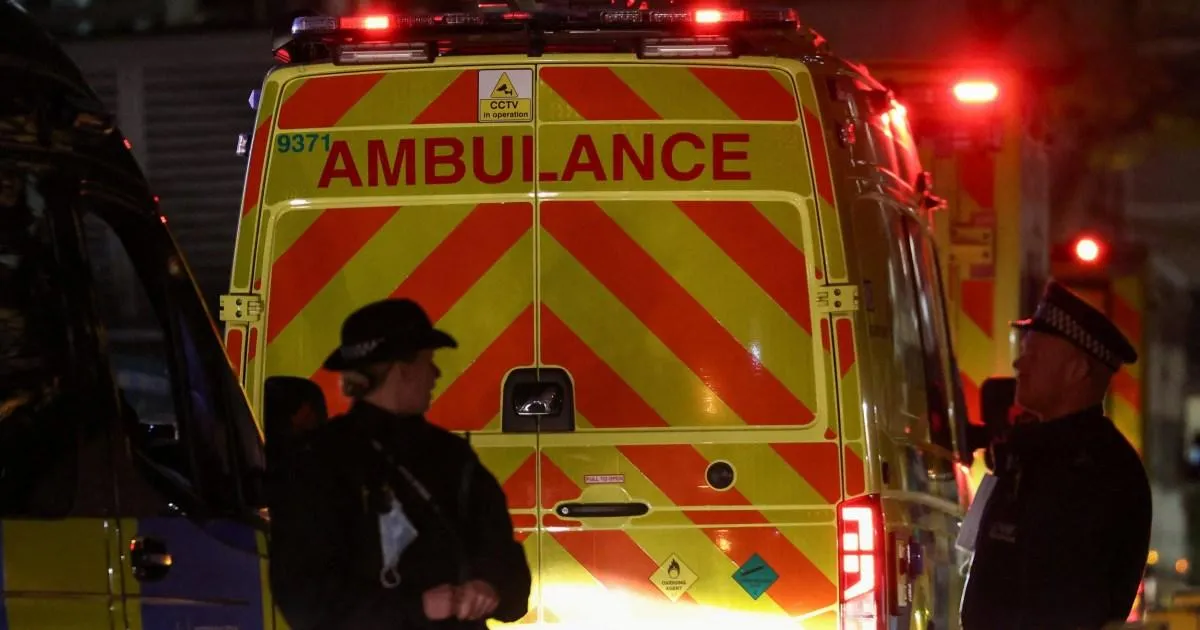
The blue lights of an emergency convoy sliced through the grey North London afternoon, a sight that would have stopped anyone in their tracks. Three police vans flanked the vehicles, holding back traffic and the public as the procession moved deliberately toward the Royal Free Hospital. This was no ordinary ambulance transfer, and the person at the center of it was no ordinary patient. He is a British doctor, a man whose name has not been made public, and whose story is one of dedication that brought him dangerously close to death. He had been working in the Democratic Republic of Congo, a country ravaged by one of the deadliest Ebola outbreaks in modern history, and had contracted the virus himself. Now, after a carefully coordinated journey that spanned thousands of miles, he was being brought home. Landing at RAF Northolt, he was moved with military precision to the specialist infectious diseases unit in north London. It is the first confirmed case of a UK national contracting Ebola in the current DRC outbreak, but in this moment, the labels matter less than the human reality: a healer had become the one in need of healing.
Behind this single patient lies an epidemic of staggering scale and sorrow. In the Democratic Republic of Congo, the latest outbreak has already claimed more than five thousand lives, and since May, more than ten thousand confirmed cases have been recorded. That is the highest rate of infection since the catastrophic West African outbreak of the 2010s, and the country has reported a fatality rate of nearly 49 percent. These are numbers that can numb the mind, but they represent real people, each with a name, a family, a future that will never be lived. The symptoms of Ebola are brutal and unmistakable: nausea, severe muscle pain, and the terrifying sight of bleeding from the ears, nose, mouth, and eyes. The disease attacks the body’s ability to hold itself together, and without treatment, it can lead to organ failure and death. The British doctor would have known all of this. He chose to go to Congo anyway, likely driven by a sense of duty, by a belief that medicine is a calling, not just a career. He would have treated patients showing these very symptoms, comforted them knowing the risk to his own life. Now he was fighting the same enemy from the other side of the hospital bed.
The arrival of an Ebola patient in the United Kingdom could easily trigger fear, and the sight of a police-escorted convoy might seem alarming. But the response from public health officials has been measured, calm, and grounded in science. Dr. Renu Bindra, deputy director of the All Hazards Public Health Response team at the UK Health Security Agency, has reassured the public that the risk to people in this country is low. She emphasized that “well-established procedures” are in place for dealing with cases like this, and she is right. The carefully managed transfer from the airfield to the hospital, the coordination between the UK and DRC governments, the presence of police to manage the movement of vehicles, all of it reflects years of planning, training, and experience. The doctor is now being treated in a highly specialized isolation unit, one of the few facilities in the world equipped to handle such a dangerous infectious disease. He will be cared for by medical staff who have chosen to work in these conditions, who knowingly suit up in protective equipment, who understand that the greatest risk comes not from the patient but from the pathogen. This is not a moment for panic, but for empathy. The man in that isolation room is not a threat to the public; he is a victim of a devastating illness, a professional who deserves the same care he once gave to others.
The Royal Free Hospital is no stranger to Ebola, and that history offers a powerful reason for hope. During the 2014-2015 West African outbreak, the hospital successfully treated three health workers who were evacuated to the UK for care. All of them survived. In fact, only four Ebola infections have ever been confirmed in the UK before this case, including those three workers and a laboratory worker who was infected in a 1976 incident. All of those individuals survived. That statistic is remarkable, and it is a testament to the expertise of the medical teams who treated them. The lessons learned from those cases have shaped the protocols being used right now to care for the latest patient. The isolation unit where he now lies is not a temporary conversion; it is a dedicated facility designed for exactly this kind of clinical challenge. If anyone has a chance of pulling through this ordeal, it is someone being treated here. The doctor is likely isolated, surrounded by the hum of machines and the muffled movements of staff in full protective suits. He may feel terrified, exhausted, and alone. But he is also in the safest possible place, with people who have done this before, who know how to manage every complication, and who will not give up on him.
Understanding Ebola is key to understanding the gravity of the situation. The virus spreads through direct contact with infected bodily fluids, such as vomit or blood, which is why medical workers are at such high risk. It does not travel through the air like the flu, so the wider public is not in immediate danger. But the disease can be devastating for those who contract it, especially in parts of the world where healthcare systems are already stretched thin. There is currently no approved vaccine for the virus, and no definitive cure, though the World Health Organization has said that two candidate drugs are being tested in an ongoing clinical trial. In a hospital like the Royal Free, treatment focuses on intensive supportive care: maintaining fluids, stabilizing blood pressure, replacing lost blood, and giving the body time to fight the virus. It is a terrible irony that a doctor who trained to save lives now depends on experimental treatments and the kindness of colleagues to save his own. But medicine has come a long way since Ebola first emerged in 1976, and the global scientific community is working harder than ever to find a way to stop this disease once and for all. For now, what the British doctor has is this: a team of experts, a proven treatment protocol, and the quiet, stubborn hope that has helped previous patients walk out of that hospital alive.
This case is not just about one man in a London isolation unit. It is also a reminder of how connected the world has become. Since the outbreak began, cases have been confirmed in Kenya, Nigeria, and Uganda, countries that have faced their own struggles with infectious diseases. A virus that starts in a remote village in Congo can travel across continents in a matter of hours, carried unknowingly by a traveler or, in this case, deliberately by a rescue mission determined to bring a citizen home. The decision to land in the UK and treat the doctor in one of the most advanced facilities in the world is a reflection of a broader truth: we are all in this together. When one country faces an epidemic, the entire world has a stake in containing it. When one health worker falls sick, it is a wound felt by the whole international medical community. The British doctor’s journey from the heart of Africa to the quiet corridors of the Royal Free is more than a news story. It is a human story about courage, compassion, and the lengths we go to for one another. As he begins his treatment, the public can offer something that no machine or drug can: a refusal to look away, a determination not to treat him as a statistic, and a hope that he will someday walk out of that hospital, not just alive, but whole.