
It was supposed to be another ordinary Friday morning across Europe, but instead it became a scene of anxiety, confusion, and quiet fear. Staff members stood outside their workplaces, waiting for further instruction, their breath visible in the cold morning air, their phones buzzing with messages from colleagues and loved ones. The reason for this disruption was both terrifying and deeply unsettling: another wave of bomb threats had swept across the continent, just one day after nearly thirty planes had been forced into emergency landings because of similar threats. This time, the targets were not only passenger flights but also some of the most trusted news organizations in Ireland and Britain. Newstalk, one of Ireland’s most prominent radio stations, suddenly went off air after staff were evacuated. RTÉ and the Irish Independent were also affected, and multiple unnamed British news organizations found themselves caught in the same storm. A large police response was underway, with officers sealing off buildings and questioning employees who had been hurried out of their desks. For the men and women who keep Europe’s airports and media outlets running, it was a stark reminder that the threat was not over. It was not even a pause. It was a continuation, a new chapter in a strange and frightening story that had already left passengers stranded on runways, fighter jets scrambling into the sky, and millions of people wondering whether it was safe to fly at all.
In Dublin, the rhythm of morning radio was broken in the most jarring way possible. Newstalk, a station known for its live talk shows and constant stream of current affairs, fell silent. Listeners who tuned in expecting the usual voices were met with nothing but static or a recorded message. The sudden absence of sound was a symbol of how close the threat had come to everyday life. Staff members who had arrived early to prepare their programmes were instead told to leave the building, and they gathered outside in small groups, watching as emergency vehicles arrived. RTÉ, the national broadcaster, was also evacuated, and the Irish Independent, a major national newspaper, suffered the same fate. These are institutions that have reported on wars, disasters, and political crises, and now they themselves were the story. Police officers moved through the buildings, checking rooms and corridors, while journalists who were normally the ones asking questions found themselves unable to do anything but wait. The fact that British news organizations were also targeted added another layer of unease. This was not a single country’s problem. It was a coordinated or copycat campaign that seemed designed to spread fear as widely as possible. The news organizations were not broadcasting live updates from the scene because they were the scene. The line between reporting the news and living it had suddenly vanished, and the psychological impact on those involved cannot be overstated. A newsroom is a place of constant noise and energy, and to see it emptied, to see desks abandoned with half-written scripts and half-finished cups of coffee, was a chilling experience for everyone who worked there.
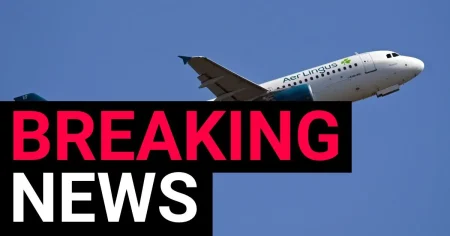
Meanwhile, in the skies above Europe, the threat was even more immediate. France reported four new bomb threats against aircraft flying over its territory on Friday, and officials said that all of the planes landed safely. Bomb dispersal units were conducting inspections, and the prime minister’s office announced that an investigation was underway to determine the origin of the threats affecting all of Europe. The Czech Police added their own warning on social media, saying that threats to place improvised explosive devices on board aircraft arriving at and departing from Prague were happening again. One Ryanair flight from Rome to Lisbon, designated FR8196, became the subject of a bomb threat. A WizzAir flight from Prague to Rome was forced to land in Venice after receiving a threat within the past hour. For the passengers on those flights, the experience must have been terrifying. One moment they were settling into their seats, looking forward to a weekend away or a business meeting; the next moment they were being told that the plane would be diverted, that emergency procedures would be followed, and that they would be met on the ground by police and bomb experts. The silence in the cabin during those final minutes, the tense expressions of the flight crew, the sight of emergency vehicles racing alongside the runway as the plane touched down—all of these images combine to create a memory that no passenger would ever forget. Even those who were not directly affected felt the ripple effects. Airports across Europe were on alert, flights were delayed, and families were left waiting for hours at arrival halls, not knowing when their loved ones would finally be allowed to leave the plane.
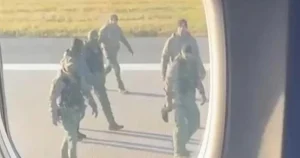
The fear did not begin on Friday. It had already taken root a day earlier, when dozens of planes were affected by similar threats and forced to make emergency landings across Europe. Reports of explosives triggered evacuations and emergency searches of multiple flights heading to Milan, Rome, Sofia, Madrid, Copenhagen, Prague, and other major cities. Passengers who had boarded expecting a routine journey suddenly found themselves caught in the middle of a security nightmare. In Rome, the situation escalated to the point where fighter jets were scrambled to intercept one plane before it landed. The target of that particular threat was an airport that had already been singled out by a group calling itself “Fighters of the Male State,” which threatened to “turn the sky red.” The name alone was enough to send a chill through anyone who heard it. It was vague, ominous, and strangely theatrical, as if the perpetrators were more interested in causing psychological distress than in causing physical harm. The sight of military aircraft flying alongside a commercial airliner is an image that stays with you. It turns a mundane trip into a life-or-death scenario. The passengers inside that plane must have looked out their windows and seen the jets, and in that moment, the abstract concept of a bomb threat became real. They were not reading about it on their phones. They were living it. And yet, despite the chaos, there was a strange sense of relief as the plane landed safely and emergency teams swarmed the aircraft. No one cheered. No one celebrated. They simply sat in their seats, stunned, trying to process what had just happened.
By now, many of the reports have been described as hoaxes. Police forces and airports across Europe confirmed that their searches so far had not discovered any genuine threats. The bomb dispersal units, the fighter jets, the evacuations, and the emergency landings were all responses to warnings that may have been designed to create maximum disruption with minimal effort. But the absence of explosives did not mean the absence of harm. Every false alarm exacts a cost. Passengers lost time, money, and peace of mind. Airlines were forced to reroute planes and rebook passengers, causing a ripple effect that lasted for hours or even days. Airport staff worked overtime to process the sudden flood of diverted flights. Journalists were evacuated from their offices and forced to report from the street. And the broader public was left with a gnawing sense of vulnerability. How were these threats being sent? Who was behind them? Why were so many targets chosen at once? Authorities launched a probe to determine the origin of the threats affecting all of Europe, but answers were slow to come. In the absence of concrete information, speculation ran wild. Some suggested the threats were the work of a single group attempting to cause panic. Others wondered whether copycats were taking advantage of the situation to add to the chaos. The truth remained unclear, but one thing was certain: the feeling of safety that most people take for granted had been shattered. The next time a plane announcement crackled over the intercom, passengers would listen a little more carefully. The next time a newsroom received an unusual email, staff would think twice. The hoax had achieved its goal, because even if nothing exploded, fear had already been planted.
For all the disruption and distress, however, there is a quiet resilience that emerges in moments like this. Passengers who were forced to sit on the tarmac for hours eventually got to their destinations. Staff who were evacuated from their newsrooms returned to their desks, picked up their microphones, and began broadcasting again. Police officers and bomb experts worked through the night to ensure that every plane, every building, and every person was safe. The investigations will continue, and perhaps one day the culprits will be identified and held accountable. But what lingers is not just the memory of waiting and worrying. It is the reminder that security is never guaranteed, and that ordinary life is more fragile than it appears. The group that threatened to turn the sky red did not succeed. The planes landed, the buildings were cleared, and no one was hurt. Yet the psychological wound remains, invisible but real. For those who were caught up in the chaos, the experience will be retold for years to come, often with a nervous laugh or a shake of the head. “I was on that flight,” they will say. “I saw the fighter jets.” And the people listening will nod, because they too have become part of a shared story, a story of a week when Europe held its breath and wondered what would happen next. In the end, the sky is still full of planes, the newsrooms are still full of voices, and life goes on. But the memory of the fear, and the courage it took to move past it, will remain.