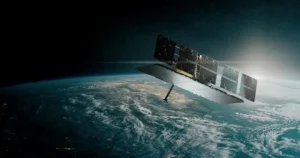


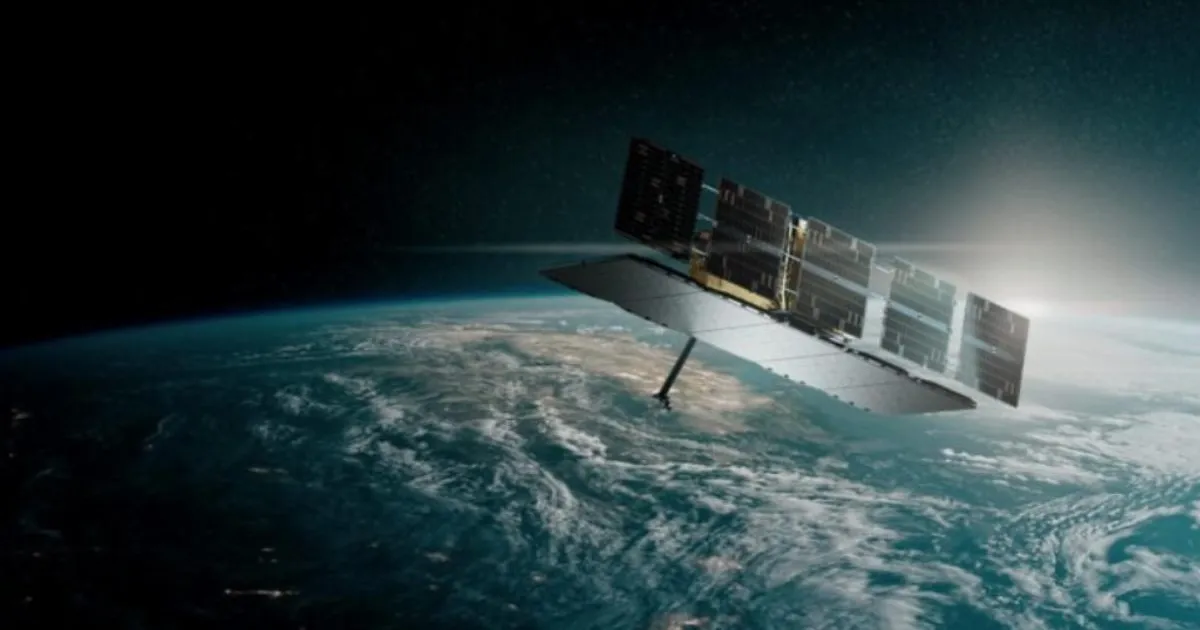
In the silent vacuum high above the Earth, where no alarms sound and no one can hear a collision coming, a small piece of Finnish hardware was recently given a stark reminder of how fragile peace can be. A Russian military satellite, a spacecraft known as Cosmos 2612, drifted dangerously close to a Finnish satellite called X36, operated by the Finnish company ICEYE. The X36 is not just any satellite; it is part of a constellation that provides radar imagery and intelligence to Western governments, helping them watch over conflict zones, track military movements, and assess damage in places like Ukraine. When it came within striking distance of a Russian military spacecraft, the event was more than a near miss. According to Thomas DiNanno, the U.S. Under Secretary of State, this was no accident. He said the Russian satellite was “intentionally manoeuvring dangerously close to a commercial satellite,” a move that shocked many in the defense and intelligence community. Space, once seen as a peaceful frontier of exploration and cooperation, has increasingly become another battlefield. And while no collision occurred this time, experts are deeply worried that the close call was not simply a warning, but a dress rehearsal for something far more aggressive.
The incident has sent ripples far beyond the quiet corridors of satellite operations rooms. To understand why it matters so much, one has to understand how essential satellites like the X36 have become to modern security. ICEYE’s satellites are small, but they are powerful. They can see through clouds, work in the dark, and provide crisp radar images of the ground below. That makes them invaluable to Western governments and military planners, especially during a war like the one in Ukraine, where knowing exactly where a Russian convoy is parked or where a missile launcher has been hidden can mean the difference between life and death. When a Russian military satellite moves dangerously close to such a satellite, it is not just a technical maneuver; it is a message. It is an attempt to intimidate, to probe vulnerabilities, and to test how the West will react. Greg Gillinger, a space analyst connected to the U.S. Space Force, said that this was “the most aggressive posture I’ve seen Russia take in terms of threatening satellites from another nation.” That statement is remarkable, given how much Russia has invested in anti-satellite weapons in recent years. Moscow has developed ground-based lasers, jamming systems, cyber tools, and even tested an anti-satellite missile in 2021 that blew up one of its own defunct satellites, creating a field of dangerous debris. The close pass by Cosmos 2612 fits into that pattern. It shows a willingness to get physically close to Western assets, to practice the kind of maneuvers that could disable or destroy a satellite in the future. For the people who work in space security, this is the nightmare scenario: a sudden, unexplained collision, followed by the blinding of a critical eye in the sky.
But this incident in orbit is only one part of a much larger and more troubling story. On the ground, far closer to home, Russia has been steadily escalating its aggressive posture against Western countries it sees as a threat. Nowhere is that more visible than on Finland’s eastern border. For decades, Finland was a neutral country, carefully balancing its relationship with its massive Russian neighbor. That all changed when Russia invaded Ukraine. The invasion sent a shockwave through Europe, and Finland, along with Sweden, made the historic decision to join NATO. When Finland’s membership was finalized, it extended NATO’s border with Russia by more than 800 miles. That was a massive strategic shift, one that the Kremlin never wanted and has never fully accepted. In response, Russia has been rebuilding the Leningrad military district, a command structure that had been allowed to atrophy, and has been pouring resources into military bases near the Finnish border. Satellite images taken over the past two years have shown a significant increase in barracks, aircraft, and other military infrastructure at four locations close to the frontier. These bases are not merely defensive. They are a major staging ground for a potential attack on NATO, should the Kremlin ever decide to move beyond threats and intimidation. The message from Moscow is clear: Finland’s membership in the Western alliance has made it a target, and Russia wants to remind its new neighbor that the border is far from peaceful.
Finland, for its part, has not been naive. The Finnish government has responded with a quiet but determined mobilization of its own. One of the most visible symbols of this new reality is the fence that now runs along a large portion of the country’s eastern border. It is a ten-foot-high barrier, topped with barbed wire, built to stop illegal crossings and to give border guards time to respond to any mass movement of people. But Finland’s preparations go far beyond physical barriers. The country has moved to strengthen its defense forces, increase its cooperation with NATO, and set up a new NATO forward command center in Lapland, deep in the Arctic north. This is no small undertaking. It requires money, manpower, and a shift in mindset for a nation that once prided itself on staying out of military alliances. Finnish officials have also warned that the threat from Russia is not only a conventional military one. They say the Kremlin has been waging a “hybrid war” against Finland, using tactics that are meant to destabilize and undermine the country without launching a single tank across the border. These tactics have included massive cyberattacks and what officials describe as “weaponized” mass migration. In 2023, the Finnish government closed the eastern border after accusing Russia of helping around 1,300 people from Syria, Iraq, and Yemen cross into Finland. The move was controversial, but Finnish authorities saw it as an act of self-defense. In their view, Russia was deliberately pushing vulnerable migrants to the border to create chaos and provoke a humanitarian crisis. Russia has denied these allegations, and President Vladimir Putin has dismissed claims that he could attack Finland as “total nonsense.” But the Finns have not been reassured.
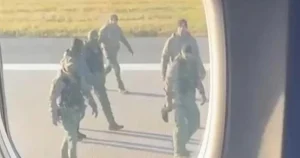
There is a human dimension to all of this that is easy to miss when one reads about satellites and military districts. Last summer, a reporter from Metro traveled to Finland’s Russian border, just as the Finnish government was closing the eastern side of it in response to those attempts to send an influx of refugees into the country. What they found was not the dramatic, war-torn frontier one might expect. It was quiet, almost eerily so. Pine forests stretched in every direction, interrupted by lakes, bogs, and long stretches of two-lane road. The new fence stood in stark contrast to the natural beauty around it, a cold steel reminder that the old era of open borders and easy relations with Russia was over. Joel Linnainmäki, a research fellow at the Finnish Institute of International Affairs, told the reporter that there had been little to report since the border closed. But, he added, the Finnish government is still wary of Russian movement nearby. That wariness is palpable. Border guards patrol with more vigilance, military convoys are more common on rural roads, and even ordinary Finns, who once thought of Russia as a difficult but manageable neighbor, now speak about it in darker terms. The atmosphere is not one of panic, but of quiet, stubborn readiness. The fence, the command centers, the drones overhead, and the soldiers in the snow are all part of a collective effort to make sure that the quiet does not become a prelude to something worse. People have adapted, as people do. Schoolchildren learn about NATO, reservists train on weekends, and small towns near the border prepare for scenarios they would never have imagined just a few years ago. It is a form of resilience, but it comes at a cost. The anxiety is always there, just beneath the surface, like the cold that seeps into the bones during a Finnish winter.
The encounter between the Russian satellite and the Finnish satellite, and the fence along the Finnish-Russian border, may seem like two entirely different worlds. One is silent and miles above the Earth, populated by machines that move at thousands of miles per hour. The other is rooted in the physical earth, made of wood, steel, ice, and human determination. But they are connected. They are both fronts in the same broad confrontation between Russia and the West. The satellite close call is a warning that the conflict is no longer confined to land, sea, or even air. It has reached into the space above us, where the infrastructure that supports modern life is both invisible and deeply vulnerable. The border fence is a warning that the old rules of European security have changed, and that no one, not even a country as stable and peaceful as Finland, can afford to take peace for granted. For NATO and its allies, the message is clear: vigilance must be constant. Negotiations, diplomacy, and arms control are essential, but so is the willingness to defend what is ours. The satellite incident was not a shooting war, but it was a shot fired across the bow. Experts hope it serves as a wake-up call. We cannot allow it to be a rehearsal for a larger attack. The people of Finland, who have weathered wars and cold and a difficult Soviet neighbor for a century, understand this better than most. They are not looking for conflict, but they are prepared for it. And in that preparation, there is a lesson for all of us. Peace does not happen by accident; it requires strength, wisdom, and the ability to look into the darkness, whether from a border post in the Arctic or from a control room watching a satellite drift through the endless night.