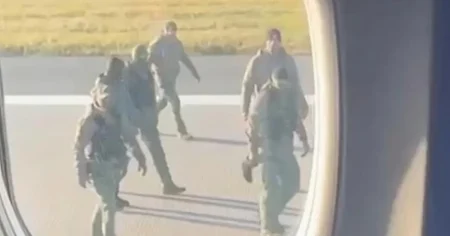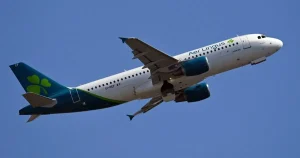

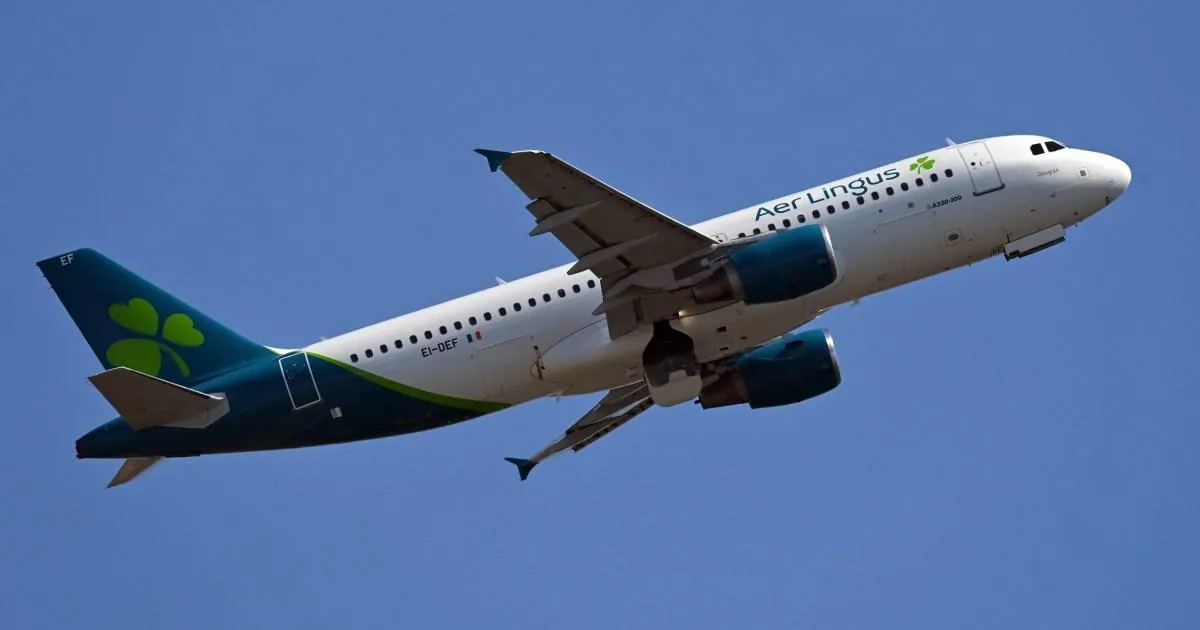
The past week has been a turbulent and unsettling one for air travel across Europe, with dozens of flights caught up in a wave of bomb threats that turned routine journeys into scenes of confusion, fear, and heavy security. At least 25 planes were affected in a single day, according to authorities, with some aircraft forced into emergency landings and others met on the tarmac by police, bomb disposal units, and anxious officials. Among the most dramatic incidents was a Ryanair flight from Manchester that was met by police and bomb disposal units just an hour after a plane from London was forced to make an emergency landing. What made it all the more disturbing was the nature of the threats: a shadowy group calling itself Fighters of the Male State reportedly warned that it would “turn the skies red” with explosions, claiming to be targeting a “feminist regime” and hoping to “make our mark on history.” For passengers, the experience was no doubt terrifying—the kind of moment when a mundane flight suddenly becomes a reminder of how fragile safety can feel. Although no explosives were found and authorities later confirmed that the alerts were malicious hoaxes, the disruption was real. Planes were diverted, airports went into lockdown mode, schedules were thrown into chaos, and hundreds, possibly thousands, of travellers were left stranded, rerouted, or delayed for hours. The incidents followed similar threats earlier in the week, including on flights departing from the UK and Ireland, suggesting a coordinated campaign designed to test Europe’s aviation security apparatus. While the immediate danger passed, the episode has raised important questions about how airlines and governments respond to such threats, why these hoaxes are being carried out, and what it means for passengers who find themselves caught in the middle. The events also highlight a grim reality: in an age of anonymous online extremism, a single emailed warning can bring down a plane, empty an airport, and cost airlines hundreds of thousands of pounds—even when the threat is empty.
So who exactly is behind this wave of hoax threats? The name invoked by the group—Fighters of the Male State—echoes Male State, a Russian far-right, misogynistic online hate group that has gained notoriety for its extreme views. The group reportedly described its goal as targeting a “feminist regime” and expressed a desire to leave a violent mark on history. The language is deliberately provocative, designed to alarm and to draw attention to an ideology built on resentment and hostility toward women and feminism. It is not yet clear whether the group making the threats is directly linked to the original Male State movement, or whether it is a copycat or offshoot seeking notoriety. What is clear is that the threats have been treated with the utmost seriousness. Security services across Europe have been on high alert, and every single affected aircraft has been searched. Police and airport staff have repeatedly confirmed that no explosives were found and that there was no evidence the threats were genuine. But that knowledge often comes only after the damage is done: passengers are evacuated onto runways, flights are held on tarmac, and emergency protocols are set in motion. The psychological impact should not be underestimated. For travellers, hearing that their flight has been targeted is terrifying, and even once the all-clear is given, the sense of safety can be shaken. For authorities, the threats present a difficult dilemma: ignore them and risk a real attack, or respond and hand the hoaxers exactly the chaos they want. So far, Europe’s response has been to take every warning at face value, to search thoroughly, and to ensure that passenger safety remains the first priority. That response is reassuring, but it also means that a small, anonymous group can cause enormous disruption with very little effort.
Understanding what happens when an airline receives a bomb threat can help explain why the response was so dramatic. According to Joji Waites, director of flight safety, policy and regulation for the British Airline Pilots’ Association, threats are initially assessed as either credible, partially credible, or not credible. If a threat is deemed credible, the flight crew is informed immediately, and the captain takes charge of deciding the next steps, guided by a detailed safety checklist. For planes still on the ground, that usually means evacuation. For aircraft already in the air, the priority is to land as soon and as safely as possible, even if that means diverting to the nearest suitable airport. Waites stressed that pilots are highly trained and skilled professionals, and that their expertise is invaluable in ensuring passenger safety and keeping aviation one of the safest forms of transport there is. The procedures followed by airlines, airport operators, and law enforcement are generally based on guidelines developed by the European Union Aviation Safety Agency and the International Civil Aviation Organization, which carries out audits to make sure countries and carriers comply. Flight crew training includes live situational exercises covering a range of threats, including how to search for explosives that may have been smuggled on board. Aviation security expert Philip Baum added that when threats are called in, airline employees are instructed to keep the caller on the line and gather as much information as possible. Many of the threats this week, however, were sent by email, containing just enough detail for authorities to determine that an inspection was necessary. That meant a full emergency response: police, fire crews, ambulances, and bomb disposal units were mobilised, and in some cases aircraft were held away from terminals while searches took place. The aim is to ensure that, if a threat is real, everything possible is done to protect lives. But when the threat is a hoax, the same resources are still used—and the cost, both financial and emotional, is borne by airlines, airports, security personnel, and, ultimately, passengers.
The financial cost of these disruptions is significant. Philip Baum, a visiting professor of aviation security at Coventry University, estimated that diverting a flight because of an unruly passenger or a bomb threat can cost nearly £200,000. That figure covers fuel, airport fees, crew costs, passenger accommodation, ground handling, and the need to reposition aircraft. In this case, the costs may be lower than that worst-case estimate because many of the disrupted flights were short-haul, with less chance of overnight delays and fewer passengers needing hotel rooms. Still, when 25 planes are affected in a single day, the total bill quickly mounts into millions. There are also hidden costs: flights that are delayed or cancelled cause knock-on effects across the network, meaning crew schedules are disrupted, aircraft are out of place, and passengers miss connections. Airports may have to close runways or terminals while inspections are carried out, as happened at several locations across Europe. For airlines already operating on tight margins, these hoaxes are more than an inconvenience—they are a direct financial hit. For passengers, the cost is often measured in lost time, missed appointments, ruined holidays, and sleepless nights. Even when compensation is not available, the disruption can feel deeply unfair, especially because the threat was a hoax. It is important to remember that behind every diverted flight are real people: a family trying to get home, a couple heading off on honeymoon, a business traveller with a meeting that can’t be missed. When a bomb threat grounds a plane, those personal plans are put on hold, often without clear information about what happens next. The human toll of this kind of incident is difficult to quantify, but it is real. And it is precisely that feeling of vulnerability and confusion that the perpetrators seem to be aiming for.
What is the intended purpose of these threats? According to Jacob Funk Kirkegaard, a senior fellow at the Bruegel think tank in Brussels, the intent appears to be to sow chaos and uncertainty about the reliability of air traffic across Europe. The threats may also be a way of testing the relative response time and coordination among authorities in different countries. By sending similar threats to flights in multiple nations, the group can see whether Polish authorities respond with the same speed and urgency as Italian authorities, for example. Kirkegaard described this as a “stress test” of the aviation security system—an attempt to identify weaknesses that could be exploited in future attacks. This makes the hoaxes more sinister than simple pranks. They are, in effect, a dry run for something worse, a way for extremists to map the contours of Europe’s defences. Even if no bombs are found, the attackers learn something valuable: how long it takes to evacuate a plane, how quickly airports react, and where the cracks in coordination appear. For security agencies, this is deeply worrying. It means every threat, no matter how implausible, has to be taken seriously, because the next one might not be a hoax. The burden on security personnel is immense, and the cost to society is high. But there is also a resilience to this response. The system has been tested before, and it continues to hold. Airlines, pilots, airport staff, and law enforcement have worked together to ensure that safety is never compromised. The hoaxers may want to create the impression that European skies are unsafe, but the opposite is true: the very fact that every threat is investigated so thoroughly is evidence of how seriously aviation security is taken. Still, the psychological effect of these incidents should not be dismissed. When passengers hear that a flight was targeted, even after the threat is disproven, the fear lingers. The sky, which for many is a place of calm and freedom, suddenly feels more uncertain. That is exactly what the extremists want.
For passengers affected by these bomb threat disruptions, one of the first questions is whether they are entitled to compensation. The answer, according to the Civil Aviation Authority, is likely to be no. Bomb hoaxes would probably be classified as an “extraordinary circumstance”—a term used to describe situations that are not the responsibility of the airline, including security risks. In practice, this means that airlines are not required to pay compensation for delays or cancellations caused by threats, even if the threats turn out to be hoaxes. That may come as a disappointment to travellers who have already endured stressful and inconvenient situations. However, the CAA and consumer experts point out that airlines still have a duty of care towards their passengers. Rory Boland, editor of Which? Travel, explained that while passengers would not be eligible for compensation because the threats are out of the airline’s control, they still have rights. Passengers are entitled to food and drink, and if the delay is long enough, to a hotel stay. They also have the choice of being refunded or rerouted at the earliest opportunity. Boland noted that in these exceptional circumstances, passengers may experience longer delays than usual, particularly if the destination airport is temporarily closed while the threat is assessed and managed. For anyone caught up in such an event, the advice is practical: stay in contact with the airline, keep receipts for any expenses you incur, and know your rights. It is also worth remembering that the people working at the airport and on the flight are dealing with the same difficult situation, and that patience and kindness can go a long way. The past week has been a stark reminder that modern air travel, for all its efficiency and convenience, operates in a world where threats—real or fake—can disrupt everything in an instant. Yet it also shows the strength of the system: the professionalism of pilots, the diligence of security staff, and the resilience of passengers who, despite the fear and frustration, continue to fly. The skies over Europe remain open, and despite the hoaxers’ hopes, they are not red—but the memory of this strange, anxious week will not disappear quickly.