



A Voice of Betrayal: Unmasking the Complicity Behind Epstein’s Crimes
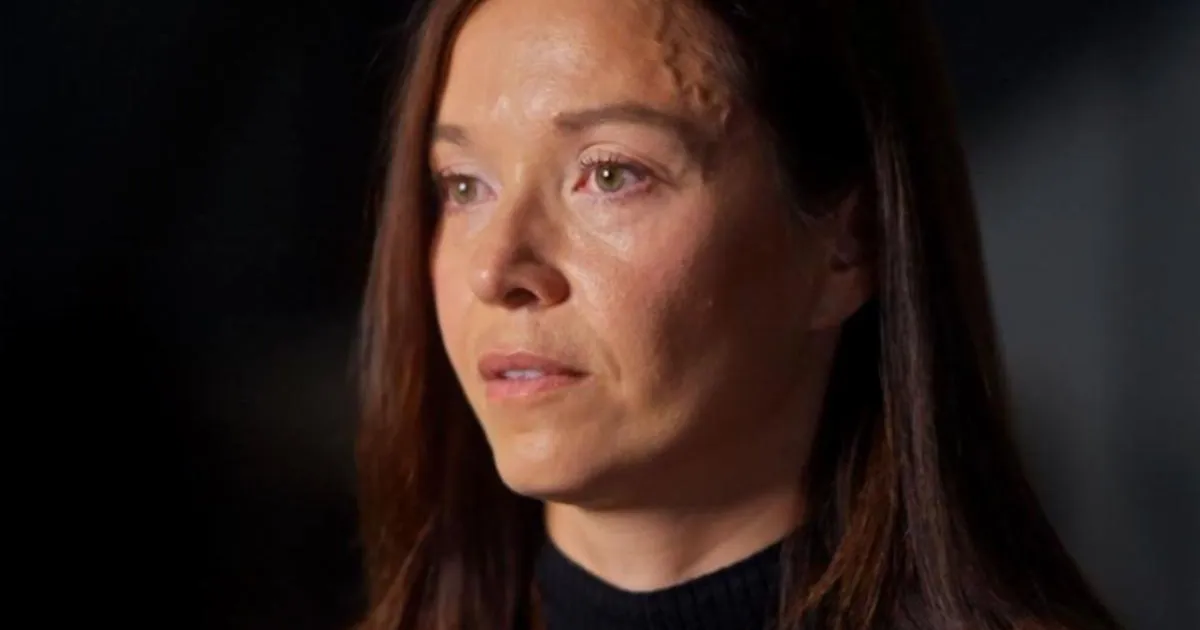
In the shadow of a global scandal that has haunted the public consciousness since his arrest and subsequent death in 2019, the victims of Jeffrey Epstein continue to step forward, determined to dismantle the network of enablers who facilitated his heinous crimes. Among the most damning recent revelations is the testimony of a woman identified only as “Roza,” who has come forward to allege that the very institution entrusted with her safety—her modeling agency—actively, or at least negligently, delivered her into the hands of a predator. Roza’s account, detailed in a recent BBC interview, pierces the veil of corporate deniability that has long protected those who worked alongside Epstein. She was a teenager, just 18 years old, when her life was irrevocably altered by a referral that should have been a career opportunity but instead became a gateway to sexual abuse. Her story is not merely a recounting of personal trauma; it is an indictment of an entire ecosystem of complicity, where the pursuit of wealth and access trumped the basic duty of care owed to young, vulnerable individuals.
Roza’s harrowing narrative begins with MC2 Model Management, a prominent agency at the time, which she claims sent her to Epstein’s lavish Palm Beach residence under the guise of professional assignments. She alleges that the agency’s then-US President, Jeff Fuller, “knew exactly where” she was going, a direct accusation that implicates him in the logistics of her exploitation. Fuller has categorically denied any knowledge of her destination or the subsequent abuse, maintaining a stance of ignorance that has become a familiar defense among Epstein’s associates. For Roza, however, the reality was starkly different. She describes being lured into a series of photo shoots at the financier’s property, a process that normalized her presence there and slowly eroded her boundaries. What began as work swiftly transitioned into a more sinister role; she was eventually employed as an “assistant” to Epstein, a euphemistic title that has become synonymous with victimhood in his orbit. It was in this capacity that the abuse began, with Epstein raping her, a violation that took place within the very environment her agency had facilitated.
The gravity of Roza’s betrayal is compounded by the institutional response, or lack thereof. MC2 Model Management has consistently and vehemently denied any involvement with Epstein, yet the paper trail suggests a far more troubling connection. Court documents and Epstein files revealed a $1,000,000 donation made to the modeling agency in 2005, a sum that raises profound questions about the nature of their relationship. Was this a charitable contribution, or was it a payment for access, a form of laundering for the procurement of victims? Roza articulates this betrayal with devastating clarity: “My agency’s job was to protect me, and they failed. In fact, they put me in danger. And for that, they should be held accountable.” Her words cut through the legal jargon and corporate PR statements, framing the issue in stark moral terms. A duty of care was breached, but more than that, a young woman was placed in the path of a monster. Fuller, who has since moved on to run another agency called “The Source Models,” has not directly addressed Roza’s allegations but has stated he was previously unaware of the abuse—a claim that rings hollow in the face of her testimony and the financial records linking him and his agency to Epstein.
Roza’s experience is not an isolated incident but rather a piece of a larger, more intricate pattern of predation. It sheds light on a calculated shift in Epstein’s methodology that occurred after his controversial 2008 plea deal, where he served a mere 13 months in an open prison for soliciting sex from a minor. This lenient sentence did not rehabilitate him; it emboldened him. As revealed earlier this year, Epstein pivoted his focus away from children and toward a specific demographic: adult women who looked like teenagers. This was a cynical, deliberate strategy to avoid the legal scrutiny that had landed him in legal trouble, exploiting the naivety of young adults and circumventing the age of consent laws. He gravitated toward the modeling industry, particularly agencies that sourced talent from Europe and Russia, where economic desperation and aspirational dreams made young women particularly susceptible to his promises of fame and fortune. These women, many of whom were in their early twenties, were brought into his sphere under the guise of professional networking, only to find themselves trapped in a coercive web of control.
The stories of these young women echo Roza’s with chilling consistency. Former Russian model Svetlana Pozhidaeva, who walked runways for prestigious European fashion brands, became one such victim. She was lured into Epstein’s orbit in 2008 with the tantalizing promise of an audition with Victoria’s Secret—a carrot dangled before her, only to be pulled away. The audition never materialized; instead, Svetlana was subjected to abuse and coerced into the grim role of recruiter, tasked with bringing other young women into Epstein’s orbit. Her testimony reveals a psychological torment that is often overlooked in favor of the physical details of the abuse. “It’s been hard for me because for many years I’ve been so embarrassed that I wasn’t underage when I met him,” she told the Wall Street Journal. “I kept thinking that I was at fault for putting myself in this situation.” This guilt, this sense of misplaced responsibility, is a brutal irony. The very legal technicality that protected Epstein—that these women were legally adults—became a weapon of self-blame for his victims, preventing them from speaking out and allowing him to operate with impunity.
This systemic failure extends beyond the actions of a single man or a single agency. It points to a culture of complicity that pervaded the upper echelons of finance, media, and even law enforcement. Epstein’s ability to function for years, to maintain a network of “assistants” and to fund operations through charitable donations, was dependent on a vast web of people who chose to look the other way, whether out of fear, greed, or willful ignorance. The $1,000,000 donation to MC2 is a single thread in this tangled web, but it is a revealing one. It suggests that powerful institutions were aware of Epstein’s proclivities and were willing to accept his money while simultaneously providing him with a pool of potential victims. The call for accountability from Roza and others is not just about punishing one man or one agency; it is a demand for a reckoning with the structures that allowed such abuse to flourish for decades. The families of survivors, the legal advocates, and the public at large are beginning to ask not just “Who did this?” but “Who knew?” and “Who facilitated?”
In the end, Roza’s story, alongside those of Svetlana and countless others, serves as a powerful testament to the importance of survivor testimony. They are not just victims; they are witnesses to a grand scale institutional failure, and their voices are a clarion call for systemic change. The legacy of Jeffrey Epstein is not just one of personal depravity, but of profound institutional corruption that enabled his crimes. As these women speak out, they reclaim their power, but they also force a global conversation about the safety of young people in vulnerable industries. The modeling agencies, the business partners, the socialites who partied with him—they are all being held up to a harsh light, and their denials are becoming increasingly untenable in the face of such consistent and compelling evidence. The path forward is not just about seeking justice in the courts, but about fundamentally altering the way we protect the young and vulnerable, ensuring that no other 18-year-old girl is sent to a predator’s home under the guise of a modeling job. The echoes of Roza’s plea are a demand for a world where institutions prioritize the safety of their clients over their own bottom lines, a world that is still, painfully, a work in progress.