


Paragraph 1:
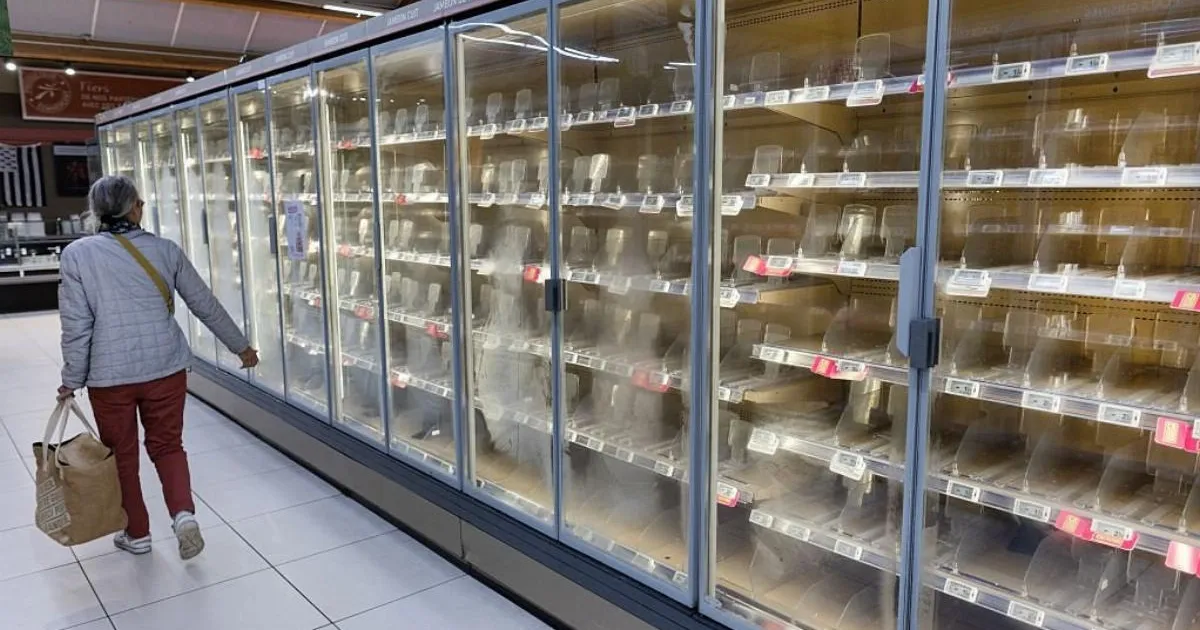
Imagine the quiet hum of a supermarket at night—the soft glow of freezer lights, the steady drone of compressors, the reassuring chill that keeps milk cold and meat fresh. Now imagine that hum breaking into silence, or worse, turning into an unnatural heat. That is exactly what happened across France last month, when hundreds of supermarkets, butcher shops, and food warehouses woke up to a nightmare. Overnight, the very systems designed to preserve food were hijacked and turned against them. Hackers slipped into the software that controls cooling units and cranked the temperatures up, in some cases to a blistering 50°C. Freezers that had held neatly stacked packages of chicken, fish, and vegetables became slow-cooking ovens. By morning, millions of pounds worth of food was ruined. Shoppers arrived to find empty aisles and thick paper signs taped to glass doors, apologizing for unavailable produce. For small independent butchers and family-run food businesses, it was not just an inconvenience—it was a potential knockout blow. A slaughterhouse, several food factories, and numerous local shops were caught in the blast radius. And in at least fifteen places, the overheating equipment sparked fires, turning an invisible cyber intrusion into a very physical and terrifying emergency. The scale was staggering: around seven hundred supermarkets across France were affected, and the sheer suddenness left entire communities staring at broken supply chains and spoiled goods. What had started as a quiet technical vulnerability had become a national crisis, felt in the most ordinary way possible—people struggling to feed their families.
Paragraph 2:
At first, it might have been tempting to blame a power surge or some bizarre mechanical failure. But investigators quickly realized this was no accident. The attack had been deliberate, calculated, and ruthlessly efficient. The hackers had targeted the software used to manage refrigeration and defrosting cycles in commercial cooling units. By accessing the systems during the night of Sunday, October 11, and continuing into Monday, October 12, they altered the defrost parameters, tricking the equipment into heating up instead of cooling down. The result was not just warm shelves and spoiled produce; it was a wave of cascading failures. In addition to the food losses, equipment at small hydroelectric installations linked to the same infrastructure also suffered “moderate effects,” according to French authorities. For the people who run these businesses, the betrayal felt deeply personal. They had trusted the technology that had worked flawlessly for years. They had trusted the safety of their products and the loyalty of their customers. And then, without warning, an anonymous adversary reached through the digital wires and set their livelihoods on fire—sometimes quite literally. The fires that broke out were a terrifying reminder that cyberattacks are not abstract crimes. They can melt plastic, scorch metal, and endanger lives. The clean, sterile world of a supermarket became a hazardous zone. Firefighters were called, insurance companies were overwhelmed, and every owner began to ask the same question: if hackers could do this to a fridge, what else could they do?
Paragraph 3:
Now, France has pointed a finger at Iran. The French national cyber security agency, ANSSI, called it an “unprecedented attack campaign” and blamed Iran’s Islamic Revolutionary Guard Corps (IRGC), specifically its electronic and cyber centre. In particular, the agency identified a shadowy group known as Shahid Kaveh as the likely perpetrator. Named after Mohammad Kaveh, an IRGC chief killed during the 1986 Iran-Iraq war, this unit has a reputation for being operationally aggressive. Experts have described Shahid Kaveh’s intelligence group 13 as a persistent and dangerous threat, and it has previously been suspected of hacking into networks in the United States and Israel. So how did investigators connect this French supermarket meltdown to a group halfway around the world? They pointed to a trail of digital breadcrumbs: the characteristics of the attack infrastructure, the use of signing tools known to be associated with the group, the relay of the attack by a propaganda organ linked to Shahid Kaveh, and traces of Persian language in the technical setup. It was, in effect, a forensic investigation conducted at the speed of light, with cybersecurity experts sifting through logs, servers, and encrypted communications. But the implication is deeply unsettling. A state-sponsored cyber unit, hidden within a powerful military force, allegedly targeted ordinary grocery stores, independent butchers, and food factories in France. This was not espionage aimed at stealing secrets. This was industrial sabotage, designed to cause maximum disruption and economic pain. It was a message, perhaps, about the vulnerability of modern life—and the willingness of certain actors to exploit it.
Paragraph 4:
France has responded with legal and diplomatic force. Public prosecutors in Paris have launched a formal investigation and, most strikingly, requested international arrest warrants against several members of the Shahid Kaveh group. This is a bold move, because it signals that the French government is not content to merely condemn the attack. It wants accountability. It wants the individuals involved to know that there is a price to pay for turning butter into puddles and breaking the freezers of struggling shopkeepers. The use of international arrest warrants is a rare and powerful tool, and it suggests that France has gathered enough evidence to identify specific suspects by name, or at least to build a compelling case. The investigation is being coordinated through France’s cyber crisis coordination centre, which has worked around the clock to trace the attack back to its source. The accusation is not just about technical breach; it is about “destabilisation and sabotage campaigns,” as ANSSI put it. For ordinary people, this legal maneuver may feel distant, but its consequences are very real. It puts Iran on notice, and it reminds other nations that cyberattacks on civilian infrastructure—whether a power grid, a hospital, or a supermarket—are not acceptable acts of mischief. They are acts of war in the gray zone, and they will be treated as such. At the same time, the move reassures the French public that their government is taking the matter seriously, that someone is fighting back on their behalf.
Paragraph 5:
The trouble did not stop at the French border. Just days after the attack in France, supermarkets in several other European countries were targeted as well. Dozens of Delhaize stores in Belgium and Luxembourg were reportedly affected, along with shops in Sweden, Finland, Estonia, Ireland, and the Netherlands. The pattern was eerily familiar: cooling systems suddenly malfunctioning, food spoiling overnight, shelves emptying, and staff scrambling to salvage what they could. For shoppers across Europe, it felt like a weird and unsettling dream. One day, everything was normal; the next, freezers were dark and empty. The culprit for this broader wave of attacks has not been officially confirmed, and cyber security watchdogs in each affected country have been carefully monitoring the situation. But the echoes of the French attack are hard to ignore. The same methods, the same timing, the same target selection—all point to a coordinated operation, or at least a copycat inspired by the apparent success of the first assault. This is the terrifying reality of modern cyber warfare: it can spread from country to country like a contagion, exploiting the same vulnerabilities in supply chains and commercial software. For the European Union, the incident is a wake-up call. Food supply chains are deeply interconnected, and a single compromised vendor can create a domino effect across many nations. The vulnerability is not just in the hardware or software; it is in the trust that links farmers, distributors, supermarkets, and consumers. When that trust is broken, even briefly, it sends a shockwave through the entire system.
Paragraph 6:
What does this mean for the rest of us? It means that cybersecurity is no longer a topic for IT departments and government agencies alone. It is a kitchen-table issue. It affects the price of our groceries, the safety of our food, and the stability of our communities. The image of a superstore freezer filled with rotting meat is not just a logistical catastrophe; it is a haunting symbol of how dependent we have become on invisible systems we rarely think about. We expect the lights to turn on, the water to run, and the fridge to be cold. We do not expect a foreign military unit to reach through the internet and turn our daily lives upside down. Yet that is precisely what happened in France, and it could happen anywhere. The good news is that awareness is growing. Governments are investing in defensive capabilities, companies are hardening their systems, and international investigators are learning to trace attacks through the murky depths of the internet. But the bad news is that the threat is constantly evolving. The attackers are patient, creative, and unburdened by ethics. They will try again, perhaps in different countries, perhaps with different targets. The best defense is not just technology; it is also solidarity, preparedness, and a clear-eyed recognition that we are all in this together. For the butchers, bakers, and supermarket owners who lost everything in one terrible night, the road to recovery will be long. But their resilience, and the determination of prosecutors and cybersecurity experts to seek justice, offers a glimmer of hope. In the end, the cold chain is not just a technical term. It is a bond between producers and families, between trust and survival. And we must protect it, not only with better firewalls and passwords, but with a shared commitment to hold those who break that bond accountable—wherever they may hide.