


Summary and Humanized Essay: The Absurd and Grave New Face of Unending Conflict
Paragraph One: The Bizarre Trump Presidency and the Erosion of Normalcy
It is a strange time when the chaotic rhetoric of global leadership begins to feel like background noise, a constant hum of hyperbole that overwhelms the senses and numbs our ability to be shocked. The news cycle, once a place of dry reports and political nuance, now brings us a headline that should stagger the conscience of any rational observer: The President of the United States has threatened to bomb a sovereign nation into oblivion for the simple crime of getting in the way. This is the reality of the current political climate, where the conventional rules of warfare, diplomacy, and basic human decency have been tossed aside in favor of bravado and schoolyard threats. The recent comments from the President, in which he vowed to “bomb the s***” out of Oman if it interfered with his administration’s plans, represent a chilling departure from the carefully measured diplomacy that has historically characterized international relations. Instead of statesmanship, we get threats; instead of careful negotiation, we get the promise of extreme violence. This is a new world, where the absurdity of a man-child with the nuclear codes is no longer a fictional movie plot but the terrifying headline of the day, forcing us to confront the fragility of the world order and the volatile temperament of those who hold its highest offices. The fact that a significant portion of the public has become desensitized to this constant stream of outrage is arguably an even greater tragedy, as the abnormal becomes the norm and we are dragged, exhausted and anxious, toward the next cliff of absurdity.
Paragraph Two: The Frantic Diplomacy of the Current Administration
Enter the contradictory world of current negotiations, where the United States and Iran appear to be stuck in a bizarre dance of death. The President, ever the self-proclaimed dealmaker, casually mentioned that the Islamic Revolutionary Guard Corps had established a back channel with his administration to continue peace talks, all while he refused to be tied down by any kind of timeline, declaring, “They’re good poker players, but they’re dying. I have no time schedule. I’m not in a hurry.” Such a cavalier attitude toward a potential conflict with the potential to engulf the entire Middle East in flames is mind-boggling. On the one hand, there is a stated interest in peace; on the other hand, there is a constant ratcheting up of aggressive, combative language. This is not diplomacy; it is a high-stakes game of chicken played out on the world stage, with the lives of millions hanging in the balance. The mention of Oman as a potential mediator is particularly galling, as it is a nation that has historically been able to build bridges and facilitate dialogue. To threaten that neutral party with military action for its peacekeeping efforts is the pinnacle of ingratitude, a clear signal that the administration is disinterested in any kind of stability that doesn’t fit its own narrow, destructive vision. The broken trust between the two nations is now a chasm, and the only words being hurled across it are either empty diplomatic pleasantries or outright threats of annihilation.
Paragraph Three: The Grim Reality of War and Its Human Cost
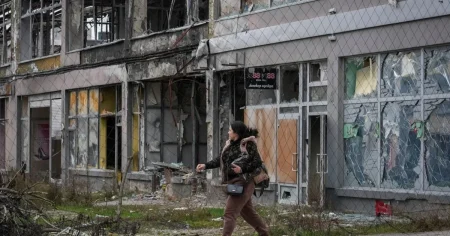
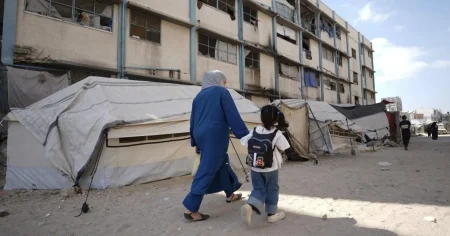
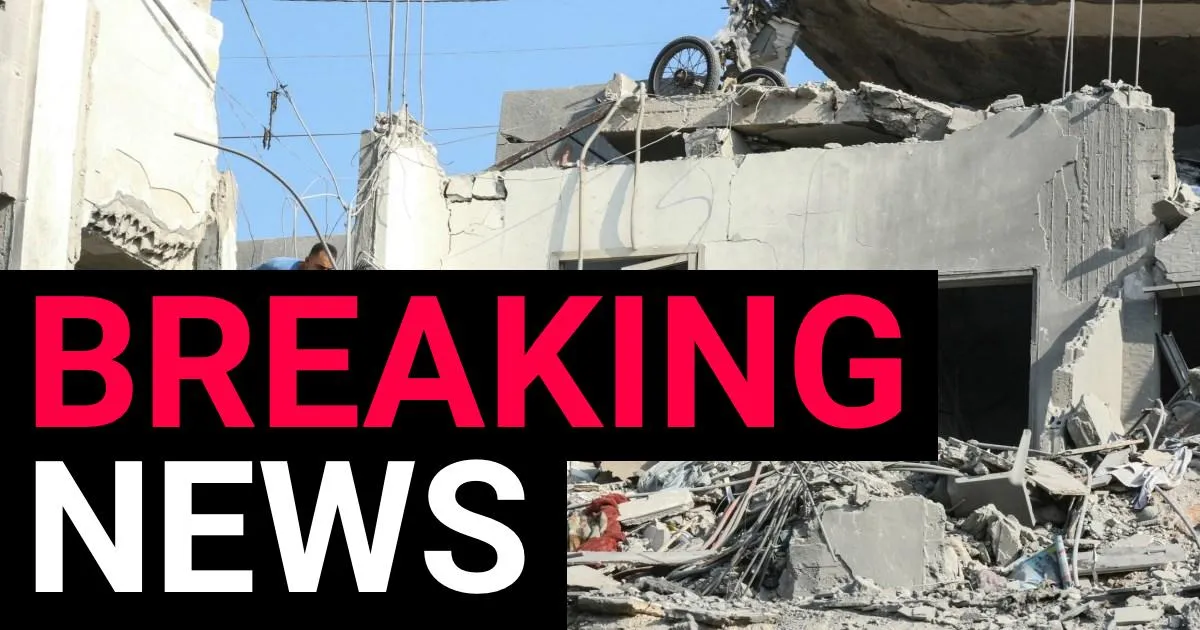
Beyond the rhetoric of TV personalities, the human reality on the ground is a living nightmare. The looming deadline of the expiration of a 60-day ceasefire has placed the region on a knife’s edge, and the conflict enters its fifth month with no end in sight. It’s easy to get lost in the geopolitical chessboard, viewing countries as abstract pieces and their people as statistics to be moved and removed. But this war, like all wars, is a collection of individual tragedies. It is the crying of a mother in Tehran, terrified for the fate of her son. It is the heartbreak of a family in Ohio, receiving the news that yet another soldier will not be coming home. The promise from the Iranian military to pay a bounty of $30,000 for the death or kidnapping of US soldiers—and double that, $60,000, if a woman commits the act—feels like a sick parody of a deadly serious situation. While the promise to reward female assailants is a transparent and grotesque attempt to appear progressive while soliciting war crimes, it highlights the lengths to which both sides believe that victory lies in dehumanizing the enemy. Every bullet fired, every bomb dropped, every life lost is not a political statement; it is a person with a story, with loved ones, with hopes and dreams that have now been cut brutally short. The continued air strikes, notably absent of ground troops, create a detached, video-game-like perception of warfare that makes it easier for those in power to authorize more violence, but it moves the blood and fear just the same for those huddled in bunkers below.
Paragraph Four: The Absurdity of “Crowd-Sourcing” Punishment
Perhaps the most surreal development in this unfolding tragedy is the revelation that the US military, in a bid to find a new way forward, has apparently resorted to a form of bureaucratic crowdsourcing to figure out how to end the war. In a development so outlandish it could be from the plot of a comedy, the military sent out an email to high-ranking analysts asking for “new, creative, and unconventional ways to pressure and punish Iran.” It is a stunning admission of a profound strategic failure that the leaders of the world’s most powerful military, with all its resources and top-tier intelligence, have to ask for homework help from the rank and file. One can only imagine the scene in the Pentagon, with stressed generals staring blankly at an empty spreadsheet, hoping that a tactical officer in a tank in Virginia might have a brilliant idea to resolve the conflict. While INTERPOL and CENTCOM claim this is just another example of their “innovative ways” of thinking, to the outside observer, it comes across as the equivalent of a desperate student taking an exam without having studied, scribbling down the first thought that comes to mind. The whole approach cheapens the gravity of the situation, suggesting that the military is no longer a facilitator of a political solution but simply a monstrous hammer in search of a nail.
Paragraph Five: The Loss of Rationality and the Search for an Escape
The end result of all this collaboration is a situation where reason has well and truly left the building. The war is no longer about a grand strategic objective or achieving a semblance peace. It has become a personal crusade, a tangled web of ego and vengeance. The constant changing of the goalposts—from containing nuclear ambitions to “punishing” a nation for its resistance—indicates a fundamental lack of coherent policy. The search for “creative” ways to maintain an un-winnable war reflects a broader societal failure to recognize the limits of military force. The very notion that after months of air and missile strikes, the only answer either side can conjure up is more devastation demonstrates a terrifying emptiness in our global leadership. As we watch the clock tick down on the ceasefire, the debate has shifted from how to end the war to who is responsible for its escalation. There seems to be no appetite for the difficult, unglamorous work of compromise that true peace demands. In this climate, the only winner is the military-industrial complex, which thrives on constant conflict, dismantling the very fabric of civil society just to feed its insatiable hunger for new ways to build better mousetraps for the human race.
Paragraph Six: A Plea for Humanity in the Face of Madness
In the end, we are left with a grim and sobering reality. We have a United States President who discusses the annihilation of a neutral nation with the casualness of a man ordering coffee, and an adversary offering bounties for the death of his countrymen. The continuous stream of rhetorical and military attacks has created a feedback loop of violence that seems almost impossible to break. Yet, for the sake of all our humanity, we must. We cannot allow ourselves to become desensitized to the cold-hearted logic of the “gym class” dodgeball game that global politics has become. We cannot accept that this is just the way things are. It is in these absurdist, terrifying moments that our shared humanity is our only shield. We must remember that beyond the politics, beyond the talking points, and beyond the military strategies, there are human beings—on both sides—who just want to live their lives in peace. The men in charge, from the bearded mullahs in Tehran to the rancher in the White House, seem content to gamble with the future of our planet. We must have a voice that speaks out against this madness, that rejects the easy thrill of warmongering and chooses the slow, difficult path of empathy and understanding. For if we continue to allow the delusions of these people to define our reality, we won’t just lose a war; we will have lost the very essence of what it means to be human.