



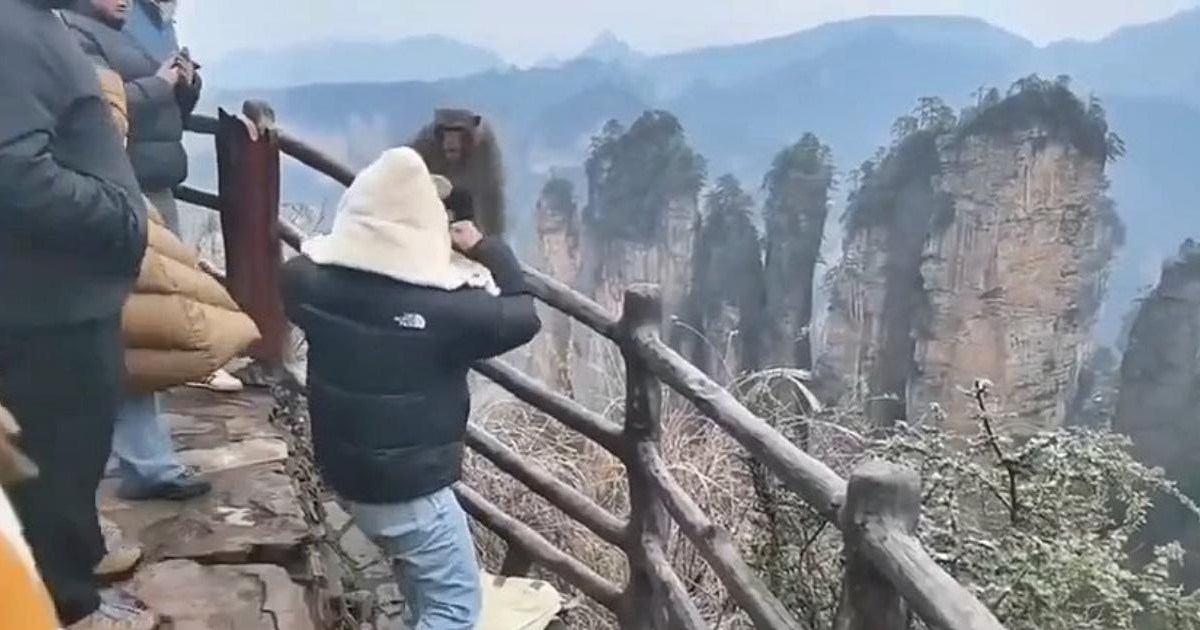
This incident highlights the complex and often fraught relationship between humans and wildlife, particularly in areas where tourism intersects with natural habitats. The encounter began with a seemingly common scenario: a macaque, known for its opportunistic nature, attempted to snatch a bag from a tourist, likely suspecting it contained food. This initial act, driven by the monkey’s instinctual foraging behavior, escalated rapidly into a physical altercation. The tourist’s defensive reaction, perceived as a threat by the monkey, further intensified the confrontation. While the tourist’s actions may be viewed by some as justified self-protection, it underscores the ethical dilemmas inherent in human-wildlife interactions and the potential for conflict when boundaries are blurred.
The incident unfolded in Zhangjiajie National Forest Park, a renowned natural preserve in Hunan Province, China. This park, like many others around the globe, faces the challenge of balancing conservation efforts with the influx of visitors who often unwittingly intrude upon the territory of resident wildlife. The macaques of Zhangjiajie, known for their boldness and occasionally aggressive behavior, have likely become habituated to human presence, leading to increased interactions, some of which can escalate into conflict. The readily available food provided by tourists, despite warnings against such practices, further reinforces this habituation and can embolden the monkeys, blurring the lines between natural foraging and opportunistic scavenging.
The monkey’s persistence in seeking food from tourists, even after the initial altercation, reveals a deeper issue at play – the disruption of the natural food chain. The easy availability of human-provided food can alter the monkeys’ foraging patterns, making them reliant on handouts and potentially disrupting the ecological balance within the park. This dependence can also lead to increased aggression, as the monkeys become more assertive in their attempts to acquire food from visitors. The incident serves as a reminder of the unintended consequences of human actions on wildlife behavior and the importance of maintaining appropriate distance and respecting natural boundaries.
The park authorities’ response to the incident, advising visitors against feeding the monkeys and highlighting the potential dangers of interaction, reflects the ongoing effort to manage the delicate balance between tourism and conservation. Education and awareness campaigns are crucial tools in mitigating human-wildlife conflict, fostering respect for wildlife, and promoting responsible behavior among visitors. However, the underlying issue of habitat encroachment and the disruption of natural food sources needs to be addressed through comprehensive conservation strategies that prioritize the well-being of wildlife while also accommodating the needs of tourism.
This incident also raises questions about the ethical treatment of animals in tourist settings. While the tourist’s actions were arguably in self-defense, the physical confrontation underscores the ethical dilemma of using force against wild animals. Furthermore, the incident highlights the potential for misinterpreting animal behavior. The monkey’s actions, while seemingly aggressive, were likely driven by instinct and survival, not malice. Promoting empathy and understanding of animal behavior is crucial to fostering respectful interactions and minimizing the potential for conflict.
In conclusion, the altercation between the tourist and the macaque serves as a microcosm of the larger challenges facing conservation efforts worldwide. Balancing human needs with the well-being of wildlife requires a multifaceted approach that includes education, responsible tourism practices, and robust conservation strategies. The incident underscores the importance of respecting natural boundaries, avoiding the temptation to feed wild animals, and fostering a deeper understanding of animal behavior to minimize the potential for conflict and ensure the long-term survival of these precious species. The story, though seemingly isolated, speaks to the complex relationship between humans and the natural world, reminding us of our responsibility to protect and coexist with the diverse life that shares our planet.