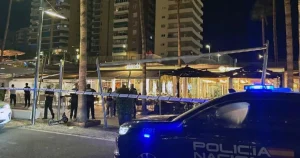


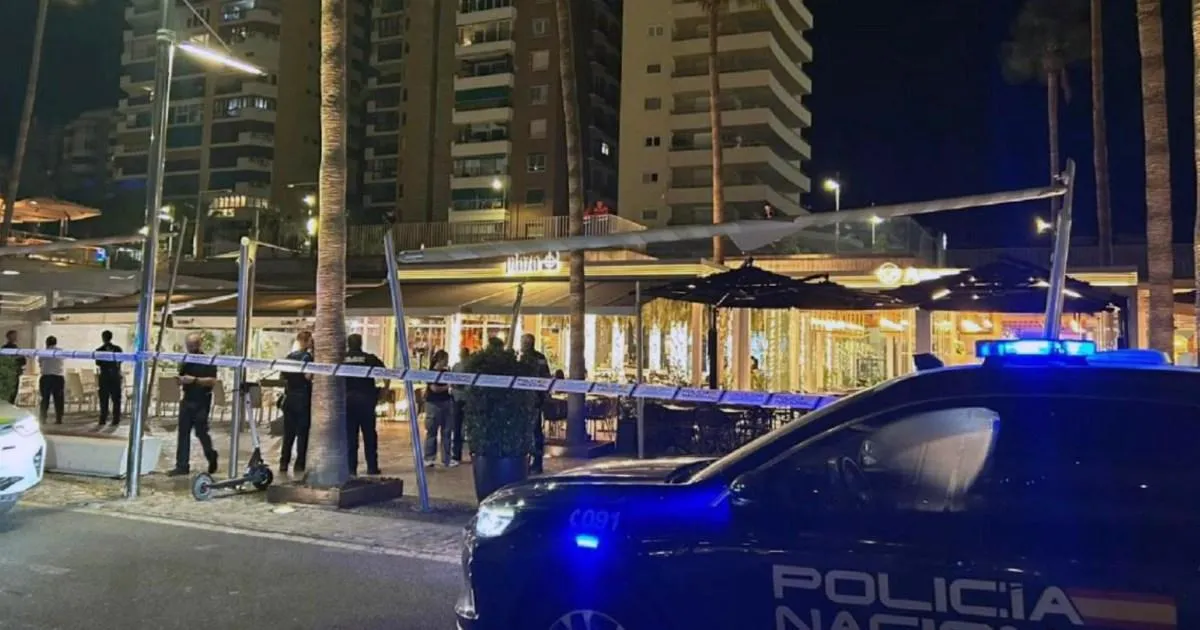
There is a particular kind of quiet that settles over a Mediterranean beach club in late summer—the lazy clink of glasses, the murmur of conversations carried on salt-warm air, the distant rhythm of waves folding onto sand. It is the kind of place people go to forget their worries, not to become the subject of a police report. But that fragile peace was shattered in Estepona, on Spain’s Costa del Sol, when gunfire erupted near the Sonora beach club and a 31-year-old Lithuanian man was shot four times. He survived, by what can only be described as a fragile twist of fate, but the bullet holes left behind more than physical scars. They marked the beginning of a sprawling investigation that would stretch hundreds of miles across Spain and end with three British suspects in handcuffs. For the victim, a holiday or a visit to the coast turned into a waking nightmare. For the beach bar staff, the shock was compounded by a strange, almost surreal detail: the incident did not happen directly on their premises, according to employees, and the attackers had sped away in a car almost immediately, vanishing into the quiet roads as quickly as they had arrived. The randomness of the violence, and the speed with which the gunmen escaped, left everyone with the unsettling feeling that nowhere, not even a sun-drenched beach club, was entirely safe.
In the weeks that followed, investigators worked quietly behind the scenes, tracking leads and piecing together a chain of events that seemed to reach far beyond one moment of violence. Their efforts eventually led them to La Zenia, a popular resort in Orihuela on Spain’s Costa Blanca, roughly 350 miles away from the scene of the shooting. There, police detained three British nationals in connection with the attack. The arrests were not casual stops; they were the culmination of a carefully coordinated operation that involved searching properties, gathering evidence, and dismantling what authorities believe is a network of criminal activity. The three suspects now face a formidable list of accusations, including attempted murder, membership in a criminal gang, drug trafficking, and illegal possession of weapons. Two of them were remanded in custody, their holidays abruptly ending not on a sun lounger but behind the bars of a Spanish prison. The third was released on bail while inquiries continue, a reminder that the legal process is still unfolding and that the full picture has not yet come into focus. During the police operation, authorities seized a troubling cache of items: false documentation, weapons, and drugs. These were not the kinds of objects a traveler packs for a beach vacation. They were the tools of a darker trade, evidence that the men arrested were not simply accused of one shooting but were allegedly embedded in a much larger world of organized crime. The distance between Estepona and La Zenia also tells a story: it suggests a deliberate attempt to put geographical space between the suspects and the crime, as if distance alone could sever the connection. But investigators, patient and methodical, closed that gap.
This was never just a single incident in isolation. Police sources have linked the shooting to a gangland-related feud, a phrase that echoes across the sun-drenched coastal towns of southern Spain with growing frequency. The region has become a battleground for criminal organizations fighting over territory, drugs, and power, and the violence has begun to spill into public spaces where ordinary people live, work, and take their holidays. In the past week alone, the province of Malaga has seen a devastating series of shootings. A 20-year-old man was shot dead on a Friday evening in a central square in the city of Malaga, in a case believed to be one of mistaken identity. Think about that for a moment: a young man, probably with plans and people who loved him, killed because someone pointed a gun at the wrong person. His death is a grotesque reminder that these feuds are not confined to shadowy back alleys; they happen in public, in the middle of the city, in front of witnesses. Three Swedish nationals of Somalian origin with links to organized crime have been arrested in connection with that killing. Then, on Tuesday, a Turkish football fan was shot in the face at a restaurant in a marina in the same city, ambushed by two gunmen. He survived, but the image of a man enjoying a meal in a beautiful seaside location only to be targeted for assassination is enough to unsettle anyone. There is no easy way to process this kind of random, brutal violence. It makes people look over their shoulders. It turns ordinary sounds into alarms. And it leaves communities wondering who will be next and whether the authorities can keep up with a wave of criminality that seems to move faster than the law.
The violence has not been confined to one beach bar or one city square. On September 8, another shooting took place in Marbella, near a four-star hotel along the resort’s famous Golden Mile, an area more commonly associated with luxury cars, designer boutiques, and glittering nightlife than with ambulances and police tape. A Dutch victim was hospitalised after the attack, and authorities again linked the incident to gangland crime. The juxtaposition is jarring: a place that markets itself as a paradise for the rich and famous, where every sunset looks like a postcard, now finds itself navigating the grim realities of criminal turf wars. Even more disturbing, just three days earlier, authorities uncovered a torture chamber inside a villa in Estepona. Two men were rescued from that villa, alive but undoubtedly traumatized, and seven suspected members of a Malaga-based Eastern European gang were arrested. The discovery of a torture chamber in a holiday town is the kind of thing that feels impossible, yet there it was, hidden behind the walls of a property that might otherwise have been rented out to unsuspecting tourists. It is a chilling reminder that the beautiful facades of coastal Spain can sometimes conceal terrible things. The victims were not just statistics; they were human beings whose lives were put through unimaginable horror. And the arrests, while significant, only scratch the surface of a deeper problem. These are not isolated incidents or random acts of street crime. They are coordinated, organized, and deeply embedded in networks that operate across borders, moving people, drugs, and violence with the same ease that tourists move between beach clubs.
In response to mounting criticism that not enough is being done to tackle organized crime, the Spanish government has sent police reinforcements to the region. It is a move that acknowledges what many residents have been saying for months: the situation is serious enough to require a surge in resources, more patrols, more investigations, and a visible law enforcement presence in the streets. For locals, the reinforcements may bring a degree of comfort, but they also serve as an admission that the problem is bigger than any one police department can handle. The Costa del Sol and the surrounding areas have long been a magnet for British tourists, expats, and holidaymakers, drawn by the warm climate, the relaxed lifestyle, and the promise of an endless summer. But the region has also become an attractive base for criminal gangs, who see the international crowds as both a cover and a market. The violence threatens not only public safety but also the livelihoods of everyone who depends on tourism—hotel owners, restaurant workers, taxi drivers, beach vendors, and small business owners who have spent their lives building something in this beautiful corner of the world. Every shooting that makes the news sends a ripple of anxiety through the community. Tourists start to hesitate. Families worry about safety. The carefree atmosphere that defines coastal Spain begins to feel a little more fragile. And yet, life goes on. The sun still shines. The bars still fill up. The waves still roll in. But there is a tension in the air now, a quiet awareness that beneath the surface of this idyllic landscape, a much darker world exists, one that occasionally erupts into the light and reminds everyone that paradise can be a complicated place.
For the Lithuanian man who survived four gunshot wounds, the story is not over. Even after the suspects are tried and convicted, even after the police operations are praised and the streets are deemed safer, he will carry the memory of that day with him forever. Recovery is not just physical; it is emotional and psychological. Every unexpected loud noise, every car backfire, every sudden movement in his peripheral vision might bring him back to the moment when his life was nearly taken from him. For the British suspects, too, the consequences are profound. They came to Spain, whether for a temporary stay or a longer plan, and now they find themselves accused of some of the most serious crimes in the legal system. Their lives, once filled with ordinary choices and perhaps some dangerous ones, are now defined by a single violent episode and the allegations that followed. Somewhere in the background, there are also the unnamed victims—the two men rescued from the torture chamber, the Dutch holidaymaker recovering from gunshot wounds, the family of the 20-year-old who died in that central square, the Swedish nationals arrested for their alleged role in one killing, and so many others whose names appear briefly in news reports and then fade from public attention. They are not just plot points in a crime story. They are people with dreams, fears, friends, and families. The arrests are a step toward justice, a signal that the authorities are listening and acting. But true justice is slower and more complicated. It means dismantling the networks that make such violence possible. It means protecting communities. It means restoring the sense of safety that has been shaken. For now, the investigation continues, more arrests may still be coming, and the coastal towns of southern Spain wait, cautiously hopeful, for the peace they remember to return.