

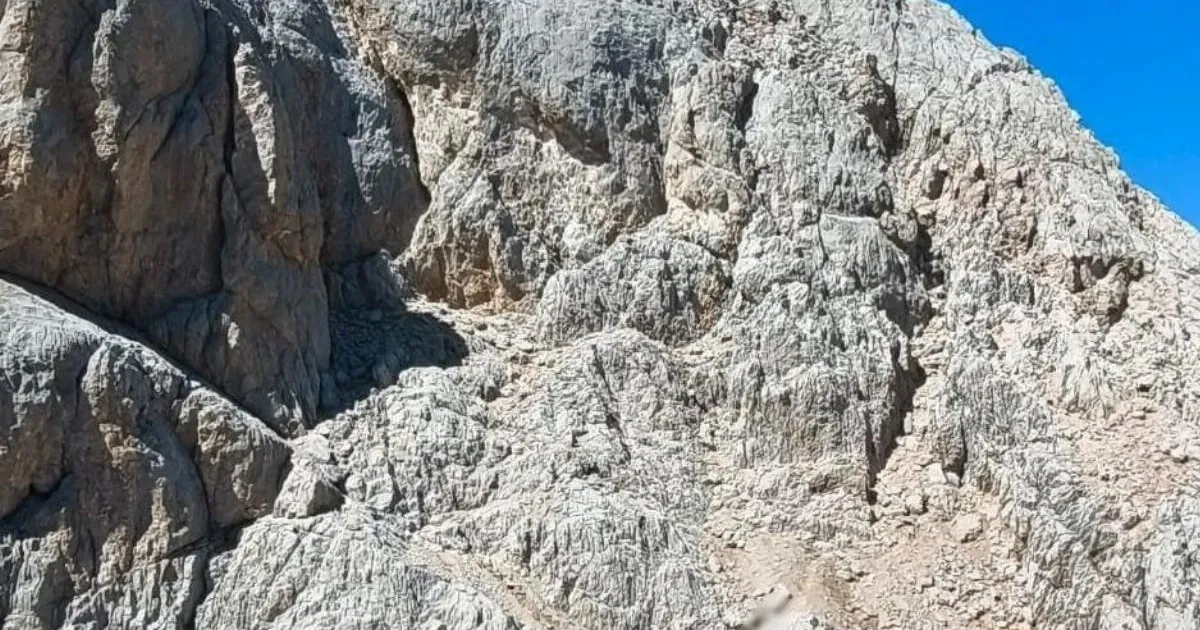
A British mountaineer has died after falling from Torrecerredo, the highest peak in the Picos de Europa range in northern Spain, a place of immense beauty and equally immense danger. The man, who has not yet been publicly identified, fell around two hundred feet from the eastern side of the mountain, a rugged and remote area that sits near the border between the regions of Asturias and Castilla y León. Spain’s Guardia Civil confirmed that a mountain rescue team was deployed after receiving reports of the accident at 2.20pm on Thursday. The news will be devastating for his family and friends, who are now left to grieve a life lost in a landscape that many consider one of Europe’s most spectacular natural wonders. The exact circumstances of the fall remain unclear, and investigators will likely spend time piecing together what happened in the final moments before tragedy struck. The man was described as an excursionist, a word that suggests a hiker or walker rather than a technical climber, but the mountain itself is not forgiving. Torrecerredo rises to 8,690 feet above sea level, and its exposed ridges, loose stones and sudden weather changes demand respect from even the most experienced outdoors people. For the local emergency services, Thursday afternoon was a stark reminder that no amount of preparation can entirely remove the risks of high mountain terrain. The initial call for help came around midday, but by the time the rescuers reached the area, there was nothing they could do to save him. His body was eventually spotted from the air, lying on the steep slopes below the summit, a heartbreaking outcome for all those involved in the operation.
The recovery was a difficult and sobering task for the rescue teams, who had to work in hazardous conditions to retrieve the fallen climber. His belongings were found scattered around the trail, a sign of the violence of the impact and a detail that made the tragedy feel even more personal. The remains were located about sixty-five feet below the summit, meaning the man had come to rest not far from the top, almost within reach of the completion of his climb. The Guardia Civil mountain rescue unit and a helicopter crew worked together to bring his body down from the mountain, treating the task with the utmost care and dignity. The body was taken to the La Morgal sports and aviation centre in Llanera, near the city of Gijon, where the necessary formalities would be carried out. For the emergency responders, such operations leave an emotional mark that is not easily erased. They had gone out expecting to find a living person, perhaps someone who had been injured and needed help, but instead they found a tragedy. The knowledge that a life had been lost before they even arrived makes every step of the recovery heavier. The mountain, which had seemed so majestic from below, had become a place of grief. Later, the British Foreign Office confirmed that it was in contact with local authorities following reports of the death of a British national in Spain, offering consular support to the man’s family during what will undoubtedly be an agonising time.
The Picos de Europa, where this accident took place, is one of Spain’s most beloved and wild mountain ranges. Stretching across Asturias, Cantabria and Castilla y León, its jagged limestone peaks have drawn walkers, climbers and nature lovers for generations. Torrecerredo is the highest point of this range, and while it may not be as tall as the Alps, it has its own distinct harshness. The weather can change within minutes, transforming a bright, calm day into a sudden storm of wind, rain and fog. The terrain is full of hidden crevices, loose rock and steep gullies, and a single misstep can have fatal consequences. For those who live in the shadow of the mountains, this latest death is not just news; it is a reminder of the forces they live alongside every day. The people of the nearby villages and towns know that the peaks are not tame, and they feel a deep connection to the rescue teams who risk their own lives to save others. Tourists and visitors often come to the Picos filled with excitement and optimism, unaware of just how quickly conditions can turn. This tragedy will be discussed in mountain refuges, local bars and climbing clubs, passed on as a story of caution and respect. It is not intended to frighten people away, but to remind them that the wilderness must be approached with humility. The mountain does not care how fit or determined a person is, and it does not give second chances.
On the same afternoon, within the same range, a second emergency unfolded that showed how thin the line between life and death really is. A fifty-four-year-old French woman fractured her leg while climbing the Jou Sin Tierre peak, another mountain in the Picos de Europa. She was accompanied by another climber, who made the difficult decision to leave her side in order to try to reach a spot where a mobile phone signal could be found and help could be called. It is impossible to imagine the fear and pain she must have felt, lying alone on the mountain, not knowing how long she would have to wait. Her companion, too, must have been torn by anxiety and the weight of responsibility, but sometimes there is no other option in remote places. The rescue services eventually reached her and brought her down to safety, transferring her to the Hospital of the Orient in Arriondas, where she could receive treatment for her injury. Her story had a happier ending, but it is part of the same larger story of human vulnerability among the mountains. Two people set out to climb on Thursday; one was rescued, the other was not. The difference between the outcomes may have come down to a matter of seconds, angles, or sheer chance. Both were doing something they loved, seeking the same sense of challenge and connection with nature, and both were at the mercy of the same indifferent landscape. The rescue teams had to coordinate two operations at the same time, stretching their resources and their emotional strength. But they did what they could, saving one life and recovering another with equal professionalism.
The official response to the tragedy has been handled with care and discretion. The Guardia Civil confirmed the deployment of a mountain rescue team after the alarm was raised, and the regional emergency services in Asturias were involved in the recovery effort. Their work was not straightforward, but it was carried out without further harm to anyone else. The British Foreign Office issued a short statement saying that it was in contact with local authorities following reports of the death of a British national in Spain. Behind such carefully worded lines lies a much deeper human reality: a family who has received terrible news, a set of arrangements that must be made, and a life that will be forever remembered through the memories of those who loved the man. The process of repatriation, paperwork, and consular support is slow and painful, but it is necessary. It provides a structure for the grief, a way of bringing the victim home and allowing the bereaved to begin the long process of mourning. The French woman who was injured will need time to recover, both physically and emotionally, and she too will carry the memory of this day for the rest of her life. The authorities have not released further details, respecting the privacy of everyone involved. In the coming days, more information may emerge about the British climber, his identity, his background, and the route he was attempting. But for now, what matters is the human loss, not the headlines. Every year, many people travel to the mountains of Spain seeking adventure and freedom. Most return safely, changed by the beauty around them. A few never do, and their stories become part of the silent history of the peaks.
There is no way to fully make sense of such a tragedy, but there is something in the human spirit that keeps returning to the mountains, even after hearing news like this. The British man who died on Torrecerredo was presumably doing something he loved, in a place he may have dreamed of visiting for years. His death, so close to the summit, is an especially cruel twist. He had almost reached the top, only to lose his footing in the final stages and fall to his death. The mountains do not spare anyone because they have already come a long way, and they do not soften their rocks for the innocent. They are ancient, silent and utterly indifferent. Yet the people who live among them and the people who are drawn to them continue to find meaning in their presence. There is a special bond that forms between climbers, a shared understanding of risk and reward, and that bond is now being felt in the outpouring of sympathy and sadness that will follow this news. The thoughts of everyone who hears this story go out to the man’s family and friends, to the rescue workers who tried so hard to help him, and to the French woman whose own ordeal on the same day was a reminder of how fragile life can be. May the memory of the fallen climber be a gentle one, and may those who loved him find strength in their connections with each other and with the natural world he chose to explore. In time, the mountain will return to its quiet rhythm, but it will never again look quite the same to those who know what happened there.