

Tragedy in the Skies: A Nation Mourns After Devastating Plane Crash in the Democratic Republic of Congo
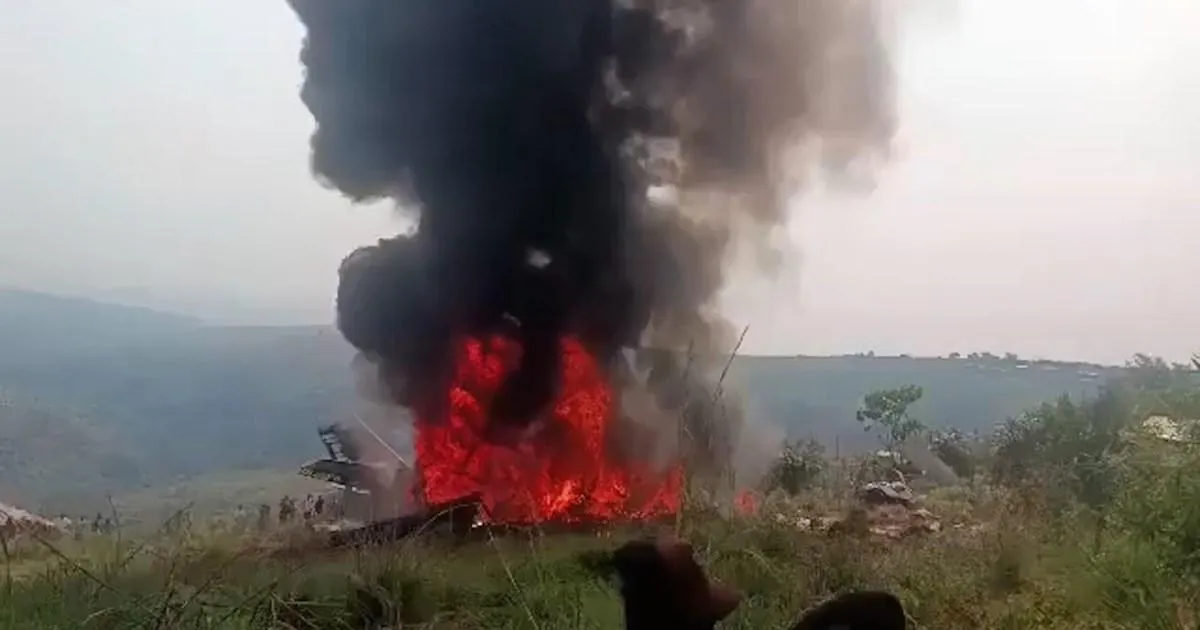
The quiet afternoon air in Kenge, a town nestled in the southwestern region of the Democratic Republic of Congo, was shattered by a deafening explosion that would echo through the hearts of an entire nation. A military aircraft, struggling against the forces of gravity and mechanical failure, plunged from the sky and crashed into a residential neighborhood, erupting into a massive fireball that consumed everything in its path. The devastating incident, which occurred on a seemingly ordinary day, claimed the lives of at least thirteen individuals, including some of the country’s most respected military officials. As thick plumes of black smoke billowed into the atmosphere, residents rushed toward the scene, their screams mixing with the crackling of flames that were rapidly engulfing the twisted wreckage of what had once been a flying machine carrying hopes, dreams, and the lives of soldiers and civilians alike. The tragedy would not only leave families shattered but would also serve as a stark reminder of the persistent dangers that plague air travel in this vast African nation, where the combination of aging aircraft, challenging terrain, and inadequate infrastructure continues to exact a heavy toll on human life.
The Final Flight: A Journey Interrupted by Catastrophe
The ill-fated journey began as a routine flight from Kikwit, a bustling city in the western part of the Democratic Republic of Congo, with the aircraft destined for the nation’s capital, Kinshasa, located over 300 miles away. On board were a diverse group of passengers, including military personnel and civilians, all of whom had placed their trust in the aircraft and its crew to deliver them safely to their destination. Among those on board was General Likulia Bakumi, the army’s auditor general, a man whose distinguished career in military service had earned him respect and admiration from his peers. Alongside him traveled a major, a captain, and other military personnel, as well as civilians who had presumably been given permission to accompany the military transport. For much of its journey, the flight appeared to be proceeding normally, but somewhere along the route, a technical malfunction began to manifest itself, threatening the safety of everyone on board. The pilot, demonstrating remarkable skill and composure under rapidly deteriorating circumstances, recognized the gravity of the situation and made the courageous decision to attempt an emergency landing. However, fate would prove cruelly unforgiving, as the aircraft continued its descent toward Kenge, a town in Kwango province, where the lack of a suitable landing strip would seal the destiny of those on board in the most tragic manner imaginable.
A Desperate Attempt: The Pilot’s Courageous Battle Against Impossible Odds
In the final moments before impact, the pilot must have experienced a terror that few can comprehend, as the realization dawned that the emergency landing he so desperately sought to execute would not be possible. Remy Saki Bokinda, the province vice governor, would later explain that with no landing strip available in Kenge, the plane crashed into a residential plot, transforming what might have been a survivable incident into an unmitigated catastrophe. Witnesses described the horrifying scene as the aircraft descended toward the earth, its engines sputtering and failing, before slamming into the ground amid a deafening roar that sent debris scattering across a wide area. The impact immediately triggered a massive fire, with flames racing through the fuselage and consuming everything in their path. For the residents of the neighborhood, the sudden appearance of an aircraft in their midst must have been bewildering, transforming their everyday surroundings into a scene of apocalyptic destruction within mere seconds. The pilot, whose name has not been released to the public, apparently managed to exit the aircraft before succumbing to his injuries or the fire, as his body was later discovered outside the wreckage, a testament to his final desperate struggle to survive against overwhelming odds. His body would later be carried away on a stretcher, while twelve of his fellow passengers were so badly burned that they could not be identified visually, their remains bearing no recognizable features to distinguish one from another.
The Human Toll: Loss, Grief, and a Community in Shock
The aftermath of the crash revealed the full extent of the tragedy, as authorities began the grim task of recovering and identifying the victims. Of the thirteen people on board, twelve were burned beyond recognition, leaving their families with the impossible task of saying goodbye to loved ones whose physical forms had been reduced to ashes. The pilot, having been found outside the aircraft, at least received the dignity of being identified, though his life had also been tragically cut short. The loss of General Likulia Bakumi represents a significant blow to the Congolese military establishment, as he served as the army’s auditor general, a position of considerable responsibility and importance. His death, along with those of the other military personnel on board, has sent shockwaves through the armed forces and the government, prompting expressions of condolence from officials and citizens alike. In Kenge, the local community has been left in a state of profound grief and disbelief, as residents grapple with the dual tragedy of losing fellow citizens while also witnessing the destruction of property in their neighborhood. The crash site has become a focal point for mourning, as curious onlookers and grieving family members gather to pay their respects and seek closure, their faces reflecting the deep sorrow that accompanies such sudden and violent loss. The provincial governor’s office has announced that an investigation has been launched by the government aviation accident body, though for the families of the victims, such procedural responses offer little comfort in the face of their devastating personal losses.
A Nation’s Recurring Nightmare: The History of Aviation Disasters in the DRC
While each aviation tragedy brings its own unique heartbreak, the Democratic Republic of Congo has become tragically familiar with such disasters, as the country has consistently ranked among the most dangerous places in the world for air travel. The DRC, being the second-largest country in Africa with over two million square kilometers of territory, faces immense logistical challenges in connecting its far-flung communities. With roads in poor condition, dense tropical forests covering vast swathes of land, and limited infrastructure, air travel often represents the most practical means of transportation for both goods and people. However, the industry has long been plagued by systemic problems, including aging aircraft fleets, inadequate maintenance practices, insufficient pilot training, and weak regulatory oversight. Historically, the country has accounted for a disproportionate share of global aviation accidents, despite representing only 0.1 percent of worldwide air traffic. This sobering statistic underscores the severity of the safety deficiencies that continue to characterize Congolese aviation. International aviation organizations have repeatedly called attention to the dangerous conditions prevailing in the country, and several airlines have been banned from operating within certain jurisdictions due to safety concerns. For ordinary Congolese citizens, the choice to fly is often a calculated risk, a necessity weighed against the very real possibility of becoming another statistic in the nation’s tragic ledger of aviation failures. The government has pledged on numerous occasions to improve safety standards, yet meaningful progress has remained elusive, as chronic underfunding, corruption, and logistical obstacles continue to impede meaningful reform.
The Road to Recovery: Investigation, Reflection, and the Quest for Accountability
In the wake of the Kenge crash, attention has now turned to the investigation that will seek to determine the precise cause of the accident and identify any systemic failures that may have contributed to the loss of life. The government aviation accident body has launched a comprehensive inquiry, with investigators expected to examine the aircraft’s maintenance records, the pilot’s training and experience, the nature of the reported technical malfunction, and the decisions made during the flight’s final minutes. For the families of the victims, this investigation represents a crucial step toward understanding what happened to their loved ones and ensuring that such tragedies can be prevented in the future. However, past experience in the DRC suggests that investigations often face significant challenges, including limited resources, political interference, and a lack of technical expertise. The broader aviation community will be watching closely, hoping that the findings of this inquiry will lead to meaningful improvements in safety protocols and regulatory enforcement. Beyond the technical aspects of the investigation, this tragedy compels a deeper reflection on the human cost of systemic failures and the responsibilities incumbent upon governments to protect the lives of their citizens. The people of Kenge, the families of the victims, and indeed the entire nation of the Democratic Republic of Congo deserve more than empty promises and symbolic gestures; they deserve concrete action that will make air travel safer and prevent future families from experiencing the profound grief that now envelops them. As the flames have been extinguished and the debris cleared, the memory of those lost will endure as a somber reminder of the urgent need for change.
Remembering the Fallen: A Community United in Grief and a Nation’s Resolve
As the sun sets on the town of Kenge, casting its orange glow over a landscape forever changed by tragedy, the people of this community and the wider Democratic Republic of Congo find themselves grappling with the profound sense of loss that accompanies such catastrophic events. Thirteen souls, each with their own stories, dreams, and loved ones, have been extinguished in a fiery moment that unfolded far too quickly for anyone to comprehend. Yet even in the midst of such overwhelming sorrow, the resilience of the Congolese people shines through, as neighbors support neighbors, families cling to one another for comfort, and a nation mourns collectively while looking toward an uncertain future. The investigation into this crash must proceed with diligence and transparency, not merely as a bureaucratic exercise but as a solemn duty owed to those who perished and those who must live with the aftermath. The international community, too, has a role to play in supporting efforts to improve aviation safety in this struggling nation, offering technical assistance, training, and resources that might help prevent similar tragedies from occurring again. In the meantime, the memories of General Likulia Bakumi, the pilot who fought bravely until the end, and all the other passengers will be honored through the grief of those who knew them and the determination of a nation to learn from this painful experience. The fiery crash in Kenge will remain etched in the collective consciousness of the Congolese people, a somber chapter in their national story that demands not only mourning but also meaningful action to ensure that the skies over their beloved country become safer for all who travel beneath them. Though the wounds may heal with time, the scars will remain, serving as a powerful reminder of the preciousness of human life and the enduring responsibility to protect it.