


Paragraph 1
If you’re about to tuck into lunch, maybe save this one for later — because Spain is dealing with a public-health nightmare that’s as disgusting as it is shocking. Hundreds of swimming pools across the country have been forced to close after becoming what officials describe as serious health hazards, and the culprit isn’t faulty filtration systems or a bacterial outbreak in the water. It’s something far more revolting: a bizarre and deeply troubling social media trend known as the “brown challenge,” or reto marrón in Spanish. As the name suggests, it involves human feces. What began as a grim and tasteless prank on platforms like Instagram and TikTok has spiraled into a real crisis, with more than 300 pools already shut down in 2025. Young people, mostly teenagers, have been filming themselves either defecating directly into public pool water or hiding feces inside a bag within their swimsuit, only to release it into the water once they’re in deep enough. The goal, apparently, is to record the chaos that follows — the screaming swimmers, the hurried evacuation, the authorities closing the pool — and to post that moment online for likes, views, and attention. It’s a trend that feels too absurd and too vile to be real, yet the closures and fines across Spain prove it is very real indeed.
Paragraph 2
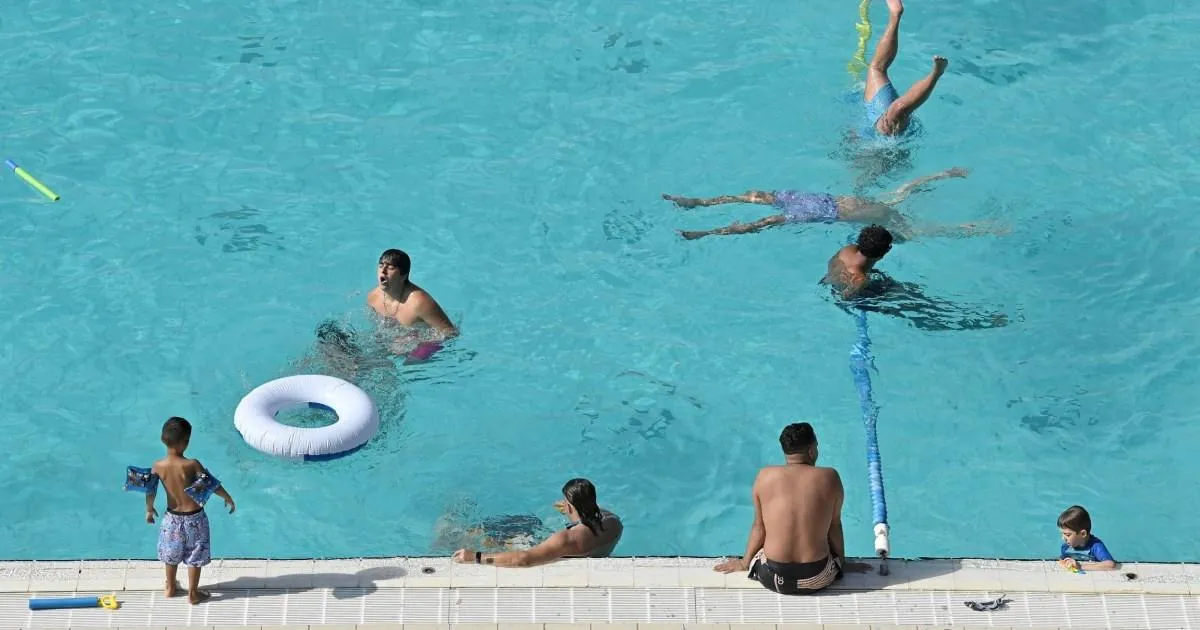
To understand just how derailed this social media fad has become, you have to picture the scene. A public pool on a scorching summer afternoon in a Spanish town. Families are scattered across the sunbeds, children are splashing and laughing, and grandparents are taking a slow, careful swim. Then, without warning, something floats to the surface. It takes a moment for people to process what they’re seeing, and then panic erupts. Gagging, shouting, and horrified parents pulling kids out of the water. Meanwhile, somewhere near the edge, someone is holding a smartphone, grinning, because they’ve just captured the so-called “perfect prank.” The “brown challenge” is exactly what you think it is, and the people doing it aren’t just being gross — they’re vandalizing public spaces and putting entire communities at risk. The twist that makes it even more malicious is that the motive isn’t just shock value. Many of those taking part are deliberately trying to get the pool closed. They film the aftermath, share it online, and treat the disruption of everyone else’s day as entertainment. It’s a disturbing blend of internet-era attention-seeking, an absence of empathy, and a total disregard for public health. And the impact hits hardest not in big, flashy resorts, but in small-town pools that are the beating heart of local summer life — the places where neighbors gather, where kids learn to swim, and where communities come together on weekends.
Paragraph 3
It goes without saying that human feces in a public pool is more than just an aesthetic catastrophe; it’s a genuine biological hazard. Feces can carry a whole host of dangerous pathogens, including viruses like norovirus and Salmonella, and parasites like Cryptosporidium — and here’s the truly alarming part: chlorine, the chemical that pools rely on to keep water safe, does not always kill these organisms. Cryptosporidium in particular is notoriously resilient and can survive in properly chlorinated water for days. If another swimmer accidentally swallows even a small amount of contaminated water, the consequences can range from stomach cramps and diarrhea to vomiting, fever, and serious dehydration. Children are especially vulnerable, not just because their immune systems are still developing, but because they naturally swallow more water while swimming. They splash around, dip their heads under, and inevitably ingest a good mouthful at some point. A single careless, selfish act by one person can therefore make dozens of people sick, including toddlers, elderly grandparents, pregnant women, and anyone with a weakened immune system. And because the contamination often isn’t noticed until later, by the time the pool is cleared and closed, many swimmers may have already been exposed. Experts warn that closing the pool immediately isn’t just about being squeamish; it’s a necessary step to avoid an outbreak that could spread through the local community and even beyond, if visitors from elsewhere carry the germs home with them.
Paragraph 4
The aftermath of these incidents is disruptive, expensive, and punishing for ordinary people who had nothing to do with the prank. Under Spanish law, if feces are found in a pool, it must be closed to the public for at least 24 to 48 hours. During that time, workers have to filter, clean, and disinfect the water thoroughly, and the pool must be tested multiple times before it can reopen. In more severe cases, particularly when the contamination is widespread or the fecal matter was particularly large, the entire pool has to be drained and refilled with thousands of liters of fresh water. That’s a massive expense for small town councils, many of which operate on tight budgets and rely on their summer pools as major community assets. It’s also an environmental waste, especially in a region like Spain, where water is often scarce and the summer heat makes every liter precious. On top of the financial cost, there is the social cost. Pool closures mean canceled swimming lessons, disappointed children, ruined birthday parties, and families left sweltering in homes without air conditioning on the hottest days of the year. The pools that were supposed to be safe, free, and open to all have become places of anxiety and frustration. And while the punishment is meant to target the offenders, the real victims are the innocent locals and tourists who lose access to a vital public amenity, often at the peak of a heatwave. It’s a situation that makes people furious, and rightly so.
Paragraph 5
In response, Spanish authorities are finally taking serious action. Around 50 municipalities have issued public alerts warning residents about the trend and urging them to report suspicious behavior. Local councils are imposing fines on those who are caught, starting at around €1,000 and going up to €3,000, depending on the severity of the offense and the location. In some places, the punishment is even heavier. The city council of Picassent, for example, has escalated matters to court and fined several young people €5,000 each. Offenders are also, understandably, banned from re-entering the pool where the offense took place. In addition to fines, some pools have increased police surveillance, with officers patrolling the grounds and keeping an eye on bathers from a distance. But catching the culprits is easier said than done. Public pools cannot legally install cameras, and demanding identification from everyone entering would be impractical and intrusive. People can simply drop their “bundle” into the water unnoticed, mix into the crowd, and be gone before anyone knows what happened. That’s why authorities are appealing to the public’s sense of collective responsibility, urging people to watch out for suspicious behavior, report anything unusual, and shame these acts publicly. But despite all this, the problem continues. In the city of Zamora alone, pools have been forced to close six times this year for exactly this reason — a sign that fines and warnings alone aren’t enough to stop a trend that lives and dies on social media attention.
Paragraph 6
So, what does all this mean for Spain, and for the people planning to spend their holidays there this summer? First, a word of caution: if you’re traveling to Spain and hoping to take a dip in a public pool, be aware that this trend has the potential to ruin not just your swim, but your health. Keep an eye on the water, and if you see anything suspicious, report it immediately. But beyond the practical advice, there’s something deeper to think about. The “brown challenge” is a disturbing symptom of a digital culture in which people will do almost anything for a moment of online fame, no matter who gets hurt. It’s one thing to be gross in private, but quite another to weaponize that grossness against unsuspecting strangers, to disrupt communities, to waste water, and to put children at risk — all for a few seconds of video. The fact that more than 300 pools have closed in 2025 should be a wake-up call not just for Spain, but for all of us. Parents, educators, and social media platforms all have a role to play in calling out this kind of behavior and reminding young people that attention isn’t worth endangering others. We need to stress that this isn’t just a prank but a criminal, harmful act with consequences that ripple far beyond the moment the video goes viral. The hope is that the attention this problem is now receiving, and the strictness of the punishments, will make anyone think twice before trying to pull off the brown challenge. In the meantime, Spanish pools will remain vigilant, but they need the public’s help to stay safe. So if you’re by a pool this summer and see someone acting oddly near the water, don’t just look away — say something. Better yet, tell them to get out. Because the next person who dives into that water could be your child, your parent, or you. And nobody should have to swim in someone else’s waste, let alone fall ill because of it.