
The summer light over the Aegean had promised nothing but the slow, golden rhythms of a Greek island holiday—salt-washed mornings, the clatter of shutters opening against whitewashed walls, the lazy shimmer of the sea beyond the rocks. On the small island of Kimolos, a family visiting from Ireland had settled into that rhythm, grateful for the break, for the smell of herbs in the breeze and the familiar warmth of a place where their mother had once been a girl. They were not strangers here; the island was threaded into their story, a place of return and memory. But on Sunday, August 9, that idyllic world was torn apart in an instant. Their 17-year-old son collapsed in the shower, killed by an electric shock believed to have been caused by faulty wiring. There was no warning, no chance to cry out for help before the current took him. The family’s holiday had become a waking nightmare, and a community thousands of miles away was left trying to comprehend how a moment of ordinary privacy, a simple act of turning on the water, could become so suddenly, brutally fatal.
The circumstances of the death remain under investigation, but the initial picture is clear and devastating. The boy, who has not been named, was taking a shower in the rental stone house where the family was staying when he received the fatal electric shock. A police source told The Irish Sun that the death was immediate and that “there was clearly some sort of wiring fault.” The source added, “It was instant.” Those two words carry the terrible weight of the tragedy: there was no struggle, no moment of realization, no final goodbye. The house itself was an old stone building, believed to have been constructed before the 1970s, the kind of traditional structure that gives Greek islands their charm but may also hide decades of aging pipes, corroded cables, and improvised electrical fixes. Forensic and technical teams were sent to the rental property to carry out a detailed inspection, trying to trace exactly how the current reached the water and why no safety mechanism intervened. A post-mortem examination was scheduled near Athens, the capital, and afterwards the boy’s body was expected to be flown back to Ireland so that his family and friends could lay him to rest and begin the slow, agonizing process of mourning.
But numbers and procedures can only capture so much. Behind the official language of consular assistance and forensic inspections lies the human reality: a teenager with his whole life ahead of him, a brother, a son, a friend who had probably been looking forward to the summer, to the freedom of days spent between sun and sea, to the small adventures that define youth. He had been born into an Irish family with roots stretching back to Kimolos, and his mother’s connection to the island made this trip more than a holiday—it was a homecoming, a chance to show love and belonging to a place that had shaped her. No parent expects to bury their child, least of all after a family summer visit to a beautiful Greek island. The shock of his death rippled far beyond the rental house. Local officials described the incident as “unprecedented,” saying it had cast a shadow over the island. For a community as small as Kimolos, where the 2021 census counted just 810 residents, the death of a visitor is not a footnote or a headline; it is a shared wound. Neighbours would have heard the sirens, seen the emergency vehicles winding through narrow streets, felt the eerie silence that follows a catastrophe. A place accustomed to the gentle rhythms of tourism was suddenly confronted with the harshest intrusion imaginable, and the grief belonged to everyone.
The tragedy also raises difficult and urgent questions about the safety of older holiday properties in Greece and across the broader Mediterranean. Stone houses, with their thick walls and beautiful facades, are prized for their authenticity, but many were built long before modern electrical standards were introduced. Wiring can degrade over decades, and when it does, the results can be silent and lethal. Inadequate earthing, corroded connection points, outdated fuse boxes, appliances and showers that were never designed to withstand exposure to moisture—all of these can turn a bathroom into a death trap. In recent years, there have been other cases of electrocutions in holiday rentals and rural homes, often in older buildings where maintenance has been minimal and safety checks are not rigorously enforced. The owners of the Kimolos property are unlikely to have wished anyone harm; they simply inherited a house with a hidden hazard, a flaw invisible to the eye and undetectable to the touch until it is too late. The investigation in the stone house will try to determine whether the fault was obvious, whether a recent repair was botched, or whether years of warm maritime air and salt had quietly worn down insulation until everything lined up for catastrophe. For tourists and travelers, the case is a terrifying reminder that the charming rental with the sea-view balcony could also be the place where the most mundane domestic act becomes fatal. It does not mean that every old Greek house is dangerous, but it does mean that the systems keeping us safe are often out of sight, and we assume them to be safer than they are.
In the midst of the family’s devastation, official channels have moved with the quiet efficiency that tragedy demands. A spokesperson for Ireland’s Department of Foreign Affairs and Trade confirmed that it was aware of the case and providing consular assistance, while declining to comment on the details, as is the standard practice in all consular cases. This support is vital: helping the family navigate local procedures, liaising with Greek authorities, arranging the release of the body, organizing flights and documentation, and making sure that no bureaucratic obstacle delays the return home. The post-mortem in Athens, the forensic examination, the paperwork, the logistics of bringing a young man’s body back to Irish soil—all of this must be managed while the family is drowning in grief. They are not alone; they have the support of the Irish Government, of relatives and friends in Ireland and on the island, and of the small but close-knit community that has been shaken by this loss. It is understood that once the necessary procedures are completed, the boy’s body will be flown back to Ireland, so that his loved ones can pay their respects, hold a funeral, and give him a place to rest in the country that was his home. There will be candles, flowers, words spoken through tears, and an empty chair at the table for years to come.
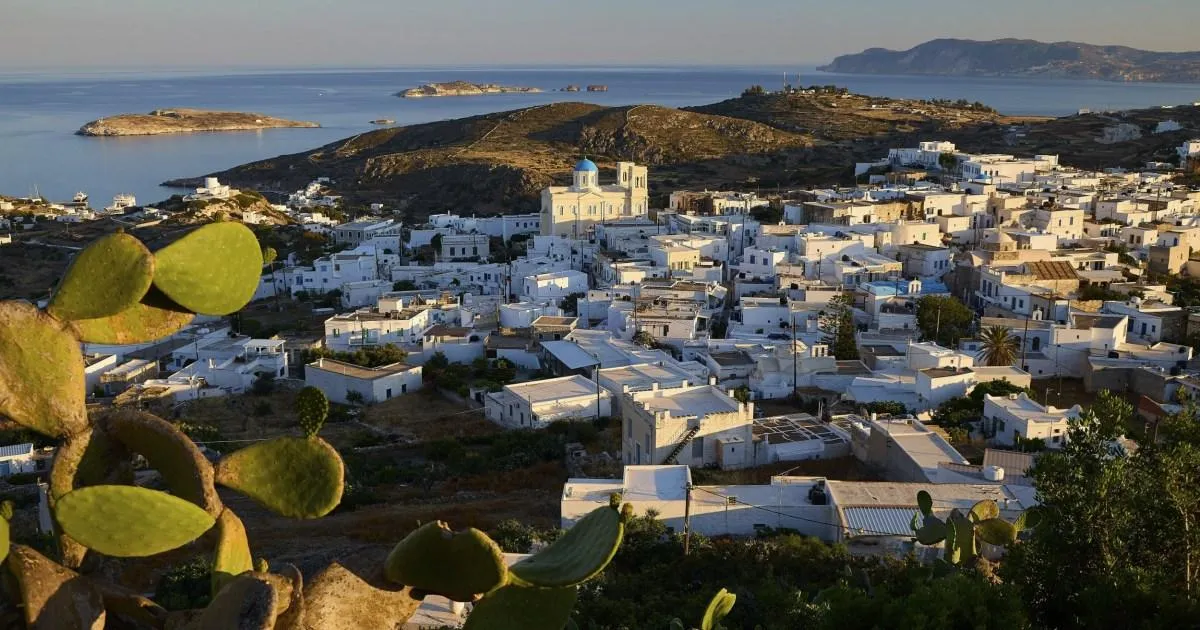
Kimolos itself is a sliver of land in the Aegean Sea, tucked into the southwestern edge of the Cyclades, a close neighbour to the larger island of Milos. It is the kind of place people dream about: quiet coves, volcanic rock formations, whitewashed churches, narrow alleyways where bougainvillea spills over stone walls, and a pace of life that seems to refuse the modern world. The island’s 810 residents know each other by name, and visitors are often treated as temporary family. It is profoundly unfair that such a place should become the backdrop for a tragedy of this magnitude. The island has been marked by the event; locals will remember the summer when a young life was cut short, when the sound of a family’s cries echoed through the hills. For the boy’s mother, the island will never be just a birthplace again; it will be the place where she lost her son, even if it is also the place she once loved and returned to with hope. The sea will still glitter, the wind will still carry the scent of thyme, the ferry will still dock in the small harbour—but for those who were touched by this death, the light will feel different, gentler and sadder. In time, the family may find some consolation in the memory of a summer before the tragedy, in the boy’s laughter, in the ordinary moments that now hold extraordinary meaning. But that consolation is still distant. For now, there is only grief, a stone house waiting to tell its secret, and a community on a small Greek island holding its breath, wishing it could turn back the clock to before the water ran, before the current struck, before an ordinary day turned into the worst day of a family’s life.