


A Predatory Ballet: Shark Consumes Crocodile Carcass on Australian Beach
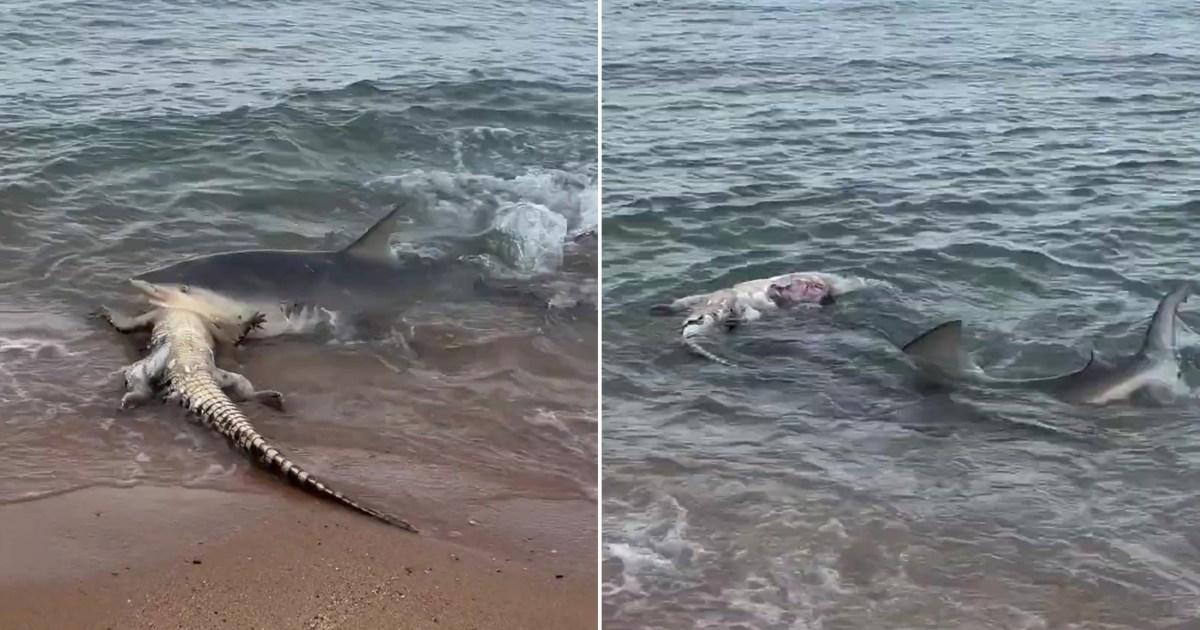
In a dramatic display of nature’s raw power, a shark was filmed devouring the carcass of a crocodile near the shoreline of Nhulunbuy, a remote town on the Gove Peninsula in Australia’s Northern Territory. The incident, captured on video by beachgoers, unfolded just meters from unsuspecting onlookers, offering a glimpse into the complex predator-prey relationships that exist within the region’s diverse ecosystem. The video depicts the shark, believed to be a bull shark, wriggling out of the shallows and seizing the lifeless crocodile, its jaws clamped firmly around the reptile’s midsection. With a sudden, forceful jerk, the shark decapitates the crocodile, highlighting the immense strength and predatory instincts of these apex predators. The grisly scene concludes with the shark dragging the remains of its meal back into the water, disappearing beneath the waves as the cycle of life and death continues.
This dramatic wildlife encounter, shared on social media platforms, quickly gained viral notoriety, captivating audiences worldwide with its stark depiction of nature’s brutality. The footage, reposted on the Instagram page "Amazing Sharks," elicited a mixture of awe, fascination, and morbid curiosity from viewers. Comments ranged from expressions of astonishment to lighthearted remarks about the unique nature of Australian wildlife. One user humorously observed that such incidents are typical of the continent’s diverse and often dangerous fauna. Another commenter, perhaps overlooking the evident lifelessness of the crocodile, suggested that beachgoers should have intervened to rescue the reptile.
The incident occurred near Nhulunbuy, a town situated within the Arnhem Land region of the Northern Territory. Nhulunbuy, the fourth-largest town in the territory, is no stranger to encounters between crocodiles and sharks, as both species share similar habitats and dietary preferences. The coastal waters surrounding Nhulunbuy provide ample hunting grounds for both predators, often leading to confrontations and, as witnessed in this instance, opportunistic feeding behavior. The coexistence of these apex predators underscores the delicate balance of the region’s ecosystem and the constant struggle for survival within the natural world.
The video footage serves as a compelling reminder of the unpredictable and often dramatic interactions that occur within natural ecosystems. While the sight of a shark consuming a crocodile carcass may be disturbing to some, it represents a natural process within the food chain. Sharks, as apex predators, play a crucial role in maintaining the health and balance of marine ecosystems. Their scavenging behavior, as demonstrated in this instance, helps to remove decaying organic matter from the environment and prevent the spread of disease. The incident also highlights the importance of respecting the natural habitats of these animals and maintaining a safe distance to avoid potential conflicts.
The video’s viral spread serves as a testament to the enduring fascination with wildlife and the power of social media to disseminate information about these encounters. While such footage can be graphic and unsettling, it provides valuable insights into the behavior and ecology of these often misunderstood creatures. By sharing these experiences, we can foster a greater appreciation for the complexities of the natural world and the importance of conservation efforts to protect these vital ecosystems. The incident near Nhulunbuy offers a glimpse into the dynamic interplay between predator and prey, serving as a stark reminder of the constant struggle for survival that unfolds within the wild.
The encounter between the shark and the crocodile carcass underscores the importance of understanding the ecological roles of these animals and appreciating the intricate web of life that connects them. While the footage may be unsettling to some, it provides a valuable opportunity to learn about the natural world and the complex interactions between its inhabitants. By fostering a greater understanding of these creatures and their roles within the ecosystem, we can promote a more informed and responsible approach to conservation efforts and ensure the long-term health of these vital natural environments. The incident serves as a powerful reminder of the raw beauty and inherent brutality of the natural world, urging us to respect and protect the delicate balance of life on Earth.