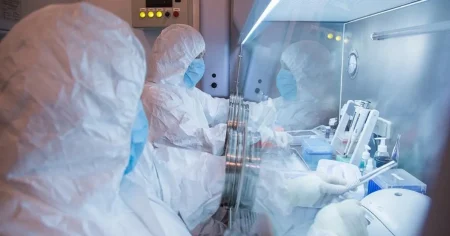




Daria Shipilova was the kind of scientist who understood the weight of her work long before it turned personal. At just 28 years old, she worked as a laboratory assistant at the Irkutsk Anti-Plague Research Institute in Siberia, a facility dedicated to studying some of the world’s deadliest pathogens. Her colleagues affectionately called her Dasha, and those who knew her described a young woman who was meticulous, cautious, and deeply aware of the dangers lurking in the samples she handled. When she returned from a research expedition to Buryatia, a remote region on Russia’s border with Mongolia, she brought back more than just data. She had been studying plague-infested squirrels, creatures that can carry Yersinia pestis, the bacterium responsible for the medieval Black Death and the modern plague. Shortly after the trip, Daria began showing cold-like symptoms. There was no fever at first, but her condition deteriorated quickly. Swelling appeared, her lungs became involved, and by September 29 she was placed on a ventilator. Days later, she was gone. Her mother, Svetlana, a physician who had devoted her own career to saving lives, was left shattered, searching for answers in a cloud of official silence and bureaucratic delays. “I saved more than one patient like that,” she said, her voice heavy with grief and anger, “but they didn’t save my daughter. They simply let my daughter die.”
The pathogen at the center of this tragedy is one of history’s most feared enemies. Yersinia pestis is a bacterium that can cause bubonic plague, septicemic plague, and pneumonic plague, the last of which is the most dangerous and the most easily transmitted between humans. Unlike the bubonic form, which is typically spread through the bite of infected fleas, pneumonic plague infects the lungs and can be passed through respiratory droplets when an infected person coughs or sneezes. It is this form that Daria is believed to have contracted, making her, according to Russian media, the country’s first fatal case of pneumonic plague in years. The disease moves quickly. Without prompt antibiotic treatment, it can be fatal within days, sometimes within hours. Daria’s colleagues at the institute told reporters that she had been extremely afraid of accidentally infecting anyone. “This was clear from how often she washed her hands, even outside of work,” they said. For a scientist working with plague bacteria, that fear is not paranoia; it is the necessary mindset of someone who handles death in a petri dish. Her mother, Svetlana, was not just a grieving parent but also a doctor who understood the clinical picture. Her anguish was compounded by the fact that she had treated similar patients and knew exactly what should have been done. Yet despite her expertise and her insistence on answers, the official explanation remained frustratingly vague: a “pneumonia case of unknown origin.” For a woman who had dedicated her life to medicine and whose daughter had dedicated hers to preventing outbreaks, that uncertainty was unbearable.
In the chaotic days that followed Daria’s death, fear began to spread faster than any microbe. Rumors swirled about what had happened. Some reports suggested that a test tube had broken in the laboratory, releasing the bacteria into the air. Svetlana dismissed this outright. “Only an amateur would say something like that,” she said. “It’s simply impossible to spill or break it. They are so heavily protected.” Her words echoed the rigorous safety protocols that scientists at anti-plague institutes are trained to follow, especially when working with pathogens that have the potential to cause global catastrophes. But the rumor mill was already churning, and the reaction from authorities did little to calm the public. Forensic teams in hazmat suits descended on the apartment building where Daria had lived, spraying the hallways and stairwells with what residents described as a powerful, sickeningly pungent antiseptic. A woman in her 40s who lived in the building recalled the overwhelming smell: “It was unbearable and very pungent.” Residents opened the doors to the outside just to breathe. When they asked what was happening, the hazmat-suited workers said they had been sent by Rospotrebnadzor, Russia’s health watchdog. When pressed for details, one of them offered a flimsy explanation: “Some girl died, a deadly virus.” Another claimed the fumigation was “for cockroaches.” The woman was not fooled. “We don’t even have any cockroaches in our house,” she said. Then she saw the worker packing her protective suit into a bag and thought, “Well, I get it now.” A notice appeared in the building instructing residents to call a certain number due to “a significant increase in illness,” a message that only deepened the confusion and dread.
For Daria’s colleagues, the fear was not hypothetical. They had worked beside her, shared the same air, touched the same surfaces. When news of her death broke, the institute became a lockdown zone. Workers were told they could not leave. According to one employee, around two hundred people were effectively confined to the facility for three days. “They held us for three days, taking swabs twice a day,” the worker said. “But they fed us. We slept on chairs, and for those who didn’t have enough space, on jackets. I slept on my jacket.” The tone of that testimony is telling: there is gratitude for being fed, but also a quiet resignation about the lack of explanation. “They didn’t sign any documents,” the worker added. “They released us on Sunday.” The scene conjures an image of exhausted, anxious scientists trapped in their own workplace, waiting to learn whether they had been exposed to a pathogen that could kill them in a matter of days. Twice-daily swabs would have been a constant reminder of their vulnerability. Every cough or tickle in the throat must have felt like a death sentence. The psychological toll of such an ordeal is hard to overstate. These were people who understood the science better than anyone, which meant they also understood exactly how bad the situation could become. Being locked in with that knowledge, with no paperwork, no clear communication, and no certainty, must have been a nightmare. Yet they also knew why the measures were necessary. If pneumonic plague had escaped into the wider community, the consequences could have been catastrophic.
Beyond Russia, global health authorities were watching carefully. In the United Kingdom, the UK Health Security Agency (UKHSA) issued a statement to reassure the public. Chris Lewis, the director of global health protection at UKHSA, said: “We are aware of media reports that emergency containment measures have been introduced in Russia’s Irkutsk region following the death of an employee at the Irkutsk anti-plague institute. We are seeking information through the International Health Regulations channels to further understand the circumstances and verify the accuracy of these reports.” Crucially, he added: “The public health risk from plague to the wider UK population currently remains very low.” That assurance was likely meant to calm nerves, but it also highlighted the seriousness with which international health agencies treat any potential outbreak of plague, even in a remote corner of Siberia. Pneumonic plague is a terrifying illness because it is both highly lethal and potentially contagious. Symptoms include high fevers, shortness of breath, shaking chills, headache, chest pain, pneumonia, and the production of bloody or watery mucus. Without rapid antibiotic treatment, mortality rates are high, and even with modern medicine, the disease demands aggressive, immediate intervention. The fact that a young, healthy scientist could die from it, despite working in a facility specifically designed to contain such pathogens, is a reminder of how dangerous zoonotic diseases can be. The world has grown accustomed to thinking of plague as a disease of the past, something out of history books and medieval paintings. Daria’s death is a stark reminder that the microbes of old never truly disappeared. They hide in animal reservoirs, waiting for an opportunity to leap into human hosts, and when they do, the consequences can be swift and brutal.
Daria’s story is ultimately one of human cost, not just scientific statistics. She was a young woman with a life ahead of her, a career dedicated to protecting others from invisible enemies, and a family that loved her. Her mother’s grief is compounded by a sense of institutional failure. Svetlana is waiting for an official document, a definitive statement of what killed her daughter. “I’m waiting for it to become official,” she said. “It has to be an official document. It’s very hard for me right now. This whole spectacle drags on.” Those words capture the unique pain of losing a loved one in the midst of a public health emergency: the private mourning is interrupted by official protocols, rumors, and unanswered questions. The workers who were quarantined are now free, but they carry the memory of those three days. The residents of Daria’s apartment building are left with the smell of antiseptic and the suspicion that they were not told the whole truth. And in a world still recovering from one global pandemic, the mention of a deadly pathogen emerging from a research laboratory triggers a deep, collective anxiety. The tragedy of Daria Shipilova is not just that she died doing her job. It is that her death raises questions about transparency, preparedness, and the sacrifices made by the scientists who stand on the front lines of the fight against infectious disease. She was extremely afraid of infecting anyone if something happened, her colleagues said. In the end, she did not infect anyone else, but she lost her own life. Her legacy should not be fear, but respect for the quiet bravery of those who study the world’s deadliest microbes so that the rest of us can stay safe. Her mother, a doctor who saved patients like the one her daughter became, deserves the truth. And somewhere in the laboratories and bureaucratic offices of Russia, that truth still needs to be told.