


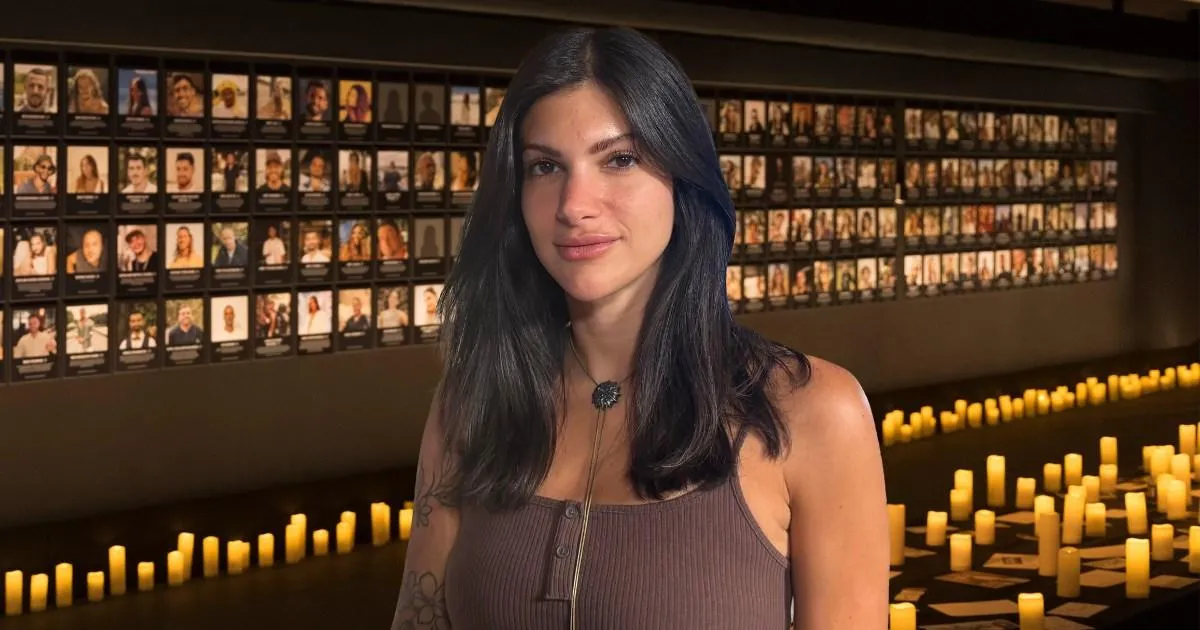
On October 7th, 2023, the world changed for countless people, but for those who were at the Nova music festival in southern Israel, it was a day that time shattered into a horrifying eternity. May Hayat, a young woman whose primary aspirations revolved around mixing cocktails and enjoying a night of music and freedom with her best friend, found herself thrust into a waking nightmare that would redefine her very existence. The vibrant sounds of electronic music, the rhythmic pulse of a crowd united in celebration, and the warm desert night were violently replaced by the deafening roar of rockets and the chilling pop of gunfire. In a matter of moments, her concept of a perfect night dissolved into a desperate, primal fight for survival. The vivid imagery of her ordeal, from hiding in a shallow pit to narrowly escaping a vehicle that would become her tomb, paints a stark picture of the sheer terror and chaos that engulfed the festival grounds that morning. Her story, shared in London with other survivors, serves as a crucial, visceral testament to the human cost of that day, a cost that extends far beyond the bleak statistics of the dead and injured.
The initial shock of the attack was a disorienting blur. May’s recollection of waking to find herself surrounded by eight terrorists in civilian clothes, armed with knives, hammers, and wooden bats, speaks to the sudden and brutal nature of the assault. This wasn’t a distant, sanitized battlefield; it was an intimate and terrifying confrontation with individuals intent on causing maximum harm. The juxtaposition of their everyday civilian clothes with their deadly weapons and their hateful mission adds a layer of psychological horror, blurring the lines between combatants and non-combatants in the most chilling way. Her escape wasn’t a strategic retreat but a frantic, almost instinctual flight, a desperate bid to put distance between herself and the encroaching danger. Finding a pit, a simple depression in the earth, became a unlikely sanctuary, a place to hide and hold her breath, praying to become invisible to the roving eyes of her pursuers. It was in this state of primal fear, covered in dirt and adrenaline, that her fight for life became a silent, terrifying contest of wits and luck against a remorseless enemy.
Perhaps the most harrowing detail of May’s account is her experience with the ambulance. In her desperation, the sight of a rescue vehicle must have felt like a lifeline, a beacon of hope in the engulfing darkness. Yet, as she would later learn, this was a “death trap,” a cruel illusion of safety. The mere moments she spent inside that vehicle, the fleeting relief she might have felt, were abruptly cut short by the realization that it was a target. Her escape from it just before it was blown up is a detail so narrow and so consequential that it underscores the razor-thin margin between life and death that defined that day. This specific incident highlights the calculated cruelty of the attackers, who would turn a symbol of aid and safety into an instrument of death, and the profound, gut-wrenching decision-making that survivors had to make in milliseconds. This near-death experience would not be her final ordeal, however, as the escape from the ambulance only led her into the arms of the very terrorists she was trying to flee, culminating in her capture and the long, uncertain period of captivity that followed.
The psychological aftermath of such an experience is a labyrinth from which it is difficult to emerge. For May, the trauma did not end with her physical release; in many ways, it was just the beginning of a different kind of battle. The guilt of surviving when so many others did not, the vivid and intrusive flashbacks of the sights and sounds of that morning, and the profound sense of vulnerability that now colors her worldview are all invisible scars she carries with her. The description of her being a “bartender” and the dream of a “night at a music festival” serves as a melancholic anchor, reminding us that this wasn’t a soldier in a conflict zone, but an ordinary young person pursuing happiness and freedom through music and friendship. The event violently severed her from that simple, joyful identity, forcing her to rebuild herself from the ashes of her former life. Her decision to travel to London to share her story indicates a remarkable, though painful, journey toward processing her trauma, transforming her personal suffering into a public testimony against the horrors she witnessed.
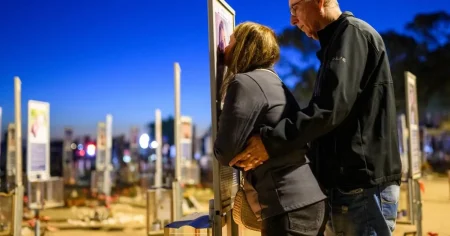
May Hayat’s experience is not an isolated anecdote; it is a cornerstone of the shared memory of that day for the thousands who attended the festival. When she stands in London alongside other survivors, they form a collective of broken but resilient souls, each carrying their own unique angle of the same cataclysmic event. Their stories, when woven together, create a comprehensive and deeply human tapestry of the massacre, going far beyond the cold facts and figures. They bear witness not just to the violence, but to the acts of selflessness, the moments of incredible bravery, and the profound bonds forged in the face of overwhelming evil. For the world, their testimony is crucial in ensuring that the full scope of the tragedy is not forgotten or minimized. It is a powerful counter-narrative to the dehumanization of conflict, forcing listeners to confront the real, breathing, and suffering individuals at the heart of the geopolitical turmoil. Their presence in London is a defiant act of remembrance, a testament to their survival, and a plea for the world to truly see and understand what happened in the desert that day.
In the end, May’s story, and those of her fellow survivors, serves as a solemn reminder of the enduring human spirit’s capacity to endure unimaginable horror and yet find the strength to continue. It is a story of agonizing loss, but also of improbable survival. It’s in the narrow escapes, the horrific choices, and the lingering shadows of trauma that we find the stark truth of October 7th. May’s journey from a carefree festival-goer to a survivor bearing witness to the world is a profound transformation, one that is still unfolding. She embodies the complex reality of such trauma: she is here to tell her story, yet she is forever haunted by the ghosts of that morning. By sharing her memory, she ensures that the lives lost are not just numbers, but are remembered as the vibrant, young individuals they were. Her voice, though marked by pain, is a powerful and necessary one in a world that so often struggles to listen. Her story, in its brutal intimacy, compels us to remember that behind every statistic and every headline, there are human hearts that broke, and human lives that were irrevocably changed, in a single, tragic morning in the desert.